
Florida Wildlife: A Field Guide to Your New Neighbors
Everyone moving here arrives with the same mental picture. An alligator on the lanai. A snake in the mailbox. Something with tusks in the driveway at two in the morning.
What you actually get is manatees in winter, an osprey screaming at you from a channel marker, and an armadillo that will personally and methodically destroy your new sod. Here is the honest field guide to your new neighbors, roughly in order of how often you will actually meet them.
Birds
How often you’ll see one: Daily. Constantly. From the moment you wake up.
Should you worry: Only about your car’s paint job.
You will become a bird person here whether you planned on it or not. Great blue herons stand around in yards like they pay the CDD fee. Ospreys build enormous nests on channel markers and light poles and shriek at anything that comes close. Pelicans dive the bay in formation. Roseate spoonbills turn up looking like a flamingo that got into the craft supplies. Give it a year and you will be the person at a barbecue saying “that’s an ibis, not a stork.”
Manatees
How often you’ll see one: Hundreds at a time, November through mid-April.
Should you worry: They are enormous, gentle and extremely slow. No.
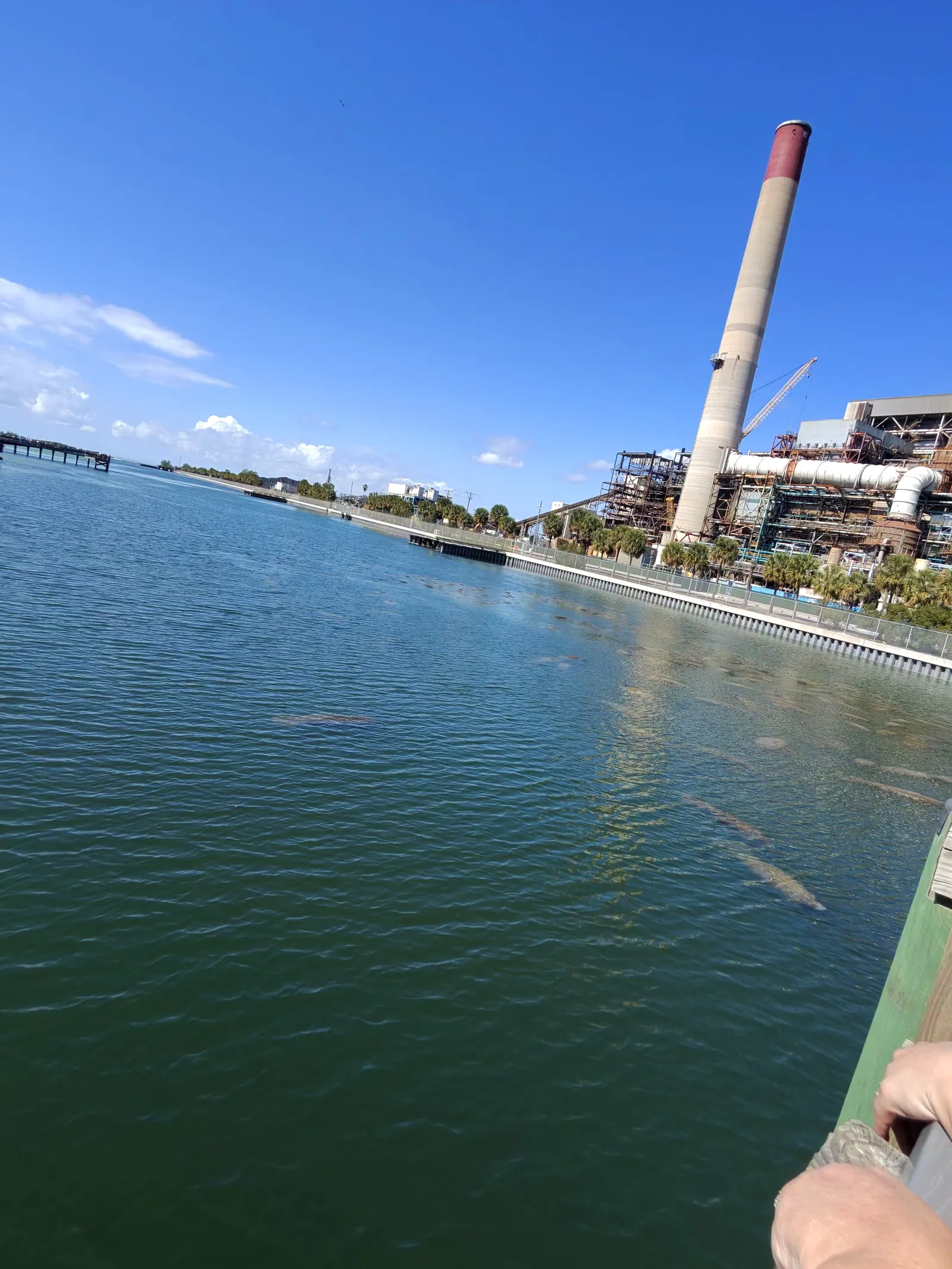
This one is ours. When the Gulf drops below about sixty-eight degrees, manatees pile into the warm-water discharge canal at the Big Bend power plant, and Tampa Electric built a viewing center around it. Open November 1 through April 15, ten to five, and both parking and admission are free. There is a fifty-foot observation tower, a rays touch tank, and close to a mile of habitat trails. If you have out-of-state guests in January, this is where you take them.
Everything about manatees — what they are, why they crowd a power plant, and what to do if one shows up at your dock.
The full guide to the Manatee Viewing Center — what to expect, when to go, and the part most visitors miss.
Alligators
How often you’ll see one: Regularly, in retention ponds, doing absolutely nothing.
Should you worry: Far less than you think.
This is the first question every out-of-state buyer asks and the last thing that will actually affect your life here. Alligators live in fresh water, which in a Florida neighborhood means the retention pond, the golf course lake and the preserve. Residents learn three habits — keep the dog away from the bank, do not linger at the water’s edge at dawn and dusk, and never feed one — and then stop thinking about it.
The full alligator guide — where they actually turn up, what normal behavior looks like, and how communities handle them.
Armadillos
How often you’ll see one: Mostly at night. Mostly you will find the evidence, not the animal.
Should you worry: Your landscaping should.
Nobody moves to Florida worried about armadillos. Everybody who lives here has a story about one. They dig for grubs, which means they will excavate a lawn you just paid good money to install, one small cone-shaped hole at a time, overnight, with a thoroughness you have to admire. They are nearly blind, they jump straight up when startled, and they are catastrophically bad at crossing roads. Of everything on this page, this is the one most likely to make you say something you regret in front of your children.
Snakes
How often you’ll see one: Occasionally. Usually already leaving.
Should you worry: Rarely.
Florida has a long list of snake species and six of them are venomous. The ones you are most likely to meet in a yard — black racers, garter snakes, rat snakes — are none of the six, and they are doing you a favor by eating rodents. The standard advice covers almost everything: do not reach into places you cannot see, and if you do not know what it is, leave it alone and let it move on rather than trying to relocate it yourself.
Wild boars
How often you’ll see one: Rarely inside neighborhoods. More often out toward preserves and pasture.
Should you worry: Give them room and change your route.
Feral hogs live in all sixty-seven Florida counties, which sounds far worse than it feels. In a built-out community you will probably never see one. Out toward the edges — the preserves, the ranch land, the newer developments still pushing east — you may come across ground they rooted up overnight. They are not looking for you. A sow with piglets still deserves a wide berth and a different walk.
Florida panthers
How often you’ll see one: Realistically, never.
Should you worry: No.
There are somewhere between 120 and 230 Florida panthers left, and the breeding population lives south of the Caloosahatchee River, a long way south of Tampa Bay. Males wander north now and then, and two breeding females were documented north of the river in 2017, which is genuinely good news for the species. It is not news that should affect where you buy a house. If you see a big tan cat in Apollo Beach, it is a bobcat, and it is considerably more alarmed than you are.
This page grows
More neighbors are on the way as I get decent photos of them. If there is something you keep wondering about — iguanas, love bugs, whatever makes that noise at three in the morning — tell me and I will add it.
And if you are still deciding whether Florida is for you, the wildlife is the easy part. Ask me about the harder parts — flood zones, insurance, and which streets actually take on water.