
Manatees in Apollo Beach
Every other animal on this list has a reputation to defend. The alligator has teeth. The wild boar has tusks. The armadillo has a genuine talent for destroying sod.
The manatee has none of that. A manatee is a two-thousand-pound vegetarian that moves like a parade float and has never once had a plan. Consequently it is the animal everyone falls in love with first, and the reason a surprising number of people end up buying a house here.
What you are actually looking at
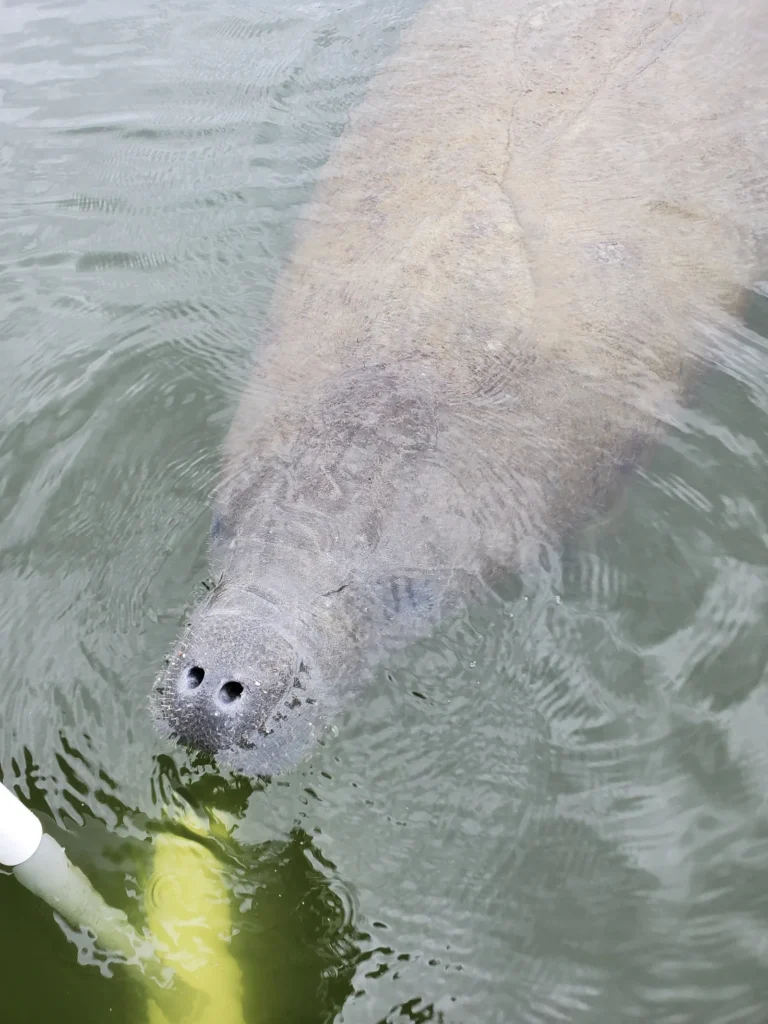
A grown manatee runs about ten feet long and can top a thousand pounds, with the largest going well past that. They eat seagrass, roughly a tenth of their body weight a day, which is a full-time job and explains the schedule. Their closest living relative, improbably, is the elephant.
They are also slow, curious and completely defenseless. So they have no natural predators to speak of, and their main threat is boats. Florida counted somewhere between about 8,000 and 12,000 of them in its most recent statewide survey, and federal law protects them as a threatened species.
Why they gather at a power plant
Here is the part that sounds made up. Manatees cannot handle cold water. Below about 68 degrees they start to suffer cold stress, which is as bad as it sounds, and Tampa Bay drops under that line most winters.
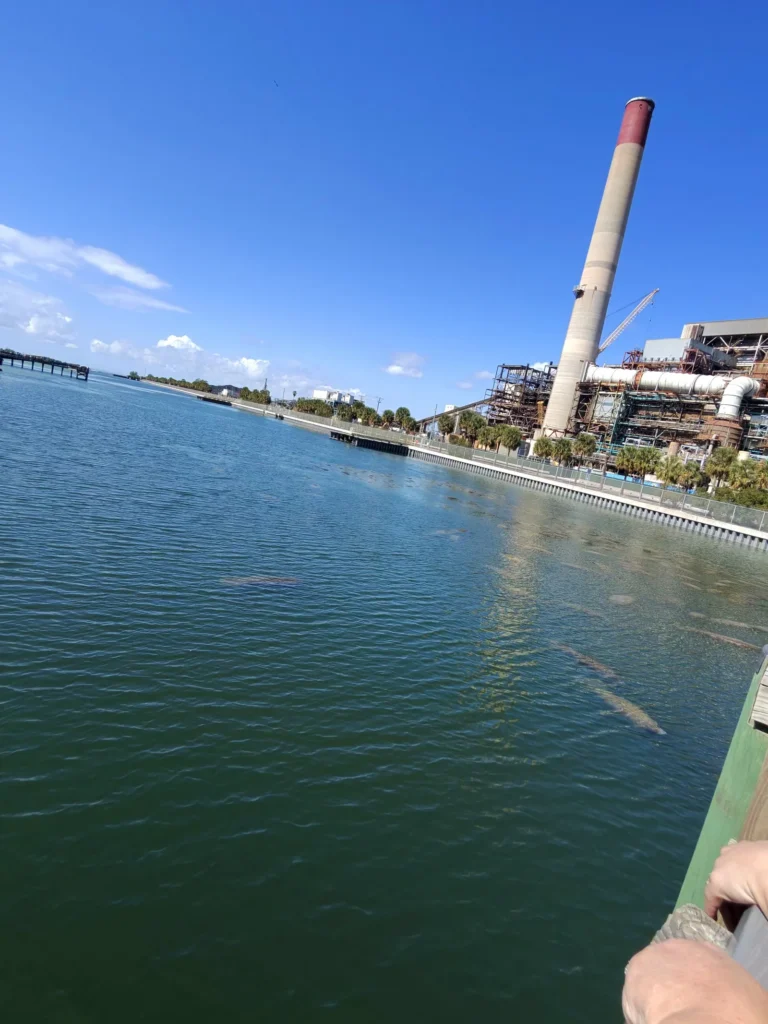
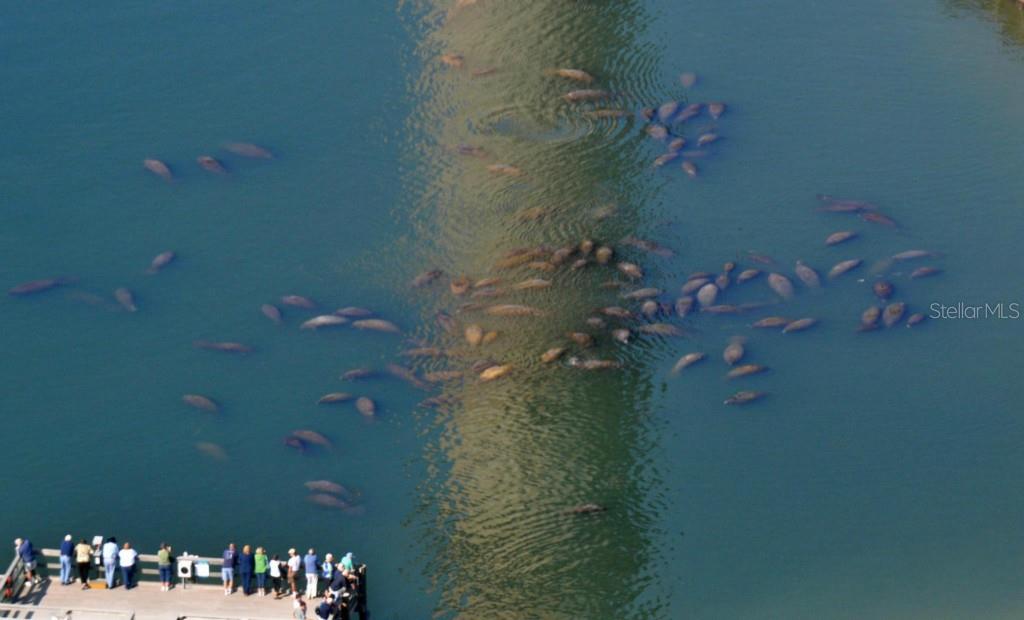
Meanwhile the Big Bend Power Station in Apollo Beach discharges clean warm water into a channel off the bay. Manatees figured this out decades ago. Now, every winter, hundreds of them pile into that channel and sit there like commuters on a heated bus.
TECO leaned into it and built a viewing center around the channel. It is a designated manatee sanctuary, and it is genuinely one of the best wildlife experiences in the state.
Going to see them
The Manatee Viewing Center is open November 1 through April 15, from 10 to 5, and it is closed the rest of the year because the manatees are not there. Admission is free. Parking is free. There is no catch, which visitors from out of state find suspicious.
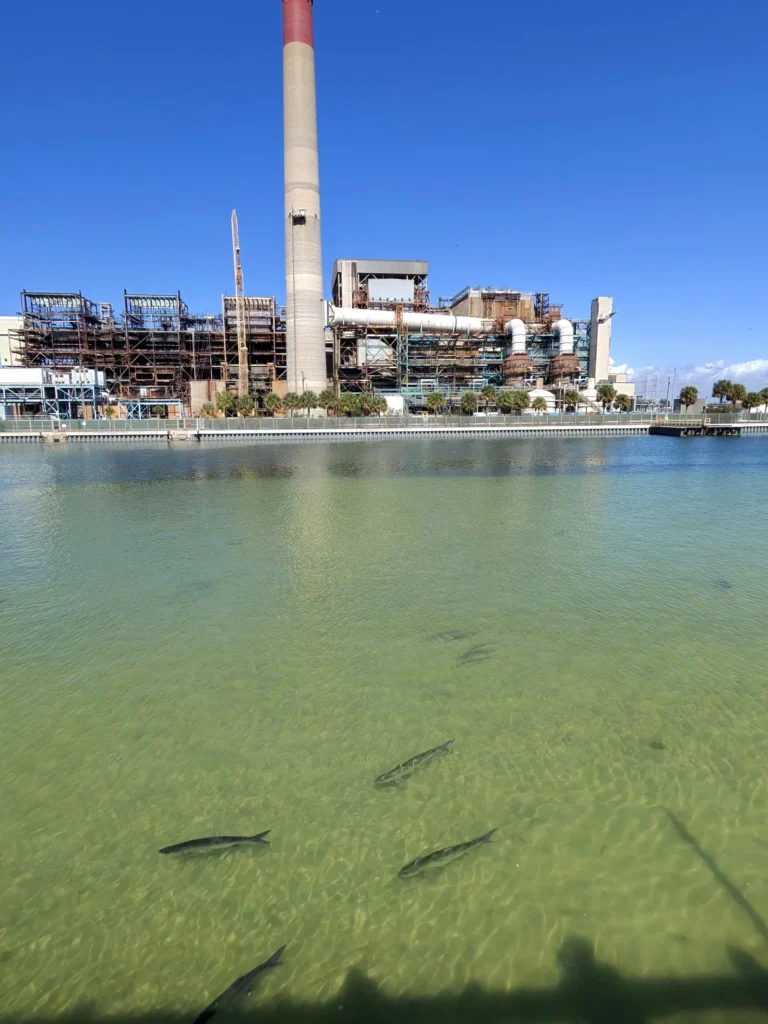
Besides the manatees you get a fifty-foot observation tower with a view over the bay, a stingray touch tank, about eight tenths of a mile of habitat trails, and usually a crowd of enormous tarpon hanging around the channel because the water is warm for them too.
Go on a cold morning. That sounds backwards, but the colder the snap, the more manatees are packed into the channel. A warm January week can leave it nearly empty.
If you buy a house on the water
You will see them from your dock. Not every day, but often enough that it stops being an event and starts being a Tuesday. In winter they come up the canals, and on a still morning you will hear one breathe before you see it.
Two practical things follow from that. First, the posted speed zones are real and officers do enforce them, so learn where they are before you open up the throttle. Second, do not run your hose into the water to give them fresh water, however tempting it is. It teaches them to approach docks and boats, and that is exactly how they get hurt.
The rules, briefly
Do not touch, feed, chase, or ride one. All of that breaks both federal and Florida law, and yes, officers have cited people for the last one. Look, take the photo, leave them alone.
The field guide line
How often you’ll see one: Constantly in winter if you are near water, rarely in summer.
Should you worry: No. Worry about hitting one, not about one hitting you.
More Florida wildlife
- Florida Wildlife: A Field Guide to Your New Neighbors
- Alligators in Florida: What You Actually Need to Know
- A Visitor Guide to the TECO Manatee Viewing Center
- Moving to Apollo Beach