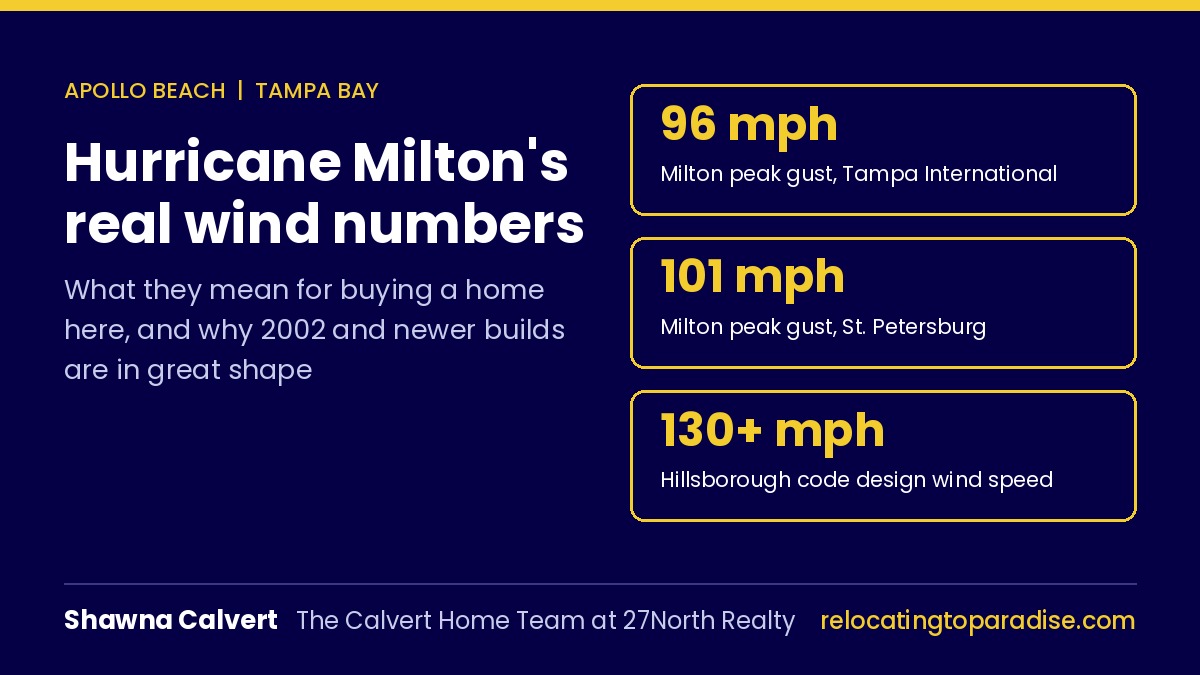
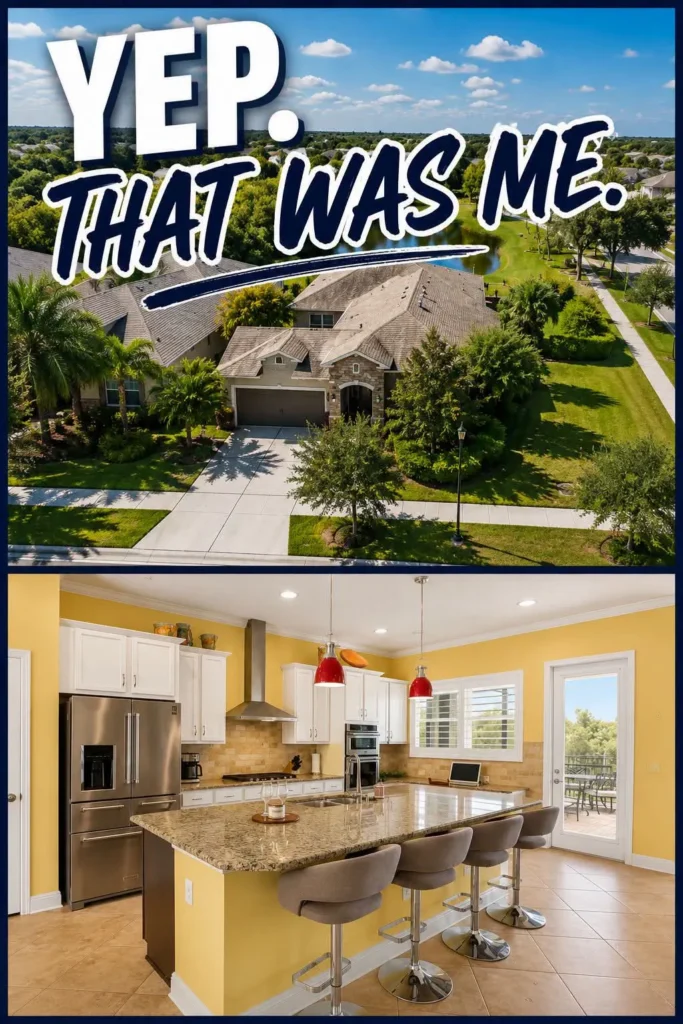
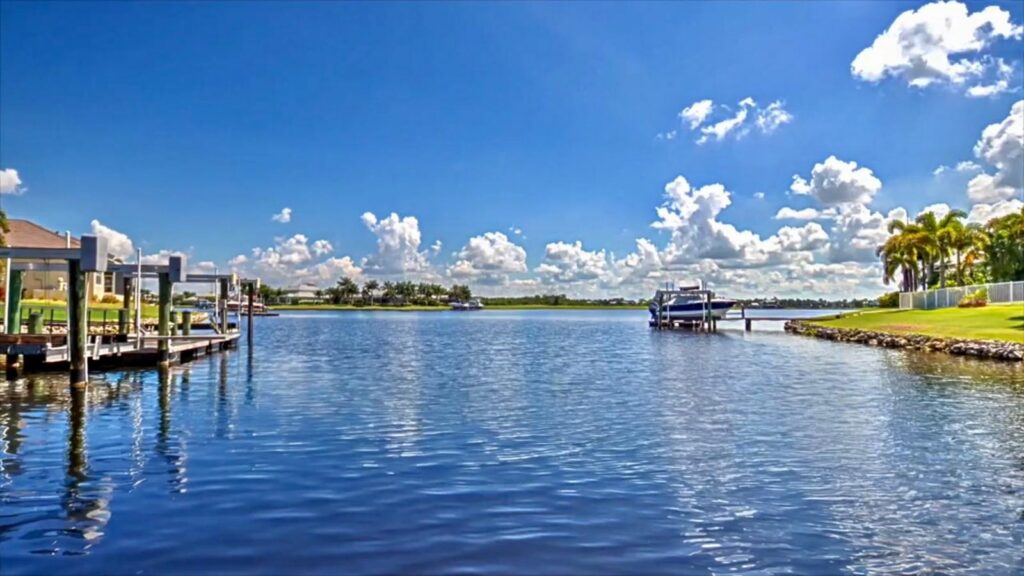
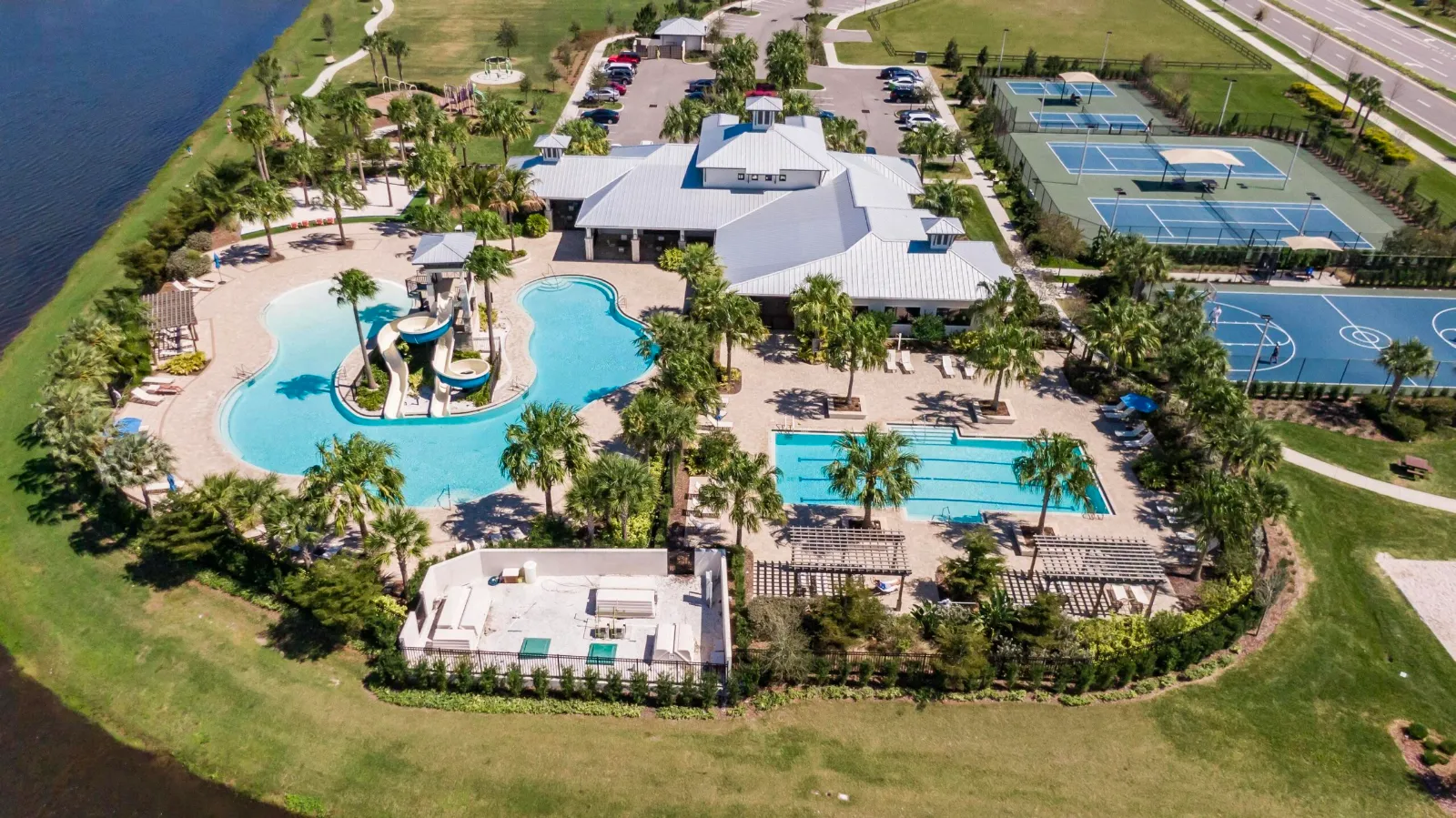
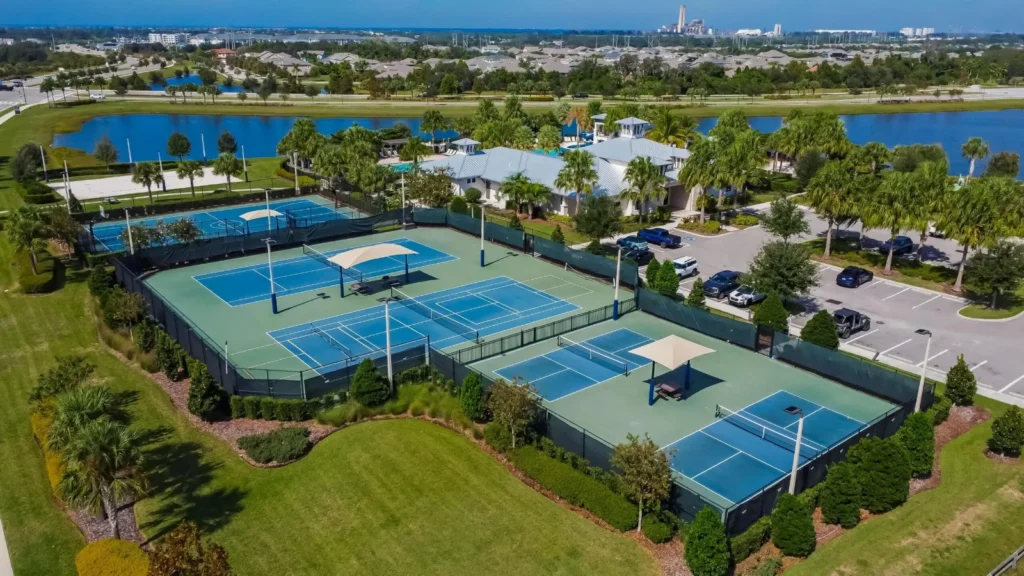
When a buyer asks me whether a home in Apollo Beach can handle a hurricane, I like to answer with real numbers instead of headlines. Hurricane Milton gave us the clearest test our area has had in decades, and the National Weather Service office in Ruskin, just down the road from Apollo Beach, recorded exactly what the wind did. The numbers are a lot more reassuring than most people expect.
How strong were Hurricane Milton’s winds in Tampa Bay?
Milton made landfall at Siesta Key on October 9, 2024 as a Category 3 storm, south of us, which put Tampa Bay on the stronger side of the storm. Even so, the highest sustained wind at Tampa International Airport was 61 mph, with a peak gust of about 96 mph. At Albert Whitted Airport in St. Pete, the sustained wind reached 67 mph with a peak gust of about 101 mph. Down at Sarasota-Bradenton International, closer to landfall, the peak gust was about 102 mph.
Here is the part that surprises people. Hurricane force starts at 74 mph of sustained wind, and none of those land stations reached it. What most homes in our area actually felt were strong gusts in the 80 to 100 mph range for a few hours.
What about Helene and Idalia?
Both of those storms passed offshore to our west. During Helene in September 2024, Tampa International saw a peak gust of about 67 mph and Albert Whitted about 82 mph. During Idalia in August 2023, the Egmont Channel station at the mouth of Tampa Bay peaked at about 62 mph. Helene’s real story here was storm surge, not wind, which is why I always talk about elevation and flood zones alongside windows and roofs.
What wind are homes in Apollo Beach built to handle?
Homes in Hillsborough County are designed for wind speeds of 130 mph and up under the Florida Building Code, and that design speed is measured as a 3-second gust. That is the apples to apples comparison with the peak gusts above. Milton’s strongest gusts at our airports, about 96 to 101 mph, landed well below what a home built to today’s code is designed for. That is a lot of cushion.
Why do homes built after 2002 matter so much?
Florida’s first statewide building code took effect on March 1, 2002. From that day on, every coastal home built here had to come with protected openings, meaning impact rated windows and doors or approved hurricane shutters. The large-missile impact test those products had to pass, a 9-pound 2×4 fired at the glass, has not changed since. So a home built in 2005 or 2010 is not “behind” just because its windows look slimmer than the newest ones. Its openings were impact rated for their date, and that is real protection.
How often does a major hurricane hit Tampa Bay directly?
Rarely. The last direct hurricane landfall in Tampa Bay was in October 1921, more than a hundred years ago. Our geography helps us, because a storm has to come in from a very particular direction to strike the bay head on. That does not mean we skip preparation. It means that when you choose a well built home and have a good plan, living here is very manageable.
What should a buyer actually check?
Start with the year the home was permitted. Then ask for the current wind mitigation report, which shows the roof attachments, roof shape and opening protection, and can lower your insurance premium. Look for the etched marks on impact glass or the shutters and panels that came with the house, and keep any product approval paperwork in one place. Finally, check the elevation and flood zone, because in our area water usually matters more than wind. My Apollo Beach flood zone guide walks through that part.
If you are looking at a home and want help reading its wind mitigation report or figuring out what protection it already has, send me the address. I would also love to hear how you picture life here. Are you dreaming of mornings on the dock, or a lock and leave home you can close up easily when you travel? That answer shapes which home and which protection fits you best.
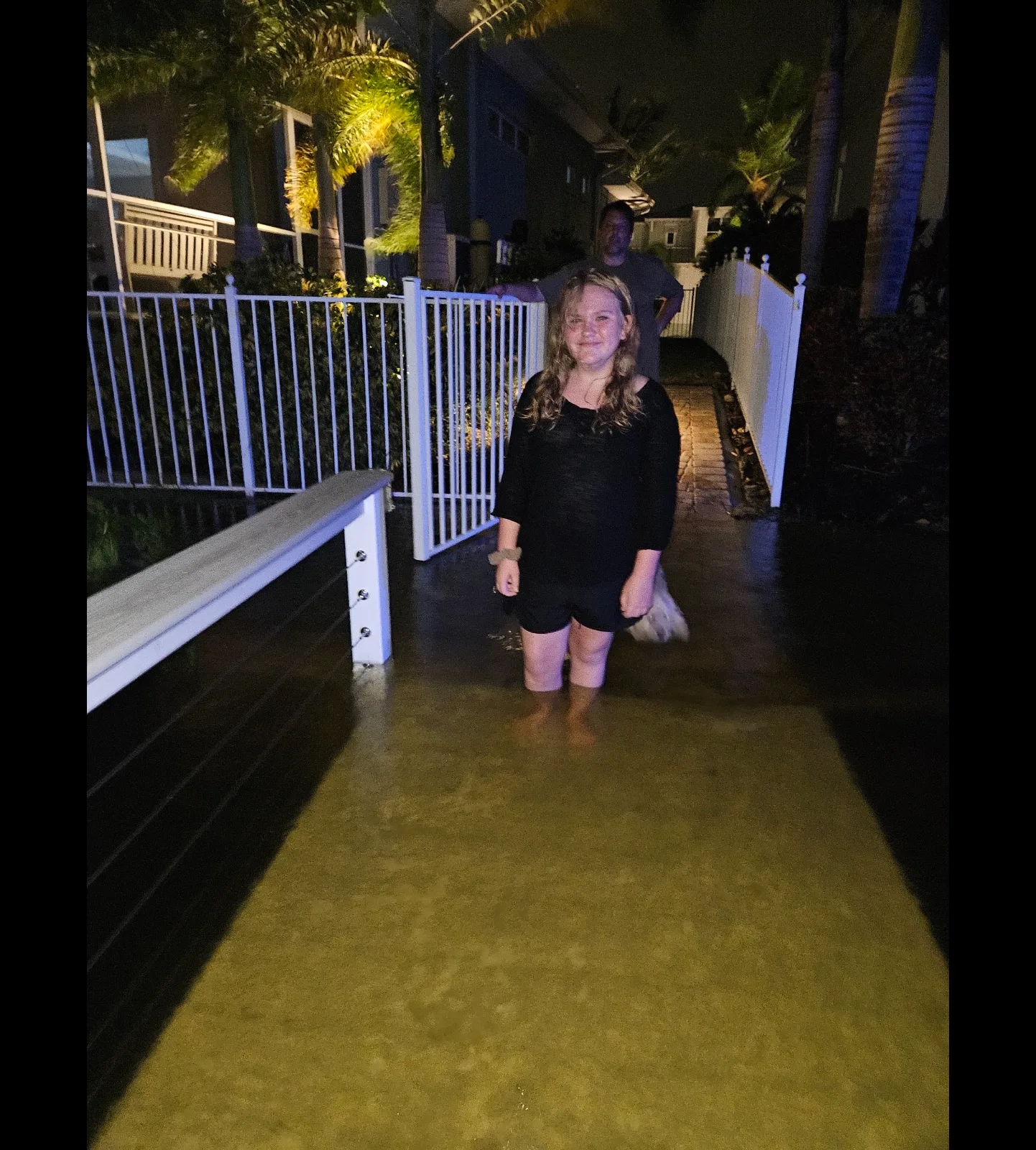
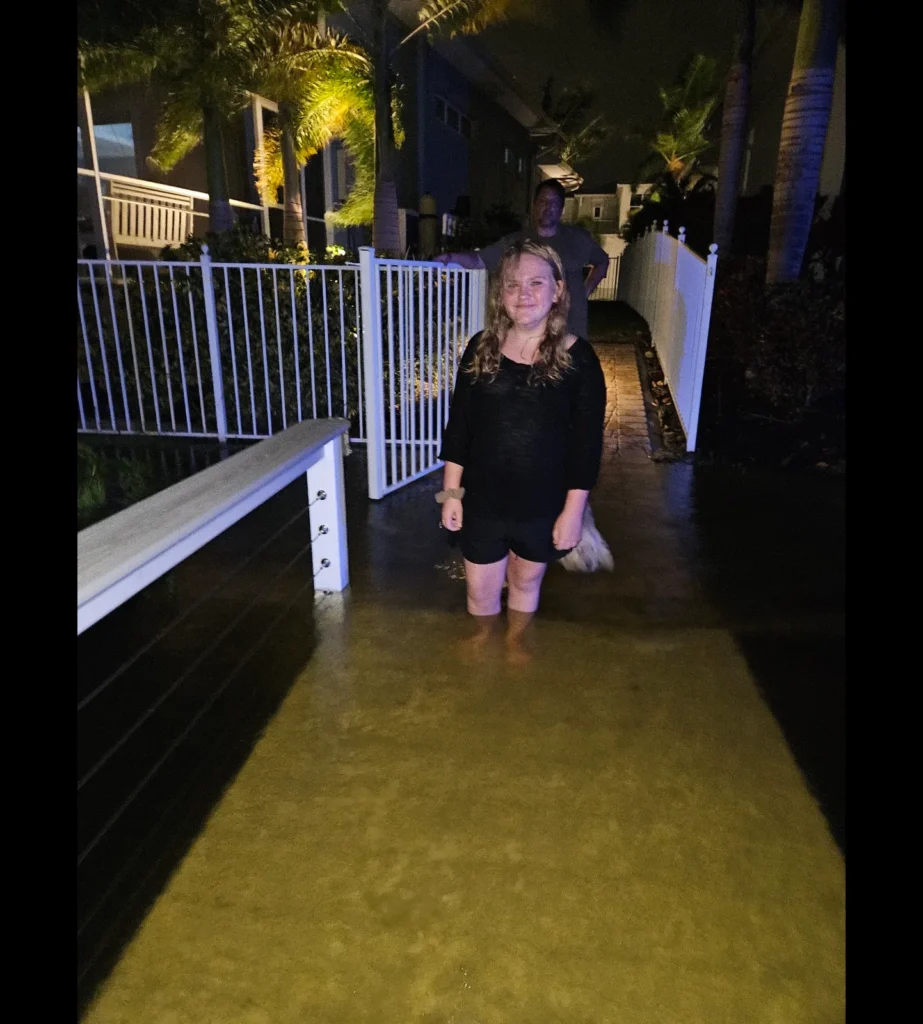
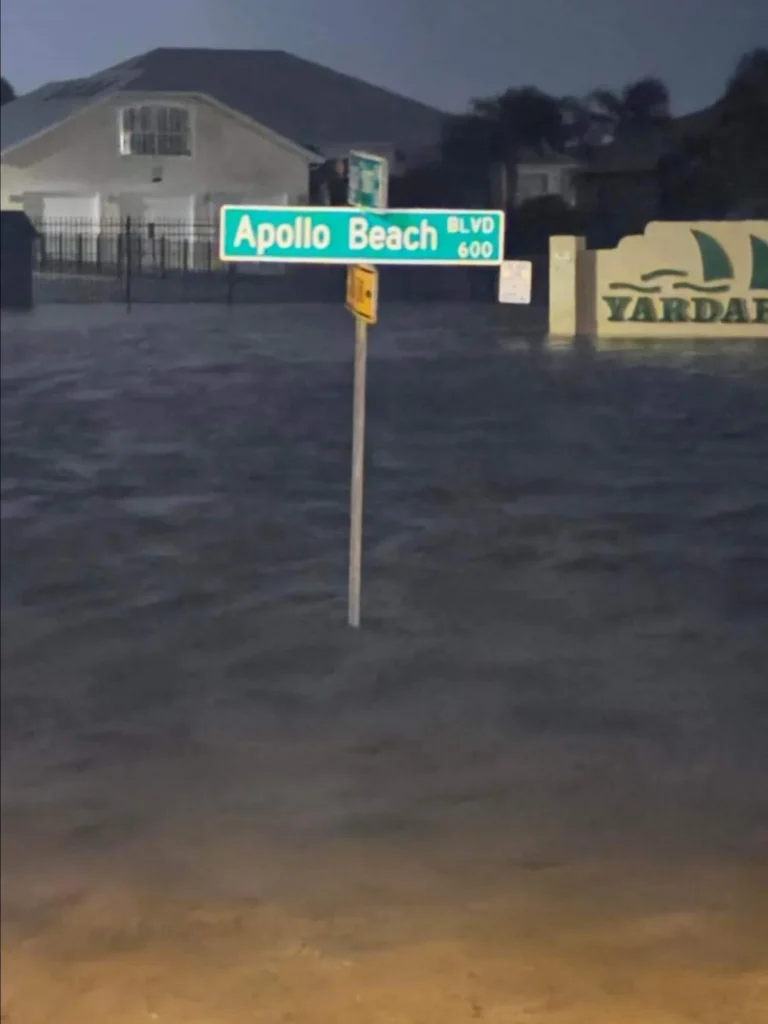
The night Helene came through, the surge came right up over our dock. That is Sophia standing in it. And the question I get more than any other from buyers moving here is the one that picture raises: “Is Apollo Beach in a flood zone?”
It is a fair question, and I love answering it, because the honest answer is more helpful than people expect.
Is Apollo Beach in a flood zone?
Parts of it are. Here is the rule I give everyone. Stand on US Highway 41 and look west, toward the water. That side is in a flood zone, so plan on flood insurance. Look east, and you are generally out of one. A couple of streets and a few communities east of 41 are still mapped Zone AE, and most of the rest is Zone X. That one rule tells you most of what you need to know.
What did Helene actually do here?
Older waterfront homes surrounded by storm surge.
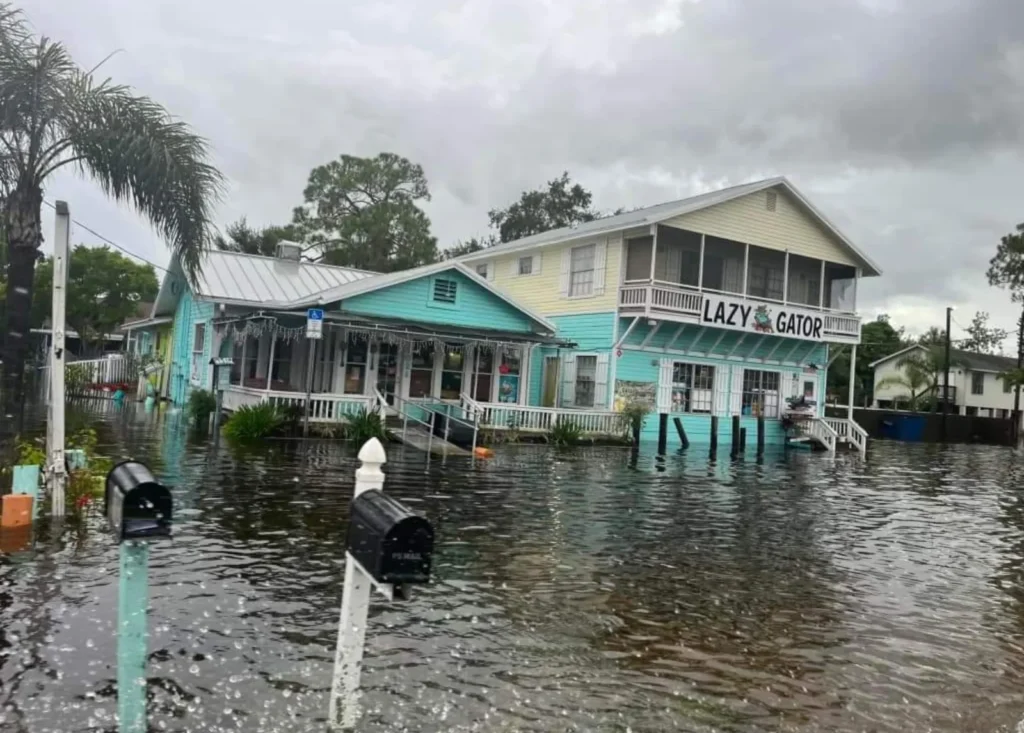
Helene’s surge came in at 4 to 6 feet at most, and really closer to 4. It was devastating for the older, lower parts of Apollo Beach. Streets like Apollo Beach Blvd sat under water, and afterward the curbs in those neighborhoods filled up with drywall and flooring.
Apollo Beach Blvd under water.
The communities built after 2000 were a different story. They sit at about 10 feet, and they were not impacted. You barely feel the hill when you drive between the two, but it is about six feet, and it made all the difference.
Why does elevation matter so much?
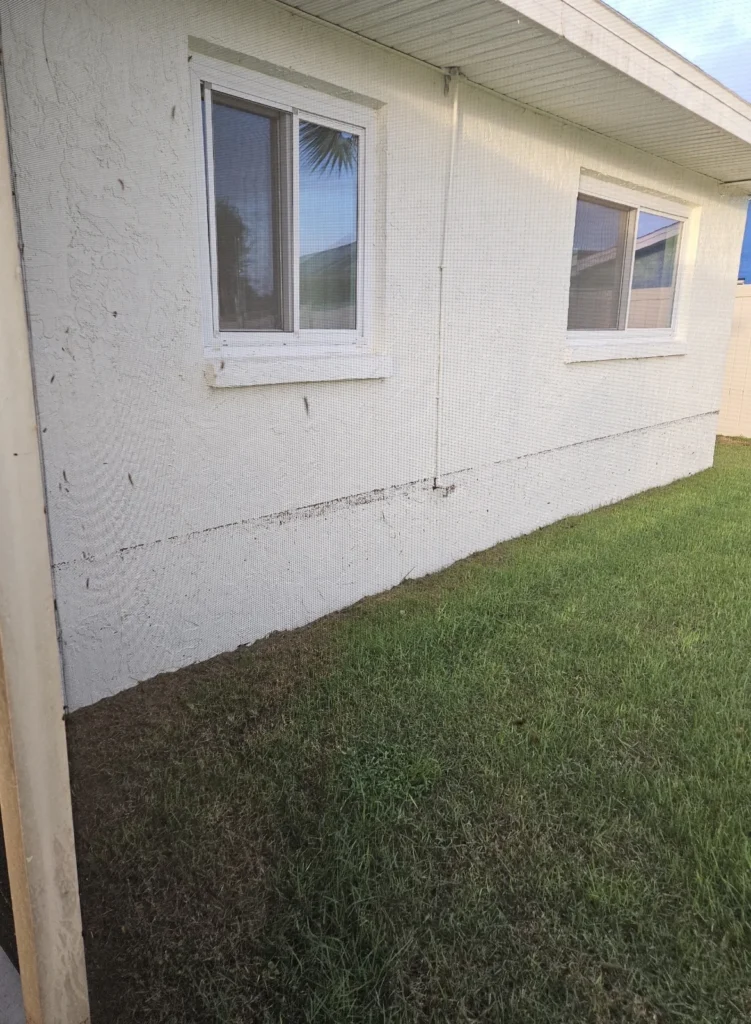
A flood water line on an older, lower home.
The original Apollo Beach was built where it landed, at roughly 1, 2 and 4 to 6 feet above sea level. The communities built from about 2000 on were raised to about 10 feet. That one difference is why two homes a few streets apart can both be in a flood zone and still be completely different to own and to insure. Since the 2002 Florida Building Code, new coastal homes need impact rated windows and doors or approved shutters, and either one helps your premium too.
So being in a flood zone is usually not the deal breaker people fear. What you want to know is how high the house sits, when it was built, and what the elevation certificate says.
What should you check before you make an offer?
Is flood insurance required by your lender, and what does the seller pay now?
Is there an elevation certificate? It is often the single most useful document for pricing flood insurance.
Has the home had any flood claims or storm damage?
Does it have impact windows and doors, or shutters?
Which evacuation zone is it in, and what is your route out to 41? Hillsborough County updated the zones for 2026, so check even if you looked last year.
Get the free Apollo Beach Flood Zone Guide
I put everything I tell buyers into one free guide: the US 41 rule, how elevation and the year a home was built affect your insurance, what Helene did here, my hurricane prep checklist and the new 2026 Hillsborough County evacuation zone map.
And if there is an address you are curious about, send it to me. I will pull the flood zone, the elevation and the insurance picture for you. I would love to hear what you are picturing, too. Is it a boat in the backyard, or a pool on a quieter street a little closer to 41?
If you are trying to determine whether you can afford a home in Apollo Beach, the mortgage payment is only the starting point.
The real cost depends on the home itself, its flood exposure, the age of the roof and major systems, whether it is in an HOA or Community Development District, whether it has a pool, and whether it sits on the water. Your cars, storage habits, landscaping expectations, and boating lifestyle matter too.
This is why two Apollo Beach homes with the same price can have very different monthly carrying costs. One may have newer construction, a CDD, lower routine maintenance, and resort-style amenities. Another may have no CDD but require more private upkeep. A waterfront property may offer an incredible boating lifestyle while adding flood coverage, seawall, dock, lift, mangrove, and boat-maintenance expenses.
The goal is not to make Apollo Beach sound expensive. It is to help you compare homes based on the complete lifestyle and budget instead of the list price alone.
The short answer: What should you include in an Apollo Beach housing budget?
In addition to principal and interest, plan for:
Property taxes based on what you are likely to pay after the purchase
Homeowners insurance
Flood insurance when required or advisable
HOA dues and CDD assessments
Electricity, water, sewer, trash, internet, and irrigation
Air-conditioning service and Florida-specific home maintenance
Lawn, fertilizer, pest, pool, and landscaping services
Roof, exterior, window, and storm-protection reserves
Waterfront expenses such as seawall, dock, lift, mangrove, boat, and fuel costs
Automobile insurance, which tends to cost more in Florida
Storage and lifestyle adjustments that many people overlook before moving south
The correct total is property-specific. Never rely only on a listing portal’s estimated payment, the seller’s current tax bill, or a generic online insurance average.
Property taxes: Do not budget from the seller’s current bill
This is one of the biggest surprises for buyers moving to Florida.
A longtime Apollo Beach owner may have a much lower tax bill than a buyer will have after purchasing the same home. Florida’s Save Our Homes benefit limits annual increases in the assessed value of a homesteaded property to the lower of 3% or the change in the Consumer Price Index. It does not freeze the tax bill, and it does not cap the tax rate itself.
When ownership changes, the property’s capped assessment generally resets to market value as of the following January 1. The new owner may then apply for homestead exemption, and eligible Florida homeowners may be able to transfer, or “port,” part of their Save Our Homes benefit from a prior Florida homestead.
That explains why two similar homes on the same street can show very different tax bills. The owner with the lower bill may simply have owned and homesteaded the property for many years. That low assessment does not automatically transfer to the buyer.
The Hillsborough County Property Appraiser specifically warns that a change in ownership resets assessed value to full market value. Before making an offer, estimate taxes using the expected purchase price, intended exemptions, and any portability benefit rather than copying the seller’s current payment.
CDD and HOA fees: Why an amenity-rich community may have a low HOA
An HOA is a private association that enforces community rules and pays for the services assigned to it. A CDD is a special-purpose unit of local government that can finance, operate, and maintain community infrastructure and amenities. CDD assessments generally appear as non-ad valorem charges on the annual property-tax bill.
In many local master-planned communities, the CDD carries much of the cost of infrastructure and major amenities. That is one reason a community can have an extensive amenity package and still charge a comparatively modest HOA fee. The CDD is not “free,” of course. Part of the community cost has simply moved to the tax bill.
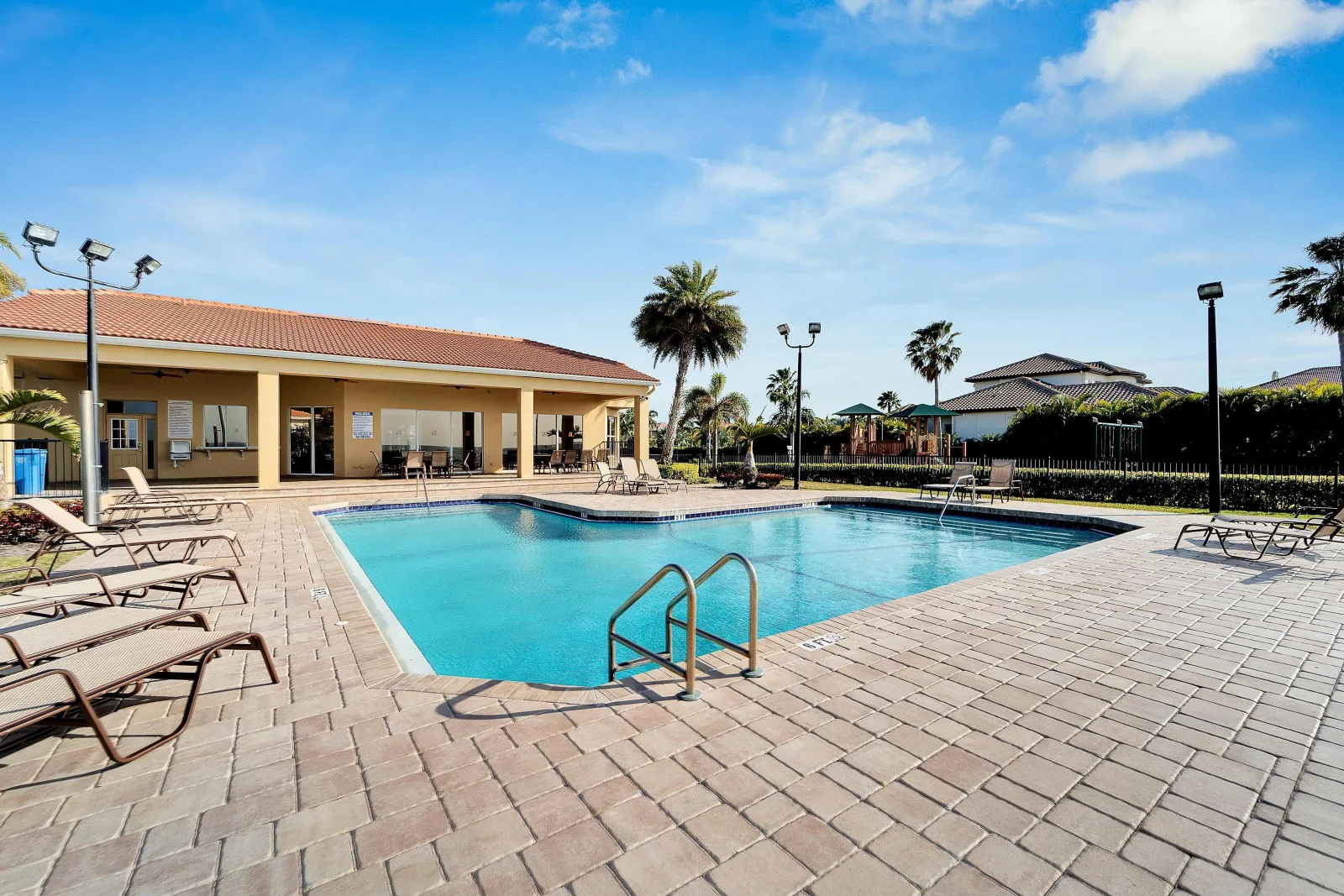
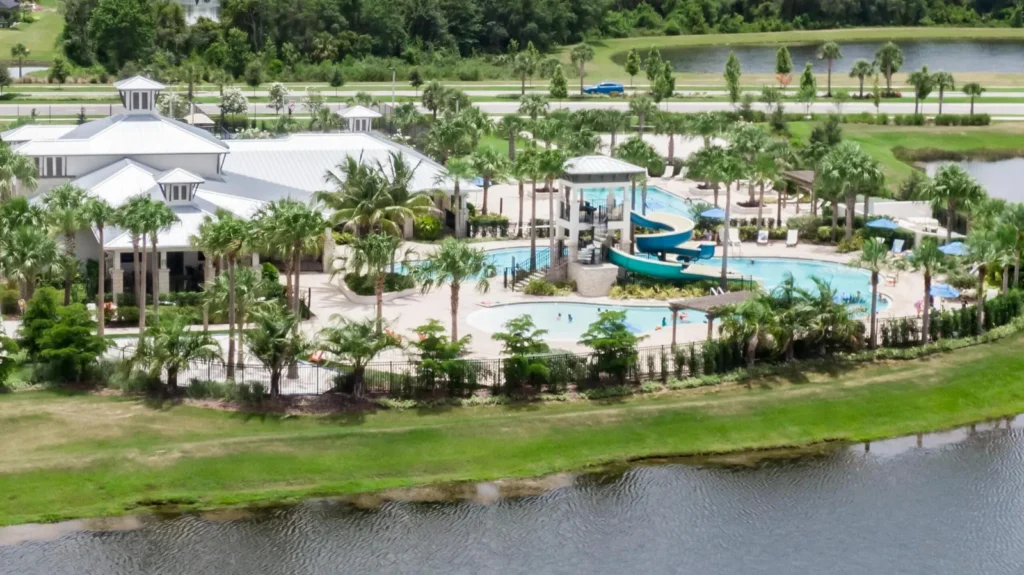
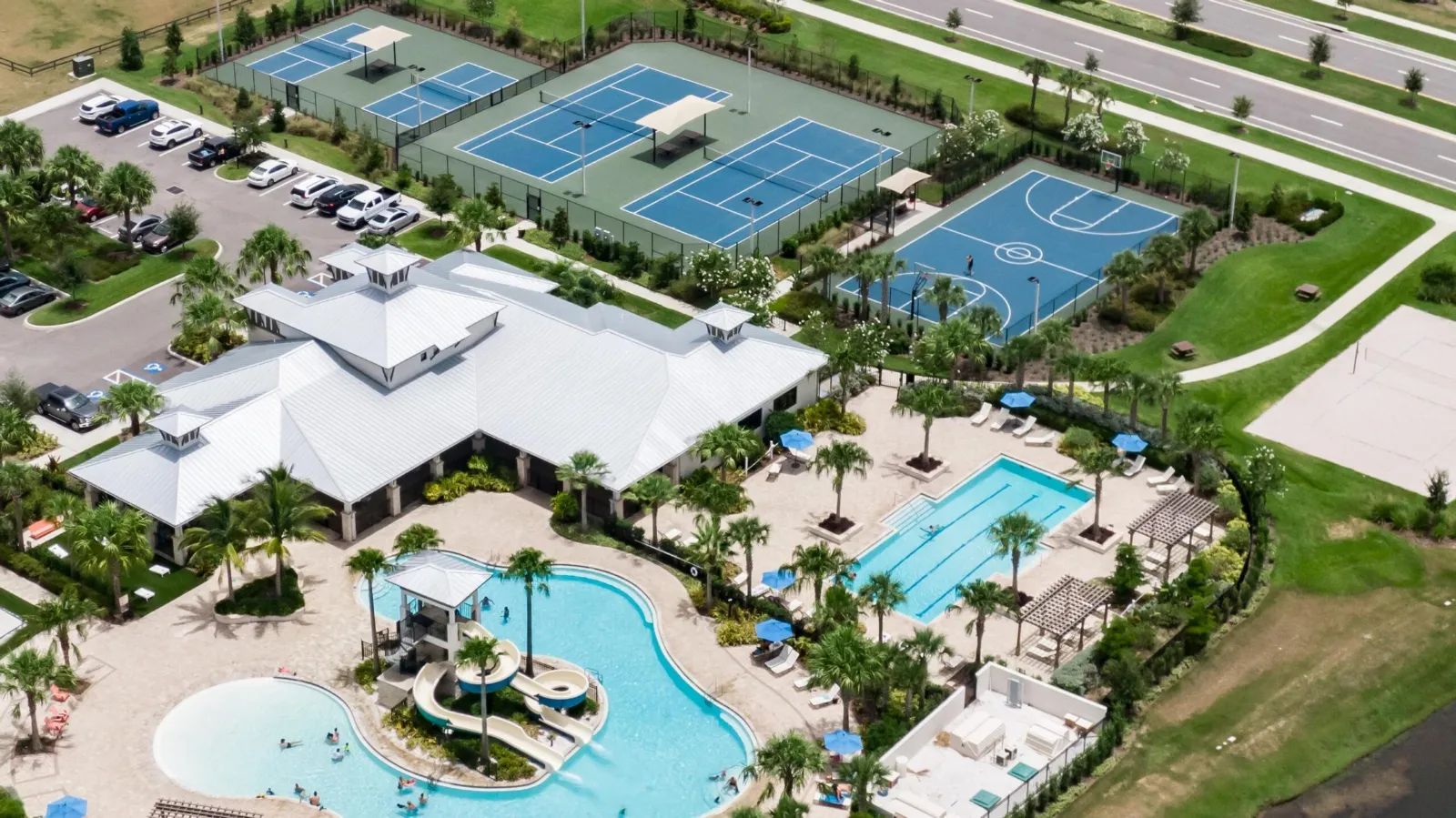
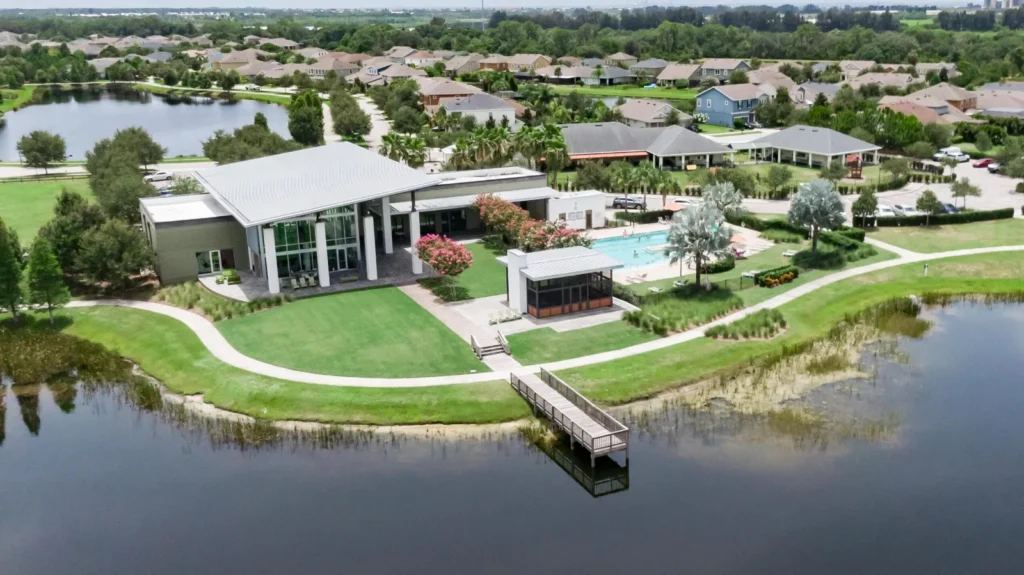
Waterset is a useful local example. The community’s own published FAQ states that it has three CDDs, a comparatively low annual HOA fee, and CDD charges that vary by home type and lot size. The community includes the kind of amenities buyers often describe as resort-style.
Here is the insider detail many buyers miss: CDD assessments are commonly allocated by a property’s assessment category, which may reflect lot width, lot size, home type, or an equivalent residential unit. They are not normally calculated as a percentage of the home’s resale price. The exact method is district-specific, so “CDD is always based on lot size” is too broad for every Florida district. In Waterset, however, home type and lot size are expressly part of the current published structure.
A larger lot or different product type can therefore carry a different CDD assessment even within the same overall community. Before comparing two homes, check the actual tax bill, identify the correct CDD, and review the district’s current assessment chart. Waterset, for example, has separate district sites and publishes adopted budgets and assessment schedules.
Also separate the CDD’s two basic cost concepts:
Debt service: Repayment of bonds used to build qualifying infrastructure
Operations and maintenance: The annual cost of operating and maintaining district facilities and services
Debt service may eventually end according to the applicable bond schedule. Operations and maintenance can continue and may change with the district budget.
Homeowners insurance: The address matters more than the average
Florida homeowners insurance can be a meaningful part of the monthly payment, but a statewide average is not a reliable quote for an Apollo Beach property.
Insurers may consider the home’s replacement cost, roof age and material, wind-mitigation features, opening protection, age and condition of electrical, plumbing, HVAC, and water-heater systems, prior claims, occupancy, and distance from the coast. A four-point inspection or wind-mitigation inspection may materially affect eligibility or premium.
The practical rule is simple: obtain a real insurance quote for the exact address before the inspection or insurance contingency expires. If the roof is older, request quotes immediately. Do not wait until the week of closing to discover that a carrier will not accept the roof or that the premium changes the debt-to-income calculation.
Impact windows, qualified shutters, roof-to-wall attachments, and other wind-mitigation features may help, but the credit depends on what an inspection documents and what the insurer recognizes.
Flood insurance: An assumable policy may be valuable, but verify the details
Flood insurance is separate from standard homeowners insurance. Whether it is required by a lender depends in part on the flood zone and loan, but a property can experience flooding outside a high-risk flood zone. Buyers should evaluate the home’s elevation, flood zone, flood history, prior claims, foundation, and storm-surge exposure even when a lender does not require coverage.
One of the most valuable and least understood opportunities is the possible assignment of an existing National Flood Insurance Program policy when title transfers. FEMA’s NFIP terminology recognizes written assignment of a policy when title transfers, subject to program rules and exceptions. FloodSmart guidance for insurance professionals also explains that building coverage may be transferred to a buyer, while the seller’s contents coverage does not transfer.
Why can that matter? Under FEMA’s risk-based pricing transition, an existing policy may still be moving gradually toward its full-risk premium. Statutory limits generally restrict how much many NFIP premiums can increase in a single year. If the policy is eligible for assignment, the buyer may be able to continue that policy’s existing transition path instead of immediately starting with a new policy at the current full-risk amount. On the right property, the difference can be meaningful.
However, buyers should not assume that every flood policy transfers or that a seller’s low premium is guaranteed to remain unchanged. Private flood policies follow their own contracts. NFIP policy assignment, coverage limits, elevation information, claims history, lender requirements, and future premium path must be confirmed in writing with the insurance agent or carrier.
Before relying on an existing policy, ask for:
The current declarations page
Confirmation of whether the policy is NFIP or private
Written confirmation that the policy can be assigned
The current premium and renewal date
Building and contents coverage details
Deductibles
Claims history and available flood-loss information
The elevation certificate, if available
A projection of the buyer’s premium after assignment
A separate new-policy quote for comparison
Do this before the offer or during the inspection period. An older, favorably transitioning NFIP policy may be an asset, but only after it is verified.
Car insurance belongs in the relocation budget too
Buyers often price the house, taxes, and homeowners insurance but forget to re-quote their automobiles before moving to Florida.
Florida vehicle coverage can be substantially different from what a household paid in another state. The Florida Legislature’s 2025 insurance analysis reported that Florida had the country’s highest average annual cost for minimum motor-vehicle coverage at the time, citing an average of $1,529 per vehicle. More recent marketplace data published by Experian in September 2026 estimated average Florida full coverage at approximately $2,738 per year, or $228 per month, although the actual cost varies widely by driver, vehicle, ZIP code, limits, deductibles, mileage, and claims history.
There has been some improvement. The Florida Office of Insurance Regulation reported that the state’s five largest auto-insurance groups indicated an average rate change of negative 6.5% for 2025 after much larger increases in earlier years. Even so, “rates are improving” does not mean your Florida quote will match what you currently pay elsewhere.
Get an Apollo Beach quote for every household vehicle before finalizing the relocation budget. Match the same liability limits and deductibles for a fair comparison.
Electricity, air conditioning, water, and irrigation
Air conditioning is not a seasonal luxury here. It is part of everyday home operation for much of the year, and it also helps control indoor humidity.
Electric costs vary with square footage, ceiling height, insulation, window exposure, thermostat preferences, HVAC efficiency, pool equipment, electric-vehicle charging, and whether the home has solar panels. Pool pumps, older HVAC systems, and large waterfront homes can change the bill substantially.
Ask the seller for the most recent 12 months of electric bills when possible. One summer bill is not enough, and an average from a vacant home may not reflect your household.
Water costs also depend on the property. A home with irrigated landscaping, a pool, several occupants, or a separate irrigation source will operate differently from a smaller low-maintenance property. Confirm whether the home uses public water and sewer, septic, reclaimed water, a well for irrigation, or another setup.
The Florida service list many relocating buyers do not expect
You can perform many of these tasks yourself, but owners often build a network of recurring service providers that they did not routinely use before moving to Florida.
Depending on the home and lifestyle, that list may include:
Lawn mowing and edging
Fertilizer and weed treatment
Interior and exterior pest control
Termite monitoring or treatment
Pool cleaning and chemical service
Periodic palm and landscape trimming, which may be separate from weekly lawn service
Irrigation inspection and repair
Air-conditioning maintenance
Housecleaning
Exterior and window washing
Roof and gutter cleaning where appropriate
Pressure washing for driveways, lanais, cages, and exterior surfaces
Mangrove trimming by a qualified provider when legally permitted
Boat refueling or mobile fuel delivery
Annual and scheduled boat, engine, lift, and dock maintenance
Not every homeowner hires every service. The point is to decide which jobs you will realistically do yourself and price the rest before choosing the home.
A pool home with extensive landscaping may require multiple vendors. The company that cuts the lawn may not fertilize it, treat pests, repair irrigation, or perform periodic landscape trimming. A clean weekly lawn bill can therefore represent only one part of the outdoor-maintenance budget.
Waterfront living has its own operating budget
Waterfront ownership is not just a higher purchase price. It may include ongoing and long-term costs for:
Seawall inspection, repair, and eventual replacement
Dock and decking maintenance
Boat-lift service and replacement components
Electrical and water service at the dock
Mangrove management under applicable rules
Boat insurance
Fuel or mobile refueling
Engine service and annual maintenance
Bottom cleaning, detailing, storage, or marina costs when applicable
Storm preparation and post-storm inspection
The best waterfront value is not necessarily the least expensive house. A property with the right canal depth, route to the bay, bridge clearance, seawall, permitted dock, correctly sized lift, and documented maintenance may be less expensive to own than a cheaper property that requires major marine work.
Storage and groceries: A lifestyle cost most relocation guides miss
Florida homes generally do not have basements, and many homes offer less interior storage than buyers are accustomed to in other parts of the country. Garages are valuable, but heat and humidity can make them a poor place for certain papers, fabrics, electronics, photographs, wine, and temperature-sensitive belongings.
This matters if you are moving from a home with a basement, large attic, oversized pantry, or extensive seasonal storage. You may need to:
Downsize before moving
Add garage cabinetry or climate-conscious storage
Rent an off-site storage unit
Choose a home with a larger pantry, closets, attic access, or three-car garage
Shop in smaller quantities because there is less space to store bulk purchases
Apollo Beach has everyday grocery options, but large-scale bulk shopping is less convenient than living beside a warehouse club. Many residents make planned trips outside the immediate area or shop more frequently for fresh food and smaller quantities.
That adjustment is not necessarily negative. Having fewer things can be liberating, especially when your Florida lifestyle shifts toward the lanai, pool, boat, and outdoors. It is simply better to make the decision intentionally than to discover after closing that everything from the basement does not fit.
Same-day and drone delivery are changing convenience in South Shore
South Shore’s location near major distribution facilities can make same-day delivery available for many items, depending on inventory and the delivery address.
Amazon also launched Prime Air drone delivery from Ruskin in 2026. Amazon says a hub can serve nearby communities within a limited radius, and current operations depend on exact address eligibility, item size and weight, daylight, and suitable weather. That means parts of the Apollo Beach area may qualify, but buyers should enter the exact address in Amazon rather than assume every home is eligible.
It is a genuine convenience for small, urgent purchases. It does not replace normal grocery planning, larger-item delivery, or the need to consider local storage.
A practical Apollo Beach cost worksheet
Before making an offer, calculate the following for the exact property:
Cost category
What to verify
Mortgage
Loan amount, rate, term, mortgage insurance, and lender fees
Property taxes
Estimated post-sale assessment, homestead eligibility, portability, and current millage
CDD
Correct district, lot or product category, debt service, operations and maintenance, and bond schedule
HOA
Current dues, what they include, pending increases, and special assessments
Homeowners insurance
Address-specific quote based on roof, systems, wind mitigation, and replacement cost
Flood insurance
Flood zone, elevation, history, NFIP or private quote, and possible policy assignment
Auto insurance
Florida quote for every vehicle using matching coverage limits
Electricity
Twelve months of bills, HVAC age, pool equipment, solar, and EV charging
Water and irrigation
Utility type, occupancy, pool, irrigation source, and landscaping
Routine service
Lawn, fertilizer, pests, termites, pool, HVAC, cleaning, windows, and pressure washing
Home reserves
Roof, HVAC, appliances, paint, storm protection, and general repairs
Waterfront reserves
Seawall, dock, lift, mangroves, boat insurance, fuel, and maintenance
Storage and shopping
Downsizing, shelving, storage unit, pantry capacity, and bulk-shopping trips
So, is Apollo Beach expensive to own?
Apollo Beach can offer tremendous value for buyers who want Tampa Bay access, boating, newer master-planned communities, resort-style amenities, pools, and more home than they may find closer to downtown Tampa or St. Petersburg.
But the smartest comparison is not simply Home A at $600,000 versus Home B at $600,000. It is the complete cost and lifestyle:
Which property will be easier to insure?
What will the buyer’s taxes be after reassessment?
Does the CDD fund amenities you would otherwise pay for elsewhere?
Is the lower HOA truly lower, or is part of the community cost on the tax bill?
Will you maintain the lawn and pool yourself?
Does the waterfront infrastructure already fit your boat?
How much storage do you actually need?
Are you prepared for higher auto insurance and a different pattern of home services?
When you compare those answers, the least expensive home to buy and the best home to own are not always the same property.
Frequently asked questions
Are CDD fees in Apollo Beach based on lot size?
Often, but the exact assessment methodology is district-specific. Waterset states that its CDD fees vary by home type and lot size. Other districts may use lot width, unit type, equivalent residential units, or another benefit-based category. Verify the property’s actual assessment and district schedule.
Why can a CDD community have a low HOA fee?
The CDD may finance or maintain infrastructure and amenities that would otherwise fall to the HOA. This can allow the HOA dues to remain comparatively low while the community offers extensive or resort-style amenities. Buyers must add both the HOA and CDD to understand the total cost.
Will I pay the same property taxes as the seller?
Probably not. A longtime homesteaded owner may have a capped assessed value under Save Our Homes. After a sale, the assessed value generally resets to market value the following January 1. Estimate taxes based on the purchase and your own exemptions or portability.
Can I assume the seller’s flood insurance policy and rate?
Some NFIP building policies may be assigned when title transfers, subject to program rules. This may preserve the policy’s existing transition toward the full-risk premium and can produce meaningful savings. It is not automatic. Confirm eligibility, premium, coverage, claims, and future increases in writing with the agent or carrier.
Is car insurance more expensive in Florida?
It often is. Florida has ranked among the country’s most expensive states for vehicle insurance, although recent rate filings have shown some improvement. Obtain address-specific quotes for every vehicle before moving.
What home services should I budget for in Apollo Beach?
Common services include lawn care, fertilizer, pest and termite service, pool service, landscaping, irrigation, HVAC maintenance, cleaning, window washing, and pressure washing. Waterfront owners may also need mangrove, dock, lift, seawall, refueling, and boat-maintenance providers.
Before you tour an Apollo Beach home
Send us the address before you tour. The Calvert Home Team can help you identify the questions to ask about taxes, HOA and CDD charges, flood zone, elevation, insurance, roof age, utilities, seawall, dock, lift, canal access, and whether the home fits your budget, boat, and lifestyle.
Property-specific details, insurance, taxes, permits, community fees, flood information, and boating conditions must always be independently verified before you rely on them.
If you have been searching online for an Apollo Beach waterfront home with a pool, dock, boat lift, beautiful updates and direct access to Tampa Bay for less than $1 million, you have probably seen a few results that make it look possible.
Here is the honest answer: you should not build your expectations around them.
An unusually low-priced listing may be a short sale, a major renovation project, a condo, a home without truly navigable water, or a property missing one or more of the features you assumed were included. Sometimes a legitimate outlier appears. That does not make it a realistic description of the broader Apollo Beach waterfront market.
I sell more than 50 waterfront homes a year, and the most helpful thing I can do for a buyer is explain what the different price ranges actually buy before we waste a weekend touring homes that cannot deliver the lifestyle they want.
What does an Apollo Beach waterfront home really cost?
The short answer is that Apollo Beach waterfront home prices start around $550,000 for genuinely navigable water, but the complete boating lifestyle most buyers picture generally costs considerably more.
Approximate budget
What buyers should realistically expect
Around $550,000
An older, smaller and dated home on navigable water, generally without a pool and with limited storage or living space
About $750,000–$980,000
More space, renovations or a pool may become possible, especially outside amenity communities, but buyers should expect tradeoffs
Around $1 million and above
Entry into more community waterfront choices, although a pool, private dock, boat lift, updates and ideal bay access rarely all arrive together at the bottom of this range
About $1.2 million–$1.9 million
The range where buyers are more likely to find a well-finished home in a well-maintained community with the pool, dock, lift, boating access and updates they actually want
These are practical expectations, not appraisal ranges or promises about a particular property. Waterfront value can change dramatically based on the canal, boat route, bridge clearance, elevation, seawall, dock, lift, home condition and neighborhood.
What can approximately $550,000 buy on navigable water?
It is sometimes possible to buy an Apollo Beach home with navigable access to Tampa Bay for around $550,000.
Entry-level waterfront: an older canal home on navigable water, no HOA, no pool.
At that price, expect substantial compromises. The home may be much older, smaller and outdated. It may have limited closet space, an older floor plan, deferred improvements and no pool. The seawall, dock, lift, roof, electrical system, plumbing, flood history and insurance options all need careful investigation.
For the right buyer, that can still be a wonderful opportunity. Some people care far more about keeping a boat behind the house than having a large kitchen or modern primary suite. The mistake is expecting an entry-level waterfront price to deliver both the premium land and a fully renovated home.
At this level, you are usually buying the water first and the house second.
What changes between approximately $750,000 and $980,000?
This range can open the door to a larger home, meaningful renovations, a pool or a better overall waterfront setup. It does not automatically buy every one of those things at once.
Mid-range: a no-HOA canal home with a pool, and no fixed bridges between the dock and the bay.
Many homes in this range are located in older canal neighborhoods with little or no homeowners-association oversight. Some buyers love that freedom. They may want fewer restrictions on boats, vehicles, rentals or how they use their property.
That freedom comes with a tradeoff. Neighboring homes can vary widely in condition and use, and short-term rentals may be possible where permitted by local law. The same lack of uniform standards that gives an owner flexibility can also make resale values less predictable and limit how high prices rise compared with a consistently maintained gated or amenity community.
This does not make these neighborhoods undesirable. It makes them a different product. Buyers should decide whether they value fewer restrictions more than community amenities, appearance standards and a more consistent resale environment.
Can I get a pool, dock, boat lift, updates and Tampa Bay access for under $1 million?
You should assume that you cannot, particularly if you also want a desirable community with amenities.
Could one unusual property appear? Yes. Real estate always produces exceptions. It may be a distressed sale, need significant work, have an inferior water route, carry an issue that is not obvious in the first photograph, or simply be priced aggressively enough to attract immediate competition.
That exception should not become your buying plan.
If your non-negotiable list includes all of the following, a sub-$1 million budget will usually require you to change either the location, condition, size or feature list:
Navigable access to Tampa Bay
A private pool
A private dock
A boat lift with the right weight capacity for your boat
Attractive, current renovations
Comfortable square footage and storage
A well-maintained community
Community amenities
Online search tools often suggest that this entire package exists for less because the word waterfront covers many very different properties.
Why online real estate apps create unrealistic expectations
On a property-search website, “waterfront” may describe a saltwater canal, freshwater pond, lake, retention area, lagoon, community waterfront or simply a water view. It does not necessarily mean you can keep your boat behind the house and reach Tampa Bay.
The seawall, the dock and the lift’s weight capacity are the things a listing photo will not tell you.
A “dock” may be private, shared, community-owned, unusable for your boat or located somewhere other than directly behind the home. A lift may not carry the weight of your boat. A canal may become difficult at low tide. A bridge may prevent the boat you own from reaching open water.
The route from the dock out to Tampa Bay. This is the part a listing never shows you.
Search results can also mix together:
Single-family homes, condos and manufactured homes
Navigable and non-navigable water
Private docks and community docks
Homes with lifts and homes where a lift might be allowed
Pools located at the property and community pools
Active, pending, distressed and stale listings
Updated homes and properties needing major renovation
That is why a low price in a search result is not proof that the complete lifestyle exists at that price. The individual property has to be investigated.
What does $1.2 million to $1.9 million buy?
This is where the search becomes more realistic for buyers who want an attractive home in a cared-for community along with a private pool, dock, boat lift, navigable access and meaningful updates. In Apollo Beach that usually means MiraBay, Symphony Isles or Andalucía.
The complete package: pool, lagoon frontage, a dock with a lift and a clear route out to Tampa Bay.
The final price still depends on taste and the details. A larger custom home, wider water view, shorter route to the bay, newer seawall, higher-capacity lift, better elevation, extensive renovation or premium lot can push the price toward the upper end or beyond it. In an amenity community, budget for the CDD as well as the HOA.
Buyers in this range generally have more control over their choices. Instead of asking, “Which major feature do I have to give up?” they can spend more time deciding which home, community and boating setup fit them best.
What if my budget is lower?
You can still buy a great Apollo Beach home. The key is adjusting the correct expectation.
A newer home in an amenity community is one of the trades buyers make when the private dock does not fit the budget.
You might choose:
Navigable water without a pool
A smaller or older waterfront home that you improve over time
A pool home off the water with access to a community boat ramp or marina
A waterfront condo or villa instead of a detached house
A home with a water view rather than private boating access
A newer home in an amenity community without a private dock
A nearby community where your money buys a different balance of features
There is nothing wrong with making a compromise. The expensive mistake is buying before you understand which compromise you are making.
Questions to answer before touring Apollo Beach waterfront homes
Before I build a waterfront search for a buyer, I want to know:
What kind of boat do you own or plan to own?
What are its length, beam, draft, height and loaded weight?
Must the boat remain behind the house?
Is a private pool required, or would a community pool work?
Are renovations required, or would you update the home gradually?
Do you want a gated or amenity community?
How much do neighborhood rules and appearance standards matter to you?
Are you comfortable with a neighborhood where short-term rentals may be allowed?
Have you budgeted for flood insurance, homeowners insurance, seawall and dock maintenance, HOA fees and possible CDD assessments?
Which matters more: the best house, the best community or the best boating access?
Those answers tell us far more than checking the “waterfront” box on an app.
The honest Apollo Beach waterfront search
Apollo Beach offers an extraordinary boating lifestyle, but waterfront homes are not interchangeable. Two houses with similar square footage and asking prices can have completely different boat access, insurance considerations, neighborhood environments and long-term resale potential.
My job is not to convince you that every waterfront listing is a good opportunity. It is to identify which properties genuinely match your boat, budget, lifestyle and expectations, and to tell you when something that looks attractive online does not hold up in person.
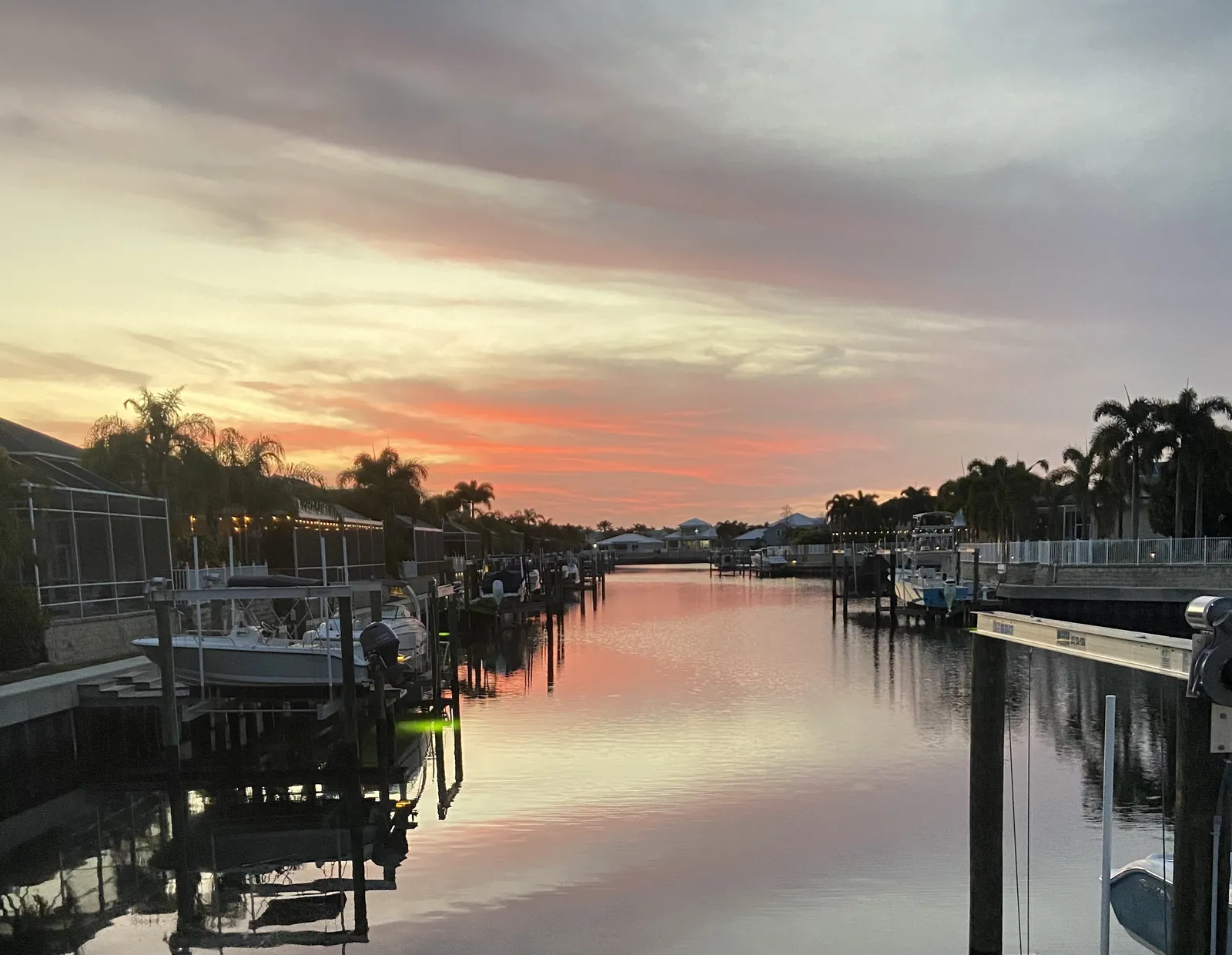
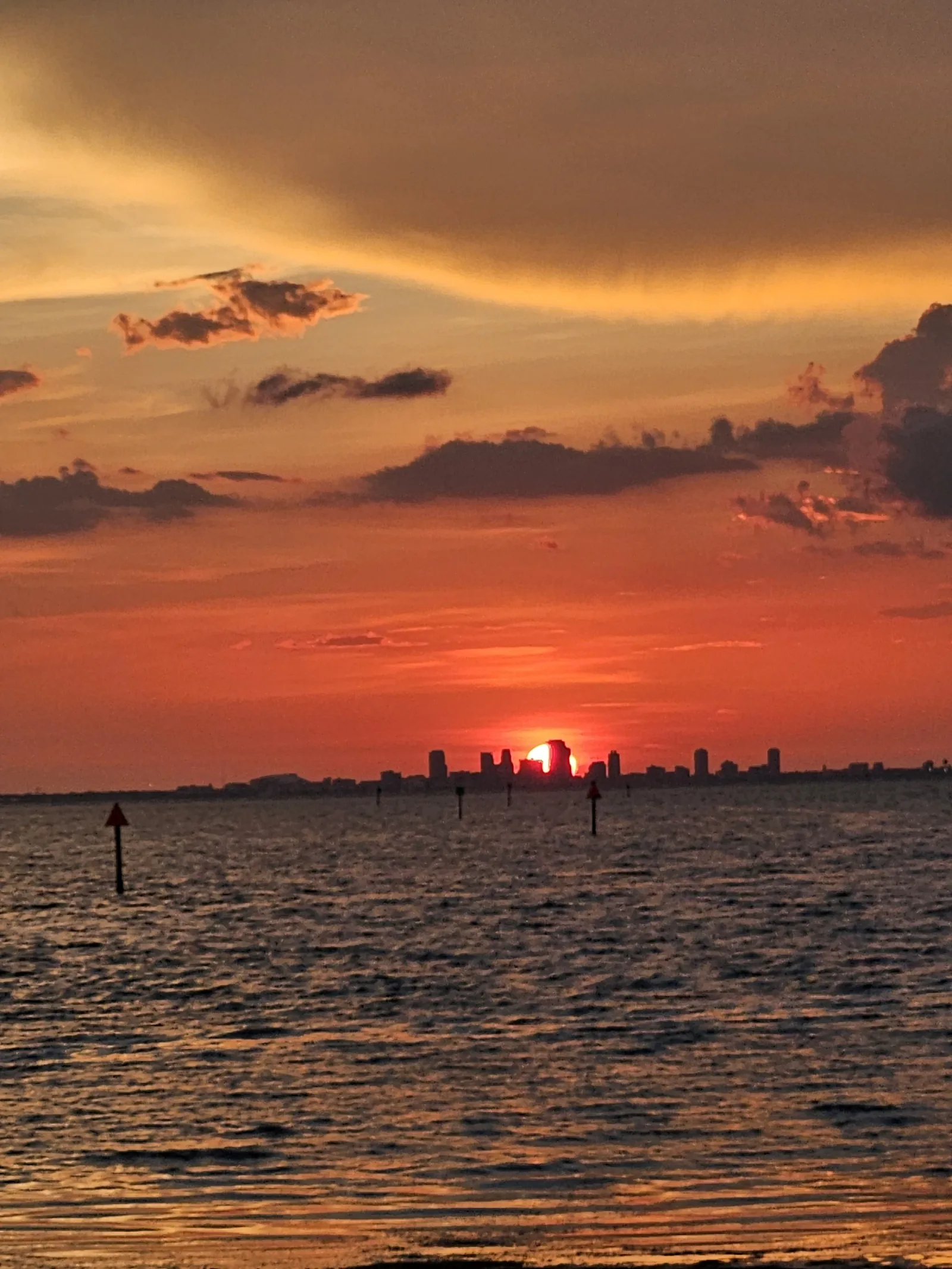
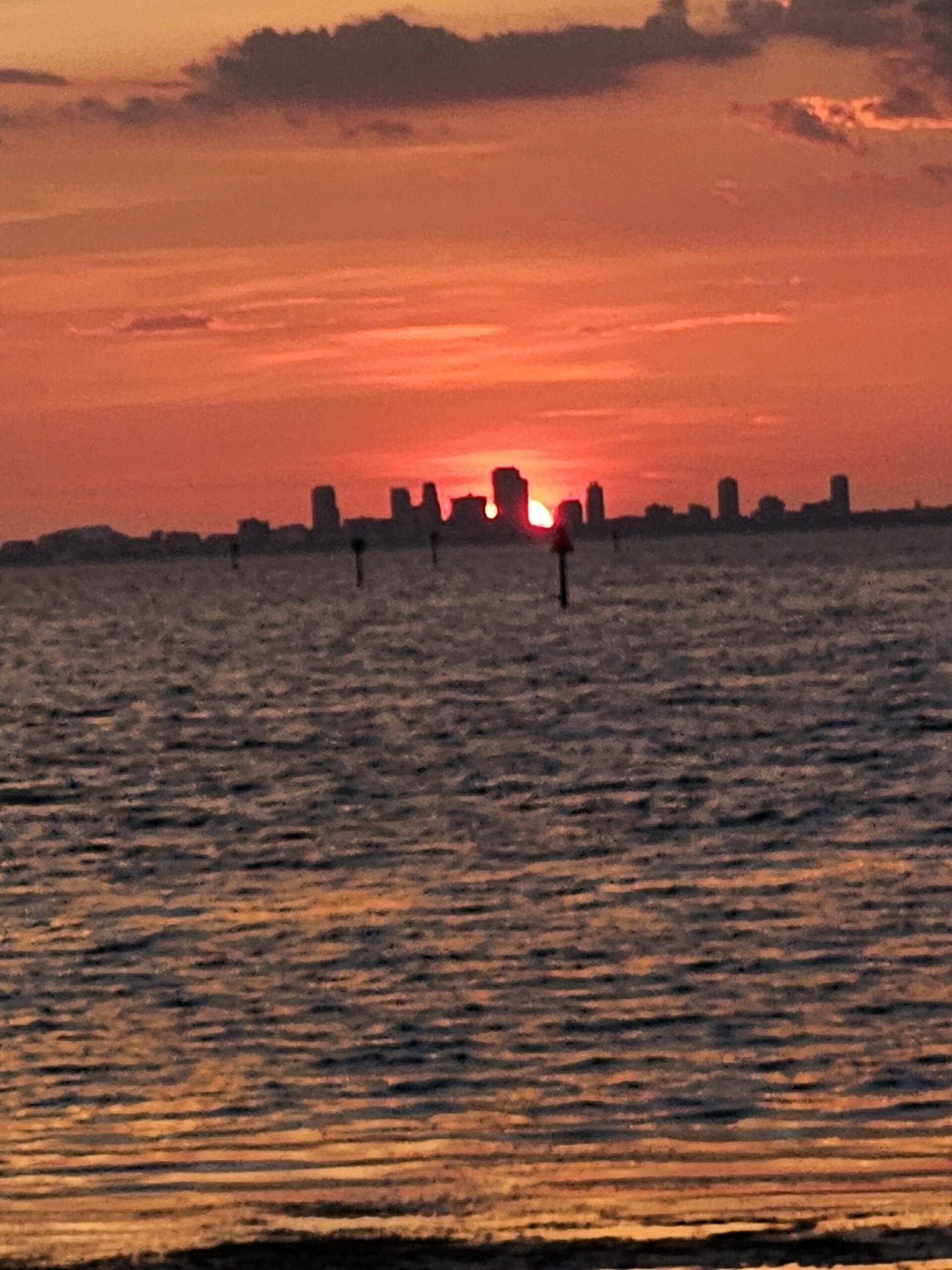
Sunset off Apollo Beach. This is the part nobody argues about.
If you are considering an Apollo Beach waterfront home, tell me your budget, boat requirements, preferred features and tolerance for renovations. I will give you an honest picture of what is realistic and help you build a search around homes that can actually work.
Market conditions and available inventory change. Price ranges in this article describe general buyer expectations and are not appraisals, guarantees or substitutes for property-specific due diligence. Rental rules, boating access, flood information, insurance availability, HOA restrictions and CDD assessments must be verified for each property.
If you’re Canadian and shopping the Tampa Bay area, you’re in better company than you probably realize. In the first quarter of 2026, Tampa ranked fifth in the country for international home-shopping activity. Only Miami, Orlando and two markets outside Florida drew more. Canadians made up 58.8% of Tampa’s international demand, up 4.6 points from the year before.
Most of what gets written for Canadian buyers is written about Miami, Naples or Fort Myers. Apollo Beach and the Southshore communities south of Tampa rarely get a mention, which is a shame, because for a lot of Canadian buyers this is the better fit: deep-water canals, boat lifts, a real neighbourhood feel, and prices that haven’t gone the way Sarasota’s have.
Here’s what actually matters when you’re buying in Apollo Beach as a Canadian. Not the brochure version.
How long can a Canadian stay in Florida each year?
Two separate rules govern how long you can be here, and they have nothing to do with each other. People conflate them constantly, and it causes real problems.
What does the six-month visitor rule actually mean?
This is the immigration clock. As a Canadian visitor you’re generally admitted for up to six months at a time. That’s a border officer’s decision rather than an entitlement, and it says nothing at all about taxes. Plenty of Canadians assume that staying inside the immigration limit keeps them clear of the IRS. It doesn’t.
What is the Substantial Presence Test?
This is the tax clock, and it’s the one that catches people. The IRS Substantial Presence Test counts:
all your U.S. days this year, plus
one-third of last year’s days, plus
one-sixth of the year before that
If that weighted total hits 183 and you were here at least 31 days this year, the IRS can treat you as a U.S. tax resident, and that means on your worldwide income.
Do the arithmetic. Four months a winter, every winter, gets you there: 120 + 40 + 20 = 180. One extra week and you’re over.
What is Form 8840, and do I have to file it every year?
Form 8840 is the Closer Connection Exception, and it’s the fix. You can use it if you were physically here fewer than 183 actual days this year, kept your tax home in Canada, and have stronger ties there: home, family, bank, doctor, driver’s licence. It’s due June 15 of the following year if you had no U.S. wages, April 15 if you did.
It is not automatic. You have to file it. Every year.
What is FIRPTA, and how much does the IRS hold back when I sell?
Everyone researches the purchase. Almost nobody researches the sale.
When a foreign person sells U.S. real estate, the buyer is required to withhold a percentage of the gross sale price and send it to the IRS. Not your profit. The gross price.
Sale price
Buyer signs residence affidavit
Withholding
Under $300,000
Yes
0%
$300,001 to $1,000,000
Yes
10%
Over $1,000,000, or no affidavit
Either way
15%
FIRPTA withholding on a sale by a foreign person. The affidavit is the buyer confirming they’ll live in the property at least half the days over the next two years.
Sell an $800,000 canal home with no affidavit and $120,000 goes to the IRS at closing, regardless of whether you made a dollar. You get it back when you file, eventually.
Can I reduce FIRPTA withholding before closing?
Yes, by filing Form 8288-B for a withholding certificate in advance. The IRS takes roughly 90 days to process one, which means the time to start that paperwork is when you list, not when you’re already under contract. Miss that window and your money sits with the IRS until you file a return for the year.
This is the single most expensive thing Canadian sellers learn too late.
Can a Canadian get a mortgage on a Florida home?
Yes. Financing works, but not the way it does at home. You don’t need U.S. credit history, though you do need a lender who does this routinely.
There are two paths: the U.S. arms of Canadian banks, which can often use your Canadian credit file, or U.S. foreign-national mortgage programs. Either way, expect a larger down payment than a U.S. buyer would put down, and rates that reflect the added underwriting. Ask for the specific number early, because it varies more by lender than people expect, and it changes what you can shop for.
Cash is common here, and it’s a real negotiating advantage in Southshore.
Which costs do Canadian buyers underestimate?
Four of them, consistently.
Why don’t Canadians get Florida’s homestead exemption?
Because Florida’s homestead exemption and its 3% Save Our Homes assessment cap both require Florida permanent residency. As a non-resident you don’t get either. Your assessed value can rise up to 10% a year instead of 3%, and that 10% cap doesn’t cover school district taxes at all. Over a decade, the gap between 3% and 10% is not small.
Worth watching: Amendment 3 goes to Florida voters on November 3, 2026. Should 60% approve it, the non-homestead assessment cap drops from 10% to 5% starting January 1, 2027. The much larger homestead exemptions in that same amendment still wouldn’t apply to you, but the tighter cap would.
What does insurance actually cost on an Apollo Beach home?
More than the number in your head, and there’s no honest average anyone can give you. Windstorm and flood are separate from your standard policy, and they’re the line item that surprises people most, especially on the water. Get real quotes on a specific address before you fall in love with it. Never a regional average, because two homes on the same street can price very differently.
What is a CDD fee, and why is it on top of my HOA dues?
A CDD is a Community Development District, and many Southshore communities carry one. The assessment pays off the infrastructure the developer built, meaning roads, drainage and amenities, and it lands on your tax bill rather than your HOA statement. It isn’t optional, and buyers miss it constantly when they compare two homes that look identically priced.
How much does the exchange rate matter?
Enough to plan around. You’re buying a USD asset with CAD, so the purchase, the carrying costs and the eventual sale all move with the rate. That’s an exposure, and it cuts both ways.
Can I rent the house out while I’m back in Canada?
Plenty of Canadians offset costs by renting in the off-season. Two things matter before you count on it.
How is a Canadian owner’s rental income taxed?
Gross rental income paid to a foreign owner is subject to 30% withholding unless you make an election to be taxed on a net basis, after expenses and depreciation. That election almost always produces a better result, but it requires filing. Nobody applies it for you.
Will my community even allow it?
Southshore HOAs vary widely on minimum lease terms. Some allow monthly, many require three, six or twelve months, and short-term rental is off the table in a lot of neighbourhoods. Read the specific community’s documents before you buy on a rental assumption, because the rules differ from one gate to the next.
What happens to a Florida property when a Canadian owner dies?
This is the one almost nobody raises, and it deserves a conversation.
A non-resident who isn’t a U.S. citizen has a dramatically smaller U.S. estate tax exemption than a citizen does. We’re talking tens of thousands of dollars of U.S.-situs assets, not millions. A canal home in Apollo Beach clears that threshold comfortably.
The Canada and U.S. tax treaty provides meaningful relief, and how you take title matters. Put this question to a cross-border accountant before you close, because it’s far easier to structure at purchase than to fix later.
A canal home in Apollo Beach at sunset, dock and boat lift in view.
What should I check on an Apollo Beach waterfront home?
This is Apollo Beach, so the waterfront questions are the real questions.
Elevation and flood insurance come first. Before anything else, know the property’s elevation and get a real flood quote on that address. Two homes on the same canal can carry very different numbers.
Then the water. How deep is the canal at low tide, not at high tide, which is what listings tend to imply? What’s the bridge clearance between the property and open water? And what’s the lift capacity, meaning the weight the boat lift is rated to carry, which is a different question from whether it was ever permitted?
If your boat doesn’t fit under the bridge, or the lift can’t carry it, the waterfront is decorative.
Where should a Canadian buyer start?
Decide roughly how many days a year you’ll actually be here. That answers the tax-residency question before it becomes a problem.
Talk to a cross-border accountant early, before you make an offer rather than after. Title structure and estate planning are cheap to get right at the start.
Get insurance quotes on real addresses, not averages.
Then go look at houses.
Canadian buyer FAQ
Can a Canadian buy a house in Florida?
Yes. There’s no citizenship requirement and no visa requirement to own U.S. real estate, and Canadians buy in Florida every day. Owning a home gives you no additional right to stay in the country, though. Ownership and immigration status are completely separate systems.
How many days can a Canadian spend in Florida without becoming a U.S. tax resident?
Fewer than you’d guess, because the IRS weights prior years. Add all your U.S. days this year, one-third of last year’s and one-sixth of the year before; at 183 or more, with at least 31 days this year, you meet the Substantial Presence Test. Four consecutive winters of four months each puts you at 180.
Do I have to file Form 8840 every year?
Yes, if you’re relying on the Closer Connection Exception. The form isn’t a one-time registration and it isn’t automatic. File it by June 15 of the following year when you’ve had no U.S. wages, or April 15 when you have.
How much tax is withheld when a Canadian sells a Florida home?
Under FIRPTA the buyer withholds from the gross sale price: 0% under $300,000 with a buyer residence affidavit, 10% from $300,001 to $1,000,000 with that affidavit, and 15% above $1,000,000 or whenever no affidavit is signed. Filing Form 8288-B in advance can reduce it, but allow about 90 days.
Can a Canadian get a mortgage in Florida without U.S. credit?
Yes. The U.S. arms of Canadian banks can often read your Canadian credit file directly, and U.S. foreign-national mortgage programs exist for exactly this. Both usually want a larger down payment than a domestic buyer would make, so ask for the specific figure before you set a budget.
Do Canadians pay higher property taxes in Florida?
The tax rate is the same, but the protections aren’t. Florida residents get the homestead exemption and a 3% annual assessment cap; non-residents get neither, so an assessment can climb up to 10% a year, and that cap excludes school district taxes. Over ten years the difference compounds meaningfully.
Can I rent out my Apollo Beach home when I’m not there?
Usually, within limits. Your rental income faces 30% withholding on the gross unless you elect net-basis taxation, and your HOA sets the minimum lease term. Southshore communities range from monthly minimums to twelve-month minimums, and several prohibit short-term rental entirely, so check the documents before you buy on a rental assumption.
Do I need a U.S. bank account to own a home in Florida?
It isn’t legally required, but it makes ownership far simpler. Utilities, HOA dues, CDD assessments, insurance premiums and property tax bills all want a U.S. payment method, and paying each one from Canada means conversion costs every time. Most Canadian banks can open a U.S. account for you before you close.
Is Apollo Beach in a flood zone?
Much of waterfront Apollo Beach sits in a FEMA special flood hazard area, but the zone and the base flood elevation change parcel by parcel. Never take a neighbour’s premium as a guide to yours. Pull the elevation certificate and get a quote on the exact address you’re considering.
Which Apollo Beach community suits a Canadian buyer best?
It depends on the boat and on how much you want handled while you’re away. MiraBay is the amenity-heavy, golf-cart-friendly option; Bimini Bay is smaller and quieter on deep water; Andalucía is guarded and gated. All three are true navigable waterfront with Tampa Bay access.
This is general information, not tax or legal advice. Cross-border ownership touches U.S. and Canadian tax law, immigration rules and Florida property law at the same time, so work with a cross-border accountant and a Florida real estate attorney on your specific situation.
Shawna Calvert is a REALTOR® and Team Leader of The Calvert Home Team at 27North Realty in Apollo Beach. RateMyAgent ranked her #10 in its 2026 national Top 100 and named her Florida Agent of the Year, Hillsborough County Agent of the Year, and Apollo Beach Agent of the Year for the second year running. She has more than 290 verified five-star reviews there, and Stellar MLS ranks her the #1 agent in Apollo Beach by total sales volume for January 2025 through August 2026. She and her team work MiraBay, Bimini Bay, Andalucía, Waterset, Covington Park, Harbour Isles and Symphony Isles, and they answer the elevation and flood questions before you ask them.
Most advice about how to find a realtor in Florida tells you to look for letters after someone’s name. I have been selling real estate here for years, and not one buyer has ever asked me about a designation. Not once.
When I see a long list of certifications on an agent’s profile, what I read is an agent with a lot of free time. The ones I respect are busy because they are working. What you actually need to know is simpler than any of that: does this person do this every week, in the places you are looking, with the kind of property you want to buy?
Here is what I would check if I were hiring an agent from another state, and the questions I would ask on the first call.
How do you find a realtor in Florida who actually knows this market?
Florida stacks up things that do not exist in most markets. Flood zones assigned parcel by parcel. Windstorm and flood insurance as separate policies from your homeowners coverage. CDD assessments that sit on the tax bill alongside HOA dues. Homestead exemption timing that depends on when you close. And on the water, canal depth, bridge clearance, lift capacity and community dock rules that decide whether the boat you own even fits behind the house.
If you are buying from out of state, you are relying on someone else to raise the things you do not know to ask about. A local buyer who misses something can drive back and look again. You cannot. That is the whole job, and it is why a friendly agent with no local depth is a genuine risk to your money.
Do real estate designations actually matter?
In my experience, no. Buyers do not ask about them, and I have never seen one change the outcome of a transaction. Coursework does not tell you whether an agent has stood on a seawall, pulled a community master dock plan, or explained a CDD to a buyer who was three days from closing. Volume and location do.
There is one exception worth knowing about. Some designations are national and some are issued by a single local association, so an impressive looking certification may have nothing to do with the market you are buying in. If an agent leans on a credential, ask who issued it and what it required. The answer is usually a weekend.
What should you actually check before you hire someone?
When you are working out how to find a realtor in Florida who is worth hiring, start with how much they close and where. Ask for a number: how many transactions last year, and how many of those were in the communities you are considering. An agent who works the same handful of neighborhoods every week knows which ones carry a CDD, which canals have a bridge problem, and how quickly a listing moves in each one. An agent whose closings are scattered across four counties is learning your market at your expense.
If you are buying waterfront, ask specifically how many waterfront transactions they closed, not just how many homes. Waterfront is its own skill set. For reference, I close more than 100 homes a year and more than 50 of those are waterfront, which is why I can tell you what a seawall costs before you order the inspection.
There is an easier way to check all of this than asking. The Homes.com app shows an agent’s actual transaction history and the communities they work in, so you can see for yourself how much someone closes and where, instead of taking their word for it. Look up whoever you are considering before the first call. Look me up too.
There is an easier way to check all of this than asking. The Homes.com app shows an agent’s actual transaction history and which communities they work in, so you can see for yourself how much someone closes and where, instead of taking their word for it. Look up whoever you are considering before the first call. Look me up too.
How do you verify a Florida agent’s license?
Every Florida license is public. Go to MyFloridaLicense.com, the state Department of Business and Professional Regulation site, and use the license search. Enter the agent’s name, confirm the license is active, see which brokerage holds it, and check whether there are any disciplinary actions on the record. It takes about five minutes and it is worth doing before you hand anyone your time.
What should you ask on the first call?
Ask questions with real answers, and listen for specifics rather than reassurance. Ask what the difference is between an HOA fee and a CDD fee, and how each one shows up in a monthly payment. A good answer explains that a CDD sits on the tax bill, funds the community and pays down the development bonds, and is usually based on lot size.
If you want a boat, ask how they check that it will actually work. A good answer covers the depth at the dock at low tide with the lift down, the bridges between you and open water, the community master dock plan, and the pound capacity of any lift already there. If the answer is that the listing says direct access, keep looking.
Ask how flood zone works and what it will cost on the specific house you are considering. A good answer sends you to the parcel, not to an average. Ask about homestead exemption timing, because closing in December instead of January changes when the benefit shows up. And ask what happens when you cannot be here in person, for a showing, an inspection, or a walkthrough. You want to hear a process, not a promise.
What does the brokerage name tell you?
Almost nothing. A recognizable brand means a marketing budget, not local knowledge, and any large franchise has both excellent agents and agents who are out of their depth. The name on the sign does not tell you which one you are talking to. The transaction history does.
What are the warning signs?
Pressure to sign a buyer agreement before your questions have been answered. Vague answers about flood zones, insurance or CDD fees. Reviews that are all generic praise with no mention of a specific deal, or a cluster of reviews from one month and nothing since. And the biggest one: an agent who treats your questions as an inconvenience. That does not improve once you are under contract. It gets worse, at the exact moment you need answers.
Should you just call the listing agent?
Buyers from other states are often told never to do this. In Florida I think it is frequently the better move, and I work both sides of a deal more than most agents do. The legal term here is transaction broker. Under Florida statute 475.278 that means I deal honestly and fairly with both of you, account for the money and disclose what materially affects the property. What I do not do is argue one of you down on behalf of the other.
The advantages to you are real. I already know what the seller wants, and I do not just mean the price. That includes whether they need time in the house after closing, whether they have somewhere lined up, and what they will fix and what they will not. Getting that home sold is what I am there to do. And I can show it to you without a buyer broker agreement, so you can walk through the house you actually called about without signing a contract with an agent you met ten minutes ago.
What you give up is an advocate arguing only your side, and some buyers want that. That is a fair thing to want, and if it is what you want, hire someone for it. But if you are looking at one specific house and you want straight answers about it quickly, calling the agent who already knows that house is not a trap. Ask which relationship you are in, get it in writing, and ask directly what changes about the advice you get. Any agent worth hiring will answer that without flinching.
Shawna Calvert on the water off Apollo Beach. Knowing the market means knowing the water.
What does it look like when someone gets it right?
Everything about how to find a realtor in Florida comes down to one behavior. The right agent tells you the uncomfortable things early, while you can still walk away cheaply. Flood zone and a real insurance quote before you are emotionally attached. The full monthly number, including taxes, insurance, HOA and CDD, before the list price sets in your head. An honest read on what a community is actually like to live in rather than what the brochure says. That is not a sales approach. It is just the job done in the right order.
Where should you start?
That is how to find a realtor in Florida who is worth your time. If you are moving to the Tampa Bay area, Southshore, or anywhere else in the state, call me before you start looking at houses. We will go through flood zones, what the monthly cost really is, which communities fit how you want to live, and if there is a boat involved, whether the water behind the house works for it. You can also read how I work with buyers on my relocation services page.
Buying a waterfront home in Apollo Beach is not the same as buying any other house. You are buying the seawall, the dock, the lift, the canal behind the house and every rule that comes attached to the water. None of that shows up in listing photos, and it is where waterfront buyers get hurt.
This post is the due-diligence checklist — the things to inspect, ask and price out before you write an offer on a waterfront house. If you are still deciding which community to look in, start with the waterfront communities guide and come back here once you have a house in mind.
I sell more than 100 homes a year and more than 50 of those are waterfront. The problems I run into on waterfront deals are almost never the house.
Here is the version that keeps happening. A buyer flies in, falls for a canal home with a dock and a lift, writes the offer that afternoon and starts shopping for a boat before the inspection is even scheduled. Then they find out the lift is not rated for the boat they just fell in love with. Or the community master dock plan limits what that particular lot can keep on the water. Or they run out toward the bay for the first time and realize the hardtop was never going to clear the bridge. None of that is bad luck. All of it was findable before the offer.
Here is what I check on every waterfront property, and what you should be asking before you write one: canal depth against your boat, the community master dock plan, the lift, the seawall, the flood zone and a real insurance quote, and what the HOA and CDD actually cost on that specific lot.
What are you really buying when you buy a canal home?
You are buying the house, and you are also buying the seawall, your right to use the water behind it, and the dock and lift if there are any. Every one of those pieces has an age, a cost and a lifespan. A seawall can look fine from the deck and be undermined below the waterline. A lift can be far too small for the boat you plan to buy. All of it becomes yours at closing.
A canal like this one in Bradenton is what buyers picture. What matters is depth at low tide, bridge clearance and the condition of the seawall.
Is the property actually on navigable water?
This is the first question, and the answer is not always what the listing implies. Around Southshore we have on-water neighborhoods and off-water neighborhoods, and both are full of good homes. On water does not automatically mean you can get a boat to Tampa Bay, either. Some homes sit on lakes and ponds. Some sit on canals with a clear run to open water. Ask directly whether the water is navigable, ask what sits between the dock and the bay, and do not let a pretty water photo answer the question for you.
How do you know the canal is deep enough for your boat?
Why does canal depth matter when you lower the lift?
Canal depth is not about whether your boat floats in the middle of the canal. It is about whether there is water under your boat when you lower the lift at low tide. Your draft and the depth at the seawall at low water are the two numbers that matter. Get the depth measured at the dock rather than out in the channel, and find out how much the tide moves in that canal.
Will your boat clear every bridge between the dock and the bay?
Fixed bridge clearance is measured at high water, and it does not care what the listing calls the property. Direct access language does not tell you whether your specific boat, with your hardtop or tower on it, will fit under every bridge on the route out. Run the route if you can. If you cannot, get the clearance numbers before you commit.
What is a community master dock plan, and why should you ask for a copy?
This is the document most buyers never hear about. Many waterfront communities have a master dock plan that governs what can be built and what size boat a specific lot can keep on a lift. The restrictions usually come down to the size of the lot and whether a boat has the room it needs to navigate, turn around and let people board and get off the lift. Some smaller lots are limited because of it. Ask for a copy of the master dock plan and find out whether the lot you are looking at carries a restriction, before you are under contract with a boat you cannot keep there.
What should you check on an existing boat lift?
Start with the pound capacity, because that is what decides whether your boat can go on it. A lift can be replaced or upsized later and buyers do it all the time. It is simply easier and cheaper when the lift already there fits the boat you want to own. Ask for the capacity, the age and any service history, and look at the pilings, cables and motors while you are standing on the dock.
Who inspects the seawall, and what do the big repairs cost?
Your general home inspector does not inspect the seawall. A marine contractor does, and that inspection covers the cap, the panels, the tie back anchors, the weep holes and the soil behind and beneath the wall where voids and erosion start. These are the two numbers worth knowing before you write an offer: a new seawall runs roughly $800 to $1,000 per square foot, and a dock replacement runs $37,000 to $75,000. Neither one is a surprise you want after closing. Ask for the age of the wall and any repair history, and look at the walls on either side of it while you are there.
How do you check the flood zone before you make an offer?
Go to the FEMA Flood Map Service Center and enter the address. That gives you the flood map panel and the flood zone for that parcel. Zones AE and VE are high risk, which means your lender will require flood insurance as a condition of the loan. Zone X is moderate to low risk. Flood zone is assigned parcel by parcel, so never assume the house you are looking at carries the same designation as the one down the street.
Then get an actual quote on that specific address instead of a number someone quoted for a different house. An elevation certificate, which shows where the lowest finished floor sits relative to the base flood elevation, can change what you pay. Insurance is part of your monthly payment, so it affects what you qualify for now and what your buyer will qualify for when you sell. Florida sellers are also required to disclose flood history and past claims, so read that disclosure closely.
Does the age of the neighborhood affect flood insurance?
It does, and this is one of the easiest things to check. A neighborhood built after 2000 was usually built up to a higher elevation, and higher elevation brings the flood insurance premium down. That difference is worth weighing when you are comparing an older canal home to a newer one. Either way, plan on carrying it. If you have a mortgage on a waterfront home, you are going to need flood insurance.
Wide canals mean easier turning and bigger boats. Narrow ones limit both.
What boating restrictions will the listing not tell you?
Deed restrictions and HOA documents can limit boat size, prohibit living aboard, restrict the type of lift you install and require board approval before you make a change at the dock. Many canal communities also sit inside manatee protection zones with posted speed limits on how you run your boat. None of this is hidden. It is all in writing, and it just takes someone willing to read it and confirm it in writing before you close.
What is the difference between an HOA fee and a CDD fee in Florida?
HOA dues go to a private association that maintains shared amenities and enforces the community rules. A CDD is different. It is the portion of your tax bill that goes back to the community, funding the operation and maintenance of the community and paying off the original development bonds. You do not write a separate check for it, it shows up on the tax bill, and it belongs in your monthly number from the start.
A CDD is also not the penalty buyers assume it is. Communities with a CDD usually have a very low HOA, and they tend to be amenity rich or come with enhancements other neighborhoods do not have, like natural gas or gated entries. The bond portion does eventually get paid down.
Here is what surprises buyers: very few waterfront communities carry a CDD at all. Around here it is really just Antigua Cove in Ruskin, which most people know as Little Harbor, and MiraBay. Off water is the opposite, where plenty of neighborhoods do carry one. Where a CDD exists it is usually based on lot size, so two houses in the same community can pay very different amounts. In MiraBay a 50 foot lot runs around $2,300 yearly while lots over 100 feet run between $6,000 and $7,000. Get the exact figure for the specific parcel before you decide what you can afford.
What should you verify before you write the offer?
Buying a waterfront home in Apollo Beach comes down to a short list: whether the water is navigable and what your boat needs to get out, the depth at the dock at low tide, the master dock plan and any restriction on that lot, the lift capacity, the seawall condition and age, the flood zone and a real insurance quote for that address, and the HOA and CDD numbers for that exact parcel. Most of it can be confirmed inside your inspection period if someone starts on it the day you go under contract.
Is buying a waterfront home in Apollo Beach worth it?
Every time. Dolphins and manatees in your back yard, sunsets from your own dock, and your boat in the water five minutes after you decide to go. I sell these homes because I believe in them and because I know this water. Nothing in this guide is an argument against buying waterfront. It is an argument for understanding what you are buying before you are emotionally committed to it. A generalist agent can open the door. Someone who works this water every week can tell you whether your boat fits, what the seawall is likely to cost you in five years, and whether the CDD makes the deal work.
If you are buying a waterfront home in Apollo Beach, Ruskin, anywhere across Southshore or anywhere else in Florida, reach out before you make an offer. I will walk the dock and the seawall with you, get you the community master dock plan, and make sure the water and the lift actually fit the boat you want.
Southshore is not one place. When someone searches Southshore Tampa, they are usually picturing a single town. It is actually six or more communities, and they do not price the same, flood the same, or feed into the same schools. The gap between the label and the address is where most relocations go wrong.
I work with out-of-state buyers every week who are trying to make this decision from a thousand miles away. Most of them start by asking where Southshore is. The better question is which Southshore community fits the way you actually live. That is the question this article answers.
Below I cover what each community is actually like, real commute numbers, how school zones get assigned, what your flood zone does to your insurance bill, the monthly costs nobody puts on the listing sheet, and how to buy here without flying down first.
What does Southshore actually mean?
The six communities you are really choosing between
Southshore is a regional nickname, not a city. It covers the communities south of Tampa: Apollo Beach, Ruskin, Riverview, Wimauma, Sun City Center and Gibsonton, running down to the Manatee County line. You will see ZIP codes 33534, 33569, 33570, 33572, 33573, 33579 and 33598 across the area, and some of those spill into neighboring places. A buyer looking for a canal home with a boat lift in Apollo Beach and a buyer looking for new construction in a Riverview master-planned community are not shopping the same market, even though both will say they are moving to Southshore.
Matching the community to how you live
Apollo Beach is where the boaters land. Canal homes with direct access to Tampa Bay, lifts in the back yard, and a slower marina feel. Riverview pulls growing families, mostly newer construction in master-planned communities with easy access to shopping and healthcare. Ruskin and Wimauma are the most affordable way into the area, which is why budget-focused buyers end up there. Sun City Center is its own world, built for active adults 55 and up, with golf cart streets, resort amenities and a social calendar nothing else down here comes close to.
Why the address matters more than the community name
Your lender, the school district, FEMA and your insurance underwriter all work off a specific address. None of them care what the community is called. Buyers who pick an area by name and skip the address-level check get surprised by their school assignment, their flood zone or their insurance requirement. Two houses in the same subdivision can land differently on all three. Start with an address, check each system on its own, and assume nothing.
Community layout tells you a lot before you ever tour a house — where the water is, where the amenities sit, how far the commute starts.
What does the commute really look like?
Getting to downtown Tampa
Plan on 25 to 40 minutes off-peak and 30 to 50 or more at rush hour from most of Southshore to downtown Tampa. The Selmon Expressway is the fastest way in. Where you land inside Southshore matters more than people expect. Northern Riverview sits noticeably closer to the on-ramp than southern Ruskin or Wimauma, and you feel that difference every weekday morning.
Getting to the airport and the job corridors
Tampa International runs about 25 to 35 minutes off-peak, taking I-75 north to I-275 west, and can stretch to 55 at peak depending on where you start. USF, Westshore and the South Tampa medical corridors follow the same pattern. If you are commuting to downtown or the airport side of town, northern Riverview buys you real time back compared with the southern edge of Southshore.
How do you verify the school before you pick the house?
How Hillsborough County assigns schools
Every Southshore community is in Hillsborough County Public Schools, one of the largest districts in the country. Assignments are made by address, not by neighborhood. Two houses across the street from each other can feed different elementary schools. Families assume the community name settles it more often than you would think. Run your exact target address through the district’s school finder before you get attached to anything.
Schools serving Apollo Beach, Riverview and Ruskin include Apollo Beach Elementary, Thompson Elementary, Eisenhower Middle, East Bay High and Lennard High, among others. There are charter options too, including Waterset Charter School and Dorothy C. York PK-8 Magnet. Your parcel decides, not your subdivision.
Look past the rating number
Boundaries move faster here than in established neighborhoods because Southshore keeps growing. New construction in Riverview and Apollo Beach has driven new school builds and boundary changes in recent years. Ask your agent about boundary history and current capacity in the area you are considering. A zone that was accurate six months ago may already be different.
How do flood zones and insurance work here?
How the zones break down here
Zone AE sits inside the 1% annual-chance floodplain, and if you have a federally backed mortgage on an AE property, flood insurance is required. Zone X is lower risk with no federal requirement, which is not the same thing as flood-free. In Southshore, the waterfront and canal-adjacent homes in Apollo Beach and Ruskin are the ones most likely to be AE or coastal VE. Inland Riverview and Wimauma more often fall in Zone X, and the insurance picture there is completely different.
What flood insurance actually costs
On Apollo Beach canal-front and waterfront homes, 2026 NFIP premiums commonly run anywhere from around $1,500 into the $12,000 range, driven by elevation, foundation type and how close you sit to open water. Inland Riverview homes in Zone X generally run $400 to $1,200 a year, with a lot of low-risk properties landing between $650 and $900. That spread is the single biggest cost surprise for buyers coming from out of state.
Put flood insurance into your monthly number before you write an offer, not after. On any waterfront or canal-front home, ask the seller for the elevation certificate. It can lower your premium, and either way it tells you what you are actually buying before you are under contract.
Evacuation zones are a separate thing
FEMA flood zones and hurricane evacuation zones are two different systems run by two different agencies. Evacuation zones are set by state and local emergency management, not FEMA. Waterfront and canal homes in Apollo Beach and Ruskin usually sit in higher-priority evacuation zones because of storm surge. Look up both the flood zone and the evacuation zone for the specific address using the Hillsborough County lookup tool. The community name will not tell you.
Master-planned communities like Waterset trade water access for amenities and lower entry prices.
What does it cost to buy in Southshore?
Southshore Tampa housing market: price ranges by community
Apollo Beach as a whole has been running roughly $485,000 to $510,000 in median price across current data sources, and canal-front and bay-front homes sit well above that depending on the water access. Riverview new construction covers a wide range, and builder incentives come and go with the market. Ruskin and Wimauma are the most accessible entry points down here. Whatever the community, the number that matters is your total monthly cost, not the price on the listing sheet.
CDD fees, HOA dues and property taxes
Florida master-planned communities often carry a Community Development District fee and an HOA, and buyers mix the two up constantly. In Waterset, in Apollo Beach, plan on roughly $300 to $400 a month combined for HOA and CDD in many sections, with the CDD assessment itself running about $1,590 to $4,148 a year depending on the section and the lot size. Riverview master-planned communities land in a similar range, with CDD fees around $1,750 a year as a benchmark in some neighborhoods.
Out-of-state buyers who plug a price into a basic mortgage calculator and leave out CDD and HOA routinely underestimate their payment by hundreds of dollars a month. Going the other way, Florida’s homestead exemption lowers your assessed value and takes a real bite out of the tax bill after your first full year. File for it as soon as you close and establish Florida as your primary residence.
Can you buy from out of state without flying down?
The remote process that actually works
Buying remotely is normal here now, not a workaround. Most of my out-of-state buyers come from the Northeast, the Midwest and the West Coast. What works is a sequence: virtual community tours first, then address-level flood and school verification, then detailed video walkthroughs, then inspection reports we go through together so you know what the findings actually mean. The difference is having someone on the ground looking at the house for you, not just handling paperwork after you have already picked one.
Your Southshore pre-move checklist
Work this sequence and you will stay ahead of the things that catch relocating buyers off guard:
Pick your community by lifestyle and life stage before you start looking at listings.
Verify the school zone with the Hillsborough County school finder using a specific address.
Pull the FEMA flood zone designation for every property on your shortlist.
Get flood insurance quotes early, before you are under contract.
Ask for a clear breakdown of CDD versus HOA fees in every community you consider.
Request the elevation certificate on any waterfront or canal-front home.
File for homestead exemption as soon as you close and establish Florida residency.
Working with someone local before you get here
This is the work my team and I do at 27North Realty. Community matching, flood zone education, CDD breakdowns and school verification are not extras we add when a buyer asks for them. They are where every relocation conversation starts. That matters most for buyers who cannot fly down three times and need one local source of truth instead of stitching together answers from national websites that do not know the difference between a Zone AE canal home in Apollo Beach and a Zone X subdivision in Wimauma.
If you are thinking about the move, get connected with someone local early. You want address-level answers before you write an offer, so that by the time you are standing in your first showing you are already confident in the community, the numbers and the decision.
It comes down to five verifications
Southshore is not one place, and the right fit depends on your lifestyle, your budget, how much commute you will tolerate and how you feel about flood risk. Before you commit to a community, verify five things: the community personality against your life stage, the school zone for that exact address, the FEMA flood zone and the evacuation zone, the total monthly cost including CDD and HOA, and the real commute from that address to where you work.
Run your all-in numbers with a Florida lender who understands CDD fees and flood insurance line items, and talk to someone local who can give you address-level answers. That is the work I do every week with buyers who are still sitting in another state, no flight to Tampa required.
There are some things you probably shouldn’t tell your Realtor until you know exactly who you’re talking to.
Kam learned that one sitting in the car with me.
Apollo Beach.
But I’m getting ahead of myself.
Kamala had been thinking about selling her house for quite a while before she was actually ready to do it.
We had lots of conversations before the sign ever went in the yard. We talked about the market, what she needed to do to get the house ready, pricing, timing and what selling was starting to look like as our market shifted.
And when she finally decided it was time, she did everything right.
Seriously.
If I could hand every seller a little instruction manual titled How to Be Kamala, my job would be considerably easier.
She got the house ready. She kept it ready. She accommodated showings and made sure everything looked beautiful when buyers came through.
And she had cats.
Which meant every showing involved gathering up the cats and getting everybody out of the house, only to have buyers occasionally show up late. Or really late. Or, everyone’s favorite, not show up at all.
This was also right around the time our market was becoming noticeably more difficult for sellers. Showings were slowing down. Buyers had more choices. They weren’t rushing anymore.
They were taking their sweet time.
Patience was becoming part of the job for both of us.
There were frustrating days. Kamala is a woman of faith, and more than once, she and I prayed together about getting her house sold and finding the right place for her to go next.
Her house was in the same neighborhood where I live, so I was close by, and during all those months of talking, preparing, showing, praying and waiting, Kamala and I got to know each other pretty well.
By the time we finally got her house under contract, we weren’t just Realtor and client anymore.
We were friends.
And now we needed to find her somewhere to go.
The reason for the move was pretty practical. Her property taxes had climbed higher than she wanted after building her home, and as a single woman, she liked the idea of something a little smaller, with lower carrying costs and maybe even some maintenance included.
So we started driving around the area looking at houses.
And somewhere along the way, Kamala started telling me about the house.
You know the one. The house she had loved.
Before building the home I was now selling for her, Kamala had actually been under contract on another house in Apollo Beach.
And she had REALLY wanted that house.
She especially loved the kitchen. It was big and bright, with white cabinets and these cheerful yellow walls that carried right into the dining area.
Years later, she could still describe that kitchen to me.
This wasn’t just some house she’d once lost.
This was the house she never quite got over.
It had happened during a completely different real estate market. Sellers had the upper hand. Multiple offers were common. Buyers had to move quickly, and sometimes you had to get creative to win.
Kamala had managed to get this particular house under contract, but her contract had something called a kick-out clause.
And this is where her story gets unusual.
Kick-out clauses are incredibly rare.
Plenty of Realtors can go their entire careers without ever dealing with one. Some may never even come across one in an actual transaction.
The simplest explanation is that a seller accepts an offer with a contingency but keeps the ability to consider another offer. If a stronger buyer comes along, the first buyer gets a very short window to remove that contingency or lose the house.
That’s what happened to Kamala.
Another family came along with cash. Kamala got her notice, couldn’t remove her contingency, and lost the house.
Now I’m sitting in the car listening to Kamala tell me this story.
And Kamala wasn’t just disappointed about what had happened.
Oh no.
Kamala was STILL MAD.
Years later mad.
She couldn’t believe another Realtor would even do something like that.
Who sees a house already under contract and thinks, You know what? Let’s go take that one.
She couldn’t believe there was even a strategy in real estate that allowed another buyer to come along and knock her out of the house she already thought was hers.
And that Realtor?
Oh, she had some thoughts about that Realtor.
She did NOT like her.
At all.
Kamala is going on about this woman. What kind of Realtor does something like that? How could she do that to somebody? Who operates that way?
And at first, I’m right there with her. Listening, nodding, being appropriately sympathetic.
Then she mentions the kick-out clause again.
And something starts sounding familiar.
Really familiar.
Because here’s the problem.
When somebody tells you about a normal real estate transaction, it could be one of hundreds.
When somebody tells you about a kick-out clause?
That’s a much shorter list.
I’m getting quieter. Kamala is getting more animated. She’s giving me more details, and I’m giving her fewer responses.
She’s talking about those buyers, that cash offer, that Realtor, that house she loved.
And somewhere in the middle of all of this, a horrible little thought enters my head.
Wait.
I’m trying to remember exactly how many transactions I’ve ever been involved with that had a kick-out clause.
Honestly, 2.
Kamala keeps going.
At this point, I’m squirming in my seat. I’m sitting on my hands. I’ve stopped nodding, and I’ve definitely stopped agreeing with her.
And now I’m silently begging her:
Please stop talking.
But Kamala does not stop talking.
She has waited YEARS to tell someone about this Realtor.
And apparently today is the day.
She’s telling me how awful the whole thing was, and I’m sitting there getting more uncomfortable with every identifying detail.
Finally, I couldn’t take it anymore.
“Kamala…”
She stopped.
“Was this house in Waterset?”
“Yes.”
Oh no.
Open water and the bridge beyond — the view that made the decision easy.
Please say no to the next question.
“Was it on Crestpoint?”
She looked at me.
“Yes.”
Well.
There it was.
I knew the house. I knew the cash buyers.
And unfortunately, I knew that terrible Realtor quite well.
It was me.
There was really no graceful way out of this.
“Kamala…”
By now she could tell something was wrong.
“Yep. That was me.”
She stared at me.
You could almost watch the pieces connecting.
And then:
“OH NO.”
A beat.
“YOU were that terrible Realtor who did that to me?!”
Yep.
That was me.
The Realtor she had apparently spent years disliking. The Realtor whose strategy she couldn’t believe. The Realtor she couldn’t understand how anyone could possibly do business that way.
She had been sitting beside her all along.
And thankfully, by this point, we knew each other well enough that it was funny.
Really funny.
Because here’s the other side of the story.
I hadn’t actually done anything to Kamala. I didn’t even know Kamala.
I was representing another family, and my job was to do everything I ethically and legally could to help them get the house they wanted.
There was already a kick-out clause in the existing contract. My buyers were in a position to make a stronger offer. The seller chose to accept it, and the contract worked exactly the way it was written.
I had simply been doing my job for my clients.
Of course, that explanation probably sounds considerably more reasonable when you’re not the person who just lost your dream house.
To Kamala, some Realtor had swooped in with cash buyers and taken away the house she loved.
And she had never forgotten her.
What gets me is everything that had to happen for us to eventually have that conversation.
First, Kamala had to end up in one of the relatively rare transactions involving a kick-out clause.
Then I had to be the Realtor on the other side of it.
Years later, out of all the Realtors she could have called when she decided to sell, she somehow called me.
Neither one of us made the connection.
She hired me. Trusted me with the sale of her home. Spent countless hours talking to me. Got through the frustrations of a changing market with me. Prayed with me. Drove all over looking at houses with me.
And somewhere along the way, we became friends.
All before she discovered I was that Realtor.
Maybe there was more than a little grace in the timing of all of it.
Kamala and I had prayed together about getting her house sold and finding the right next home for her. Neither one of us had any idea that years before we met, our paths had already crossed.
She just knew me then as the Realtor she couldn’t stand.
Maybe God knew it was better to let her meet me first before filling her in on that little detail.
Because Kamala got the chance to know me before she knew who I was in that old story. She got to form a completely different opinion of me without either one of us knowing she already had one.
And I got the rare privilege of sitting quietly beside her while one of my best clients explained, in considerable detail, exactly how awful she thought I was.
We still laugh about it.
And by the grace of God, Kamala and I are still good friends.
So if you’re ever sitting in the car telling your Realtor about that absolutely terrible Realtor who did something to you years ago, maybe don’t get too far into the story.
Because eventually she may have to look over at you and say…
I hear this one constantly: “We’d love to buy, but it’s just too expensive right now.” Maybe. But before you settle that question, do the math on what renting will cost you over the same three years — because that number surprises people.
Buying isn’t automatically smarter than renting, and renting isn’t automatically throwing money away. Anyone who tells you otherwise is selling something. The right answer is the one that fits your budget, your timeline, and the life you’re actually living — without stretching you so thin that a broken A/C ruins your year.
Quick Answer: Should You Rent or Buy in Tampa Bay?
Buying may make sense when your income is stable, you’ve cash left after closing, the complete payment fits comfortably, and you expect to stay long enough to absorb the costs of purchasing and eventually selling. Renting may be stronger when you need flexibility, have a short timeline, are still learning the area, or would have little emergency savings after buying.
Don’t compare rent only with principal and interest. Compare rent with the complete monthly ownership cost and include the cash required before closing.
Renting keeps you flexible. Buying starts building equity. Three years is usually where the math flips.
How do you calculate three years of renting?
Start with your current monthly rent, estimate reasonable annual increases, and include renter’s insurance, moving costs, parking, pet charges, and other required fees. Use your actual lease history and local options rather than assuming every landlord will raise rent by the same percentage.
Rental cost
How to estimate it
Base rent
Monthly rent multiplied by the months in each lease year
Possible increases
Use written renewal offers or a clearly labeled planning assumption
Renter’s insurance
Use a current quote
Required fees
Parking, pets, amenities, application, or renewal charges
Moving costs
Include another move if the lease or property may not fit for three years
Refundable deposit
Track it separately because its final cost depends on the lease and property condition
A Simple Three-Year Renting Example
Assume rent begins at $2,200 per month and, only for planning purposes, increases 3 percent at each annual renewal. The rent would total approximately:
Year one: $26,400
Year two: $27,192
Year three: $28,008
Three-year base rent: about $81,600
This is an illustration, not a forecast. Your rent could stay level, rise by a different amount, or change because you move. Add renter’s insurance and required fees to create your own total.
How do you calculate three years of owning?
Ownership requires a wider worksheet. Separate upfront costs, recurring costs, unpredictable costs, and potential benefits so one optimistic assumption doesn’t hide the real cash flow.
Ownership category
Items to include
Upfront cash
Down payment, inspections, appraisal, closing costs, prepaid taxes and insurance, moving, and immediate repairs
Monthly housing
Principal, interest, property taxes, homeowners insurance, flood insurance when appropriate, mortgage insurance, HOA, and CDD obligations
Maintenance
Routine service, landscaping, pest control, pool care, and a reserve for repairs
Florida property risks
Roof, HVAC, plumbing, electrical, moisture, wind mitigation, seawall, dock, boat lift, and storm preparation when applicable
Potential financial benefits
Principal reduction and possible appreciation, neither of which should be treated as guaranteed cash
Exit costs
Possible selling, moving, repair, and transaction costs if you sell after three years
Why is the monthly payment not the whole answer?
Suppose a renter pays $2,200 and the complete estimated cost of owning a particular home is $2,900 per month. The $700 difference matters, but it doesn’t answer the entire question. Part of a mortgage payment may reduce principal, while rent pays for the right to occupy the property. Ownership also requires upfront cash, exposes the owner to repair and resale risk, and reduces flexibility.
Ask what you’ll do with the difference if you rent. If it will be saved or invested consistently, that belongs in the comparison. If it will simply disappear into other spending, the practical result may be different.
Which Florida costs change the comparison?
Homeowners and Flood Insurance
Get property-specific quotes early. Roof age, construction, wind-mitigation features, prior claims, replacement cost, location, and carrier underwriting can affect availability and price. Flood coverage is a separate consideration from a standard homeowners policy.
Property Taxes
Don’t rely on the seller’s current tax bill as your future bill. Assessed value, exemptions, the purchase price, taxing authorities, and non-ad valorem assessments can change the amount. Ask for a property-specific estimate and review the county property appraiser and tax collector records.
HOA and CDD Obligations
Two homes with similar prices can have very different recurring community costs. Review current HOA dues, special assessments, CDD debt service, CDD operations and maintenance charges, and any planned changes. Read our Florida CDD fee guide before comparing master-planned communities.
Maintenance and Property Condition
A low list price can lose its advantage when the roof, HVAC, plumbing, electrical system, pool, or waterfront improvements need major work. A professional inspection doesn’t predict every future repair, but it helps the buyer identify current conditions and decide what specialist reviews may be needed. See our Florida home inspection guide.
Does new construction or resale change the math?
Southshore buyers often compare a resale home with new construction. A builder may offer closing-cost assistance, an interest-rate incentive, or included upgrades, but the details and eligibility matter. A resale property may offer an established location, mature landscaping, completed amenities, different lot characteristics, or negotiating room.
Compare the complete payment, future HOA or CDD obligations, insurance, taxes after reassessment, included features, warranty limits, construction timeline, and the value of any incentive. A temporary rate buydown shouldn’t be confused with a permanently lower payment.
When is buying the better fit?
You expect to remain in the area for a meaningful period.
Your employment and income are reasonably stable.
You can close while keeping an emergency and repair reserve.
The total payment fits without sacrificing essential savings.
You understand the property’s condition, insurance, taxes, HOA, and CDD costs.
You value control over the home, stability, privacy, or customization.
You’re prepared for the responsibilities of maintenance and eventual resale.
When is renting the better fit?
Your job, household, or location needs may change soon.
You’re new to Tampa Bay and want time to compare communities.
Buying would use nearly all available savings.
The complete ownership payment would be uncomfortable.
You prefer predictable maintenance responsibility under a lease.
You may need to relocate before purchase and selling costs have time to be absorbed.
A Seven-Step Tampa Bay Comparison
Choose the monthly housing amount that feels comfortable, not simply the maximum a lender may approve.
Calculate three years of rent using your current lease and clearly labeled assumptions.
Request current loan estimates using the same purchase price and timeline.
Obtain property-specific insurance and tax estimates.
Add HOA, CDD, flood, maintenance, utilities, and commute differences.
Review upfront cash and the emergency reserve remaining after closing.
Compare lifestyle, flexibility, and likely ownership timeline before deciding.
Frequently Asked Questions
Is renting always cheaper than buying in Tampa Bay?
No. The answer depends on the property, financing, rent, insurance, taxes, HOA or CDD costs, maintenance, timeline, and future market conditions. Renting can cost less each month while buying may build principal equity, but neither result is guaranteed to be better.
How many years should I stay before buying makes sense?
There’s no universal break-even period. Upfront costs, future selling costs, mortgage terms, appreciation or decline, and maintenance all matter. Run several timelines rather than relying on one rule of thumb.
Should I wait for mortgage rates to fall?
Future rates are uncertain. Decide whether today’s complete payment works. If it doesn’t, waiting and strengthening savings may be appropriate. A possible future refinance should be treated as an option, not a promise.
Does the down payment count as a cost?
It’s cash required at closing and becomes equity in the property, subject to transaction costs and market value. Track it separately from expenses so you understand both liquidity and net worth.
Can first-time buyers use a low-down-payment loan?
Some qualified buyers may be eligible for FHA or conventional low-down-payment options. Program rules, mortgage insurance, credit, income, property eligibility, and lender requirements vary. Compare our FHA versus conventional loan guide with written lender estimates.
Make the Decision With Local Numbers
The goal isn’t to rush someone into buying. It’s to replace a vague fear about affordability with a clear comparison. Shawna Calvert at 27North Realty helps buyers compare Apollo Beach, Ruskin, Riverview, Wimauma, and surrounding Tampa Bay options while licensed lenders, insurance professionals, inspectors, and tax professionals provide their specialized estimates.
This article provides general real estate information and an illustrative planning framework. It isn’t lending, financial, tax, legal, insurance, or investment advice. Costs and market conditions change. Use current property-specific estimates from qualified professionals.
The question isn’t “is now a good time to buy?” Nobody can answer that for you, and anyone who tries is guessing.
The real question is whether this specific house gives you the life you want at a cost and a risk level you can live with. Apollo Beach has a mix that’s genuinely hard to find anywhere else on Tampa Bay — established canal streets, newer master-planned neighborhoods, 55-plus communities, villas, family houses, and waterfront running from modest canals to wide-open bay views. That range is the whole appeal, and it’s also why you have to compare these houses one at a time.
Apollo Beach offers a mix that’s difficult to duplicate elsewhere around Tampa Bay: established canal neighborhoods, newer master-planned communities, 55-plus options, villas, family-sized homes, and waterfront properties ranging from modest canals to open-bay views. Those choices are a strength, but they also make property-by-property comparisons essential.
What is the Apollo Beach market doing?
As of June 2026, Realtor.com described Apollo Beach as a balanced market. Its market page reported a median listing price of $540,000, a median sold price of $493,499, and a median 66 days on market. Homes sold for about 98% of asking price on average, or roughly 1.8% below the final list price.
Those figures are a snapshot, not a promise about an individual home. They do suggest that buyers have more room for inspections, property-specific research, repair discussions, seller concessions, and financing comparisons than they had during the most frantic pandemic-era market.
A balanced market rewards preparation. Buyers can negotiate, but the strongest homes still command attention when price, condition, location, elevation, and water access line up.
The broad citywide median also blends very different properties. A villa away from the water, a newer home in a planned community, an older direct-canal house, and a premium bayfront estate shouldn’t be evaluated as if they compete on price alone.
Sunset over the skyline from Bahia Beach. Whether 2026 is your year depends less on the market than on how long you plan to stay.
Why do buyers keep choosing Apollo Beach?
Apollo Beach has grown while retaining a strong owner-occupant base. U.S. Census Bureau estimates for 2020–2024 report 11,961 households, an owner-occupied housing rate of 85.7%, and a median household income of $127,617. The same data estimates a mean commute time of 35.3 minutes, which is an important reminder to test your real routes rather than judging distance from a map.
The community now supports more everyday services, recreation, and dining while remaining close to Tampa Bay. The county-operated SouthShore Sportsplex and Apollo Beach Park and Recreation Center add nearby options for sports and activities. For some buyers, however, the main appeal is still the water: private docks, canals, boating, sunsets, and the possibility of making Tampa Bay part of an ordinary weekend.
What should you answer before you buy?
1. Does the complete monthly cost feel comfortable?
Start with principal and interest, then add property taxes, homeowners insurance, flood insurance when applicable, HOA fees, CDD assessments, utilities, and a reserve for maintenance. A lower purchase price can be offset by higher insurance, an aging roof, a recurring CDD, or responsibility for a seawall.
2. Does the neighborhood fit your actual lifestyle?
Apollo Beach neighborhoods aren’t interchangeable. One may have resort amenities, clubs, a social calendar, and golf-cart activity. Another may be quiet, independent, and free of an HOA or CDD. One may prioritize low-maintenance living; another may offer a larger yard and more individual responsibility.
Drive the neighborhood at the times you’ll use it. Test the commute, school or activity routes, grocery run, dinner trip, and route to the water. Price matters, but a less expensive house isn’t a bargain if it pulls you away from the lifestyle that made you choose Apollo Beach.
3. If boating matters, can the waterway support your boat?
A waterfront label doesn’t confirm usable boating access. Review low-tide depth, the boat’s loaded draft, canal width, turning radius, bridges, idle-speed zones, dock placement, lift capacity, and the time required to reach open water. Community rules may also limit vessel size or use of a shared lift.
4. What do the flood, elevation, and insurance records show?
Flood risk can change from one parcel to the next. Don’t rely on a road, neighborhood reputation, or a neighbor’s recollection. Check the effective FEMA flood zone, county flood information, evacuation zone, elevation certificate when available, permit history, disclosed prior damage or claims, and a current property-specific insurance quote.
5. Who’s responsible for the seawall, dock, and lift?
Ownership and maintenance responsibility vary. In some communities, shared infrastructure may be funded through a CDD or association. In other canal neighborhoods, the individual homeowner is responsible for the seawall behind the property.
Inspect the seawall, dock, and lift as seriously as the roof and major systems. Ask about age, permits, repairs, engineering, shared boundaries, and remaining useful life. A beautiful view can hide a large future obligation.
6. Are the HOA and CDD delivering value for you?
A CDD isn’t automatically good or bad. Review what it funds, how much debt remains, the current operating budget, and which responsibilities shift away from the individual owner. Then review the HOA rules, reserves, restrictions, and recent meeting information.
The right comparison is total cost plus actual value. A buyer who uses pools, fitness facilities, trails, security, recreation, or boating amenities may evaluate the same fee differently from someone who wants fewer rules and more independence.
7. Are you buying for several years or trying to time the market?
No one can guarantee the next interest-rate move or perfectly identify a market bottom in real time. A more durable decision considers how long you expect to own, whether the payment leaves room for savings and repairs, and whether the home will still serve you if work, family, or boating plans change.
When does buying now make sense?
The complete monthly cost fits comfortably.
You’ll retain emergency and maintenance reserves after closing.
You’ve compared several neighborhoods and property types.
The insurance and flood information are acceptable for the exact property.
Water access works for the boat and lifestyle you actually want.
You expect to own long enough for the transaction to make sense.
The inspection, permits, title, HOA, CDD, seawall, dock, and lift information support the price.
When is waiting the smarter move?
The payment would leave you stretched or without reserves.
Your job, location, or household plans may change soon.
You’re relying on an unverified development announcement or future resale assumption.
You haven’t received property-specific insurance estimates.
You’re compromising on the neighborhood or water access that brought you to Apollo Beach.
You feel pressure to overlook condition, flood history, or recurring costs.
Frequently asked questions
Is Apollo Beach a buyer’s or seller’s market in 2026?
Realtor.com classified Apollo Beach as balanced in June 2026, meaning supply and demand were roughly in balance. Conditions vary by price range, neighborhood, property condition, elevation, and water access, so use current property-specific data when you’re ready to buy.
Is every Apollo Beach home in a flood zone?
No. Flood designations vary by parcel, and a property’s evacuation zone is a separate determination. Verify both with official tools and obtain a current insurance quote rather than relying on a general rule about one side of a road or one neighborhood.
Are CDD communities more expensive?
A CDD adds an assessment, but the useful comparison includes what that assessment funds and which infrastructure or amenities the owner would otherwise fund directly. Review the tax bill, bond schedule, operating budget, HOA costs, and total monthly carrying cost.
What’s the first step if I’m considering Apollo Beach?
Set a comfortable complete housing budget, identify the lifestyle and neighborhood features you won’t compromise on, and compare several representative properties. Waterfront buyers should also bring their boat specifications before touring seriously.
Make the decision with property-specific facts
Apollo Beach deserves serious consideration in 2026, but the right answer depends on the home, waterway, elevation, costs, and neighborhood. If you’re comparing properties, contact Shawna Calvert at 27 North Realty. We can evaluate the house and the lifestyle together before you make a decision.
This article is for general educational purposes and isn’t financial, tax, legal, engineering, insurance, or floodplain advice. Market data and property conditions change. Verify current information for the exact property and consult qualified professionals.
Every buyer I meet wants to know the same thing: is the Fed about to drop rates, and should we wait? Here’s the honest answer — the Fed doesn’t set your mortgage rate. It never has.
What does the Fed actually control?
Your rate comes from the bond market, your loan program, your lender, your credit, the property itself, whether you buy points, and what day you happen to lock. I’ve watched rates move before a Fed meeting, after one, and straight in the opposite direction of what everybody predicted. Trying to time one announcement is a great way to lose the house you wanted.
That’s why a headline saying the Fed held or lowered rates doesn’t guarantee that a lender will offer a lower mortgage rate the next morning.
The Fed sets short-term rates. Mortgage rates follow the bond market, which is a different animal.
Can you count on the rate you see advertised?
Freddie Mac reported that the national average for a 30-year fixed-rate mortgage was 6.66% on August 27, 2026. That survey is a useful market reference, but it isn’t a quote for every borrower. Your actual rate, annual percentage rate, fees, and payment can be different based on the details of your application.
What should Florida buyers compare instead?
1. The complete monthly housing payment
Don’t compare principal and interest alone. In Florida, your realistic housing budget may also include property taxes, homeowners insurance, flood insurance when applicable, HOA dues, CDD assessments, and maintenance. Waterfront homes can add seawall, dock, lift, pool, and marine-maintenance planning.
2. The same-day loan options
Ask a licensed lender to show options on the same day using the same purchase price and down payment. Compare the interest rate, APR, discount points, lender fees, cash needed at closing, mortgage insurance, and payment. A lower advertised rate may require more cash upfront.
3. A seller concession versus a price reduction
Depending on the contract, loan program, appraisal, and lender rules, a seller concession may help with allowable closing costs or a temporary or permanent rate buydown. Ask the lender to calculate the payment and break-even point. In some cases, a concession can improve near-term affordability more than a modest price reduction. In other cases, the price reduction is the better long-term choice.
4. Your waiting scenario
Waiting isn’t free. Compare the cost of continued rent, a possible change in home prices, the chance that inventory or seller flexibility changes, and the savings you expect to build. Also compare what happens if rates rise instead of fall. A decision should still work if the market doesn’t cooperate with the forecast.
5. Whether the payment is comfortable today
Refinancing may be possible later, but it isn’t guaranteed. Future rates, equity, credit, income, property condition, and closing costs will matter. Buy only when the current payment and reserves make sense without depending on a future refinance.
A practical mortgage-rate checklist
Get a written Loan Estimate when available and compare it carefully.
Ask whether the rate is locked, for how long, and what could change it.
Compare APR and total lender costs, not just the note rate.
Ask the lender to price a concession, a buydown, and a price reduction side by side.
Include taxes, insurance, HOA, CDD, flood coverage, and maintenance in the budget.
Does a Fed rate cut automatically lower mortgage rates?
No. Fed policy influences financial conditions, but lenders don’t simply copy the federal funds rate. Mortgage markets may already have priced in an expected decision.
Should I wait for mortgage rates to fall before buying?
It depends on your finances, time horizon, available homes, and complete payment. Compare a buy-now scenario with a realistic wait scenario rather than relying on a forecast.
Is a rate buydown always better than a price reduction?
No. The answer depends on the cost, loan rules, time in the home, payment impact, and break-even point. Ask the lender to show both options in writing.
Can I refinance later?
Possibly, but no one can promise that a future refinance will be available or worthwhile. The purchase should be affordable under the loan you’re accepting now.
Mortgage rates and loan terms change frequently. This article is educational and isn’t lending, legal, tax, or financial advice. Consult a licensed mortgage professional for quotes and advice specific to you.
Planning a Florida purchase? I help buyers compare the home, neighborhood, waterfront details, and complete ownership picture while their licensed lender handles loan advice.
Summer closings in Florida have a rhythm all their own, and it isn’t a relaxed one. Everybody’s juggling vacations, school calendars, movers, insurance, financing, inspections, and usually the sale of another house — and every professional touching your file is doing the same thing.
A busy season doesn’t have to turn into a chaotic closing. Treat your contract date as a real deadline, build a backup plan before you need one, answer requests the day they land, and never assume a phone call changed something that’s written down. That last one has cost more people more money than anything else on this list.
Quick Answer: How Do You Avoid a Summer Closing Delay?
Choose realistic contract dates and confirm major participants’ availability.
Submit lender documents promptly and avoid unexplained financial changes.
Request insurance quotes and resolve property-condition questions early.
Schedule inspections, appraisal access, surveys, and association applications immediately.
Reserve movers with flexible terms and backup dates.
Review the Closing Disclosure as soon as it’s received.
Verify wire instructions through a trusted telephone number.
Put every approved deadline change in writing.
Summer closings run into afternoon storms, vacation schedules and slower insurance binders.
Why do summer closings feel so busy?
School and Household Timelines Converge
Families often try to close after one school year ends or before another begins. That can create a narrow target for selling, buying, enrolling, moving, and starting work. A small delay in one transaction can affect storage, travel, temporary housing, and childcare.
Vacations Affect Every Part of the Transaction
Buyers, sellers, agents, lenders, processors, underwriters, inspectors, appraisers, association managers, title professionals, attorneys, vendors, and movers all take time away. Well-run companies have coverage plans, but a decision or document may still require a specific person.
Moving Companies and Rentals Reach Capacity
Popular dates, weekends, and month-end periods can book early. Long-distance moves add route schedules, truck availability, delivery windows, storage, and weather to the plan.
Florida Weather Can Change Logistics
Heavy rain, tropical weather, lightning, flooding, and extreme heat can affect inspections, repairs, moving, insurance, travel, utility work, and final walk-throughs. Hurricane season runs through the entire summer closing period.
New Construction Has Its Own Timeline
Construction completion, certificates, municipal inspections, lender conditions, punch-list work, utility activation, and builder scheduling can move. Don’t give irreversible notice or schedule a nonrefundable move based only on an estimated completion date.
What is a realistic contract timeline?
The closing date isn’t simply a preference. It must allow enough time for financing, inspections, title work, surveys, insurance, association approval, repairs, appraisal, final documents, and any related sale.
Before signing, discuss:
Lender turn times and loan-program requirements
Inspection and repair deadlines
Appraisal access and review
HOA or condominium application and approval timing
Survey requirements
Title, lien, permit, probate, trust, or entity issues
Insurance availability and property-condition requirements
Seller occupancy, buyer possession, and moving needs
Holidays, vacations, and planned travel
Whether another sale or closing must occur first
A fast closing can be attractive, but a date that leaves no recovery time can create unnecessary risk.
Buyer Checklist for a Smoother Summer Closing
Keep Financing Boring
Mortgage approval is based on documented information that can be checked again before closing. Avoid opening or closing credit accounts, financing furniture or a vehicle, changing jobs without discussion, moving unexplained money, depositing undocumented cash, or making large transfers without asking the lender how to document them.
When the lender asks for a document, send the complete item through the lender’s secure process and confirm that it was accepted. A screenshot or partial page may not satisfy underwriting. Keep recent pay statements, bank statements, identification, tax documents when requested, insurance contacts, and gift-fund documentation organized.
Order Insurance Early
Florida insurance questions can affect both affordability and loan approval. Roof condition, electrical panels, plumbing, wind-mitigation features, prior claims, flood risk, and property use may matter. Obtain property-specific quotes during the inspection period when possible.
Schedule Every Buyer Task Immediately
General inspection, four-point or wind-mitigation inspections, pool, sewer, septic, seawall, dock, survey, association application, and other specialist work can require separate appointments. The signed contract controls the available time.
Keep Closing Funds Accessible
Ask the closing agent and lender when final funds will be known, what form of payment is accepted, and when the funds must arrive. Bank-transfer limits and processing times can surprise buyers. Never rely on emailed wire instructions without independent verification.
Seller Checklist for a Smoother Summer Closing
Complete Disclosures and Documents Early
Provide requested ownership, loan, association, permit, lease, solar, repair, and other property information promptly. Missing records can slow title review, association estoppels, insurance, or buyer due diligence.
Plan Repairs Around Access and Weather
Qualified vendors may have tight summer schedules. Clarify scope, receipts, permits, access, completion standards, and any reinspection needs in writing. Don’t wait until the final walk-through to address an agreed repair.
Do Not Pack Away What the Closing Needs
Keep keys, remotes, permits, warranties, receipts, appliance information, access codes, association documents, and identification available. Protect confidential records during showings and moving.
Prepare for the Final Walk-Through
The property should be in the contractually required condition, with agreed personal property present and unwanted items removed. Confirm utilities remain on when required so systems can be checked.
What happens at the closing disclosure and final loan review?
For most covered mortgage loans, the lender must provide the Closing Disclosure at least three business days before closing. The document shows final loan terms, projected payments, and closing costs. Buyers should compare it with the Loan Estimate and ask about unexpected changes immediately.
Some changes can require a new review period. Don’t wait until the signing appointment to question the interest rate, loan type, cash to close, credits, taxes, insurance, or fees.
How do you protect yourself from wire fraud?
Real estate wire fraud often uses an email that appears to come from a trusted professional. Treat any new or changed instruction as suspicious.
Obtain the closing agent’s trusted phone number from an independent source early in the transaction.
Call that number and verbally verify the recipient name, bank, routing number, account number, and amount.
Don’t use a telephone number supplied only in the wire-instruction email.
Be cautious of urgency, secrecy, changed accounts, unusual grammar, or last-minute instructions.
After sending funds, confirm receipt using the trusted number.
If you believe a wire was misdirected, contact the financial institution and law enforcement immediately. Speed matters.
Build extra days into a July or August contract. Everyone you need is also on vacation.
How do you plan the move without betting on one date?
A signed closing date is important, but travel and moving plans should still include contingencies. Before committing to nonrefundable arrangements, ask what happens if the closing moves by one or more days.
Choose movers with clear rescheduling, storage, and delivery terms.
Keep essential medication, documents, clothing, chargers, pet supplies, and work equipment with you.
Maintain a temporary-housing option when two transactions must align.
Don’t put closing documents, identification, or valuables in the moving truck.
Confirm utility start and stop dates with enough overlap for the final walk-through and move.
Plan for heat, rain, pets, children, and hydration on moving day.
What Happens if the Closing Date Must Change?
A delay doesn’t automatically extend a contract. The parties should communicate through their agents and closing professionals, identify the actual cause, and determine what written agreement may be appropriate. Depending on the contract and circumstances, legal advice may be needed.
Possible issues include:
Final underwriting conditions
Appraisal review
Insurance binding or repair requirements
Title, lien, permit, probate, or survey questions
Association approval or estoppel timing
Storm closures or unsafe travel
Delayed funds or documents
A related sale that hasn’t closed
Focus on the solution rather than blame. Clear information, realistic options, and professional cooperation protect the transaction better than dramatic messages.
Confirm movers, utilities, travel, signing location, identification, and backup plans
Three business days before
Buyer reviews the Closing Disclosure when applicable and asks questions
Two days before
Verify final walk-through timing, property condition, keys, remotes, and agreed personal property
One day before
Confirm final funds and independently verify wire instructions
Closing day
Bring identification, follow signing instructions, confirm funding and recording before assuming completion
Frequently Asked Questions
Is the scheduled closing time the moment I receive the keys?
Not always. Signing, lender funding, funds receipt, title requirements, and recording can affect when a transaction is complete and possession is delivered. Follow the contract and closing agent’s instructions.
Can a hurricane delay a Florida closing?
Yes. A storm can affect insurance, inspections, utilities, travel, offices, funding, and safe access. The contract doesn’t necessarily change automatically, so written coordination is important.
Should buyers schedule movers for the morning of closing?
That can create risk if funding or recording is delayed. Discuss possession timing and choose arrangements that allow flexibility.
What should I do if I receive new wire instructions?
Stop and call the closing agent at a previously verified telephone number. Don’t reply to the message or use contact information found only inside it.
Why is the lender asking for another document at the end?
Underwriters may need updated information or clarification before final approval. Respond quickly through the lender’s secure process and avoid financial changes until the transaction is complete.
Keep the Closing Calm and Coordinated
Summer closings involve many people who are trying to meet the same goal. A strong real estate team anticipates pressure points, communicates clearly, and protects the client’s contract rather than turning a solvable delay into a battle.
27North Realty helps buyers and sellers coordinate Tampa Bay and Southshore transactions with practical local guidance from contract through closing.
This article provides general real estate information. It isn’t legal, lending, title, tax, insurance, cybersecurity, or moving advice. Contract rights and deadlines depend on the signed agreement and transaction facts. Consult the appropriate qualified professionals.
Almost every first-time buyer mistake I see in Florida happens before anybody looks at a house. Shopping without a lender strategy. Budgeting off the sticker price. Forgetting that insurance and community assessments are part of the payment. Waiting too long to dig into the property itself.
Looking at listings is the fun part, and I’d never take that away from you. But after walking a lot of buyers through this across Tampa Bay and Southshore, I can tell you the ones who end up happiest knew their real monthly payment, their cash to close, and their due-diligence plan before they ever wrote an offer.
1. Starting the home search before understanding the financing
Scrolling through homes can help you learn the market, but serious touring should begin with a realistic financing conversation. A lender can review income, credit, debts, available funds, and loan options. That information helps establish a payment and price range before emotions become attached to a property.
A preapproval isn’t a promise that every home or loan scenario will qualify. Taxes, insurance, HOA dues, CDD assessments, property condition, appraisal results, and loan requirements can change the numbers. Ask the lender to update the estimate when the target property changes.
The beach is why people move here. The mistakes on this list are what keep them from enjoying it.
2. Shopping by purchase price instead of total payment
Two homes with the same price can produce very different monthly costs. Buyers should compare principal and interest together with projected property taxes, homeowners insurance, mortgage insurance when applicable, flood insurance when applicable, HOA dues, CDD assessments, and other recurring housing expenses.
This is especially important in Southshore Florida. A newer master-planned home may include HOA and CDD costs. A canal-front home may have different flood, insurance, seawall, dock, and maintenance considerations. A condominium may include substantial services in its association fee, but the buyer still needs to review the association’s financial condition, insurance responsibilities, and potential assessments.
3. Using every available dollar for the down payment
The down payment is only one part of the cash needed to buy. Closing costs, prepaid taxes and insurance, inspections, appraisal costs, moving expenses, utility deposits, immediate repairs, and basic home needs can require additional funds.
The Consumer Financial Protection Bureau explains that closing costs commonly range from 2 to 5 percent of the purchase price, excluding the down payment, although the actual amount depends on the loan, property, lender, location, and transaction. A lender’s Loan Estimate provides the property-specific projection.
Keeping a reasonable reserve after closing can be more valuable than stretching to the absolute maximum down payment. Ask the lender to compare multiple down-payment scenarios and explain the effect on the rate, mortgage insurance, cash to close, and monthly payment.
4. Treating the lender’s maximum as the buyer’s budget
A loan approval is based on lending guidelines. It doesn’t know how much you want to save, travel, invest, spend on childcare, maintain a boat, or keep available for emergencies. The right housing budget should work with your life, not merely fit a qualification formula.
Choose a monthly amount that remains comfortable after including utilities, routine maintenance, and realistic lifestyle expenses. Then ask the lender what price range supports that payment under current assumptions.
5. Searching for the perfect house instead of the right fit
First-time buyers sometimes combine every favorite feature from every house they’ve seen into one impossible target. A better approach separates true needs from preferences.
Non-negotiables: Items the home must have for safety, function, accessibility, location, or household needs.
Strong preferences: Features that add meaningful value but may have workable alternatives.
Cosmetic wishes: Paint, fixtures, landscaping, and finishes that may be changed later.
Flexibility doesn’t mean ignoring important priorities. It means recognizing that location, lot, layout, and structural limitations are usually harder to change than cosmetic finishes.
6. Falling in love with the home but ignoring the location
You can renovate a kitchen. You can’t move the lot. Evaluate the commute, traffic patterns, nearby services, planned development, community rules, noise, access routes, and daily routine.
Visit the area at different times when practical. A neighborhood can feel different during weekday traffic, evenings, and weekends. Buyers should conduct their own research on schools, public services, crime information, and other personal priorities through appropriate official sources.
7. Waiting too long to investigate Florida insurance
Insurance can materially affect affordability and loan approval. Request quotes early enough to understand the likely premium, deductibles, coverage limitations, wind requirements, roof considerations, prior claims information when available, and whether flood insurance is required or advisable.
For homes west of US 41 in Apollo Beach and nearby waterfront areas, flood-zone and elevation due diligence should be expected even though the official FEMA zone and property-specific facts must always be verified. An elevation certificate and the finished-floor elevation may be important to the insurance analysis.
8. Confusing an inspection with a pass-or-fail test
A home inspection is a decision tool. It helps the buyer understand the property’s visible condition and identify areas that may require additional evaluation. The findings should be considered with the contract, repair priorities, available reserves, insurance requirements, and the buyer’s tolerance for future work.
Specialized inspections or evaluations may be appropriate depending on the property. Florida buyers may need to consider items such as roof condition, plumbing, electrical systems, HVAC, pool equipment, seawalls, docks, boat lifts, elevation, flood history, permits, septic systems, wells, termites, or condominium and association documents.
9. Making financial changes during underwriting
The lender may verify financial information again before closing. Buyers should speak with the lender before opening or closing credit accounts, financing furniture or a vehicle, changing jobs, moving money between accounts, making large deposits, or taking on new debt.
Even a purchase that appears affordable can affect qualification or create documentation requirements. Keep financial records organized and respond promptly to lender requests.
Tour the amenities and the CDD line on the tax bill in the same visit.
10. Accepting one loan option without comparing the details
Rate matters, but it isn’t the only loan cost. Compare the interest rate, annual percentage rate, points, lender credits, mortgage insurance, estimated cash to close, projected payment, rate-lock terms, and loan features.
The Loan Estimate is a standardized form designed to make comparisons easier. Review it carefully and ask questions about anything that differs from expectations. A low advertised rate may be tied to points, a particular down payment, a short lock period, or other conditions.
11. Focusing only on the offer price
A strong offer is a complete package. Price is important, but so are financing strength, deposit structure, inspection terms, appraisal risk, requested concessions, closing date, occupancy needs, and the buyer’s ability to perform.
The best strategy depends on the property and current competition. In a slower market, buyers may have room to negotiate repairs, credits, or seller contributions. A well-positioned home can still attract multiple buyers. Local market evidence should guide the offer instead of a generic rule.
12. Choosing guidance based only on who opens the door
A buyer’s representative should do more than schedule showings. The job includes helping the buyer interpret local market data, evaluate property-specific risks, structure an offer, coordinate due diligence, communicate with the lender and title company, and keep the transaction moving toward closing.
For Southshore and waterfront buyers, local experience is especially valuable. Canal routes, bridge clearance, water depth, seawalls, docks, boat lifts, flood exposure, CDD infrastructure, HOA rules, and insurance considerations can make two nearby homes very different purchases.
A first-time Florida homebuyer checklist
Choose a comfortable monthly housing budget.
Meet with one or more reputable lenders and compare loan options.
Estimate down payment, closing costs, and the reserve you want after closing.
Define location needs, non-negotiables, and flexible preferences.
Tour homes using total ownership cost, not price alone.
Request early insurance guidance for serious candidates.
Review HOA, condominium, and CDD information when applicable.
Build inspection and specialized due diligence around the specific property.
Review the Loan Estimate and ask whether the rate is locked.
Avoid financial changes without first speaking with the lender.
Read the Closing Disclosure and compare it with the most recent Loan Estimate.
Keep a post-closing reserve for moving, maintenance, and surprises.
First-time Florida homebuyer FAQ
Do I need 20 percent down to buy my first home?
No. Some loan programs permit lower down payments for qualified borrowers. Lower down-payment options may include mortgage insurance or other costs. Ask a licensed lender to compare the available choices for your circumstances.
How much should I expect in closing costs?
The CFPB says closing costs often range from 2 to 5 percent of the purchase price, not including the down payment, but actual costs vary. Use the lender’s Loan Estimate for a transaction-specific projection.
Should I talk to a lender before contacting a real estate agent?
You may contact either professional first, but financing should be clarified before serious touring or making an offer. A good agent and lender can coordinate the early planning.
Do I need flood insurance if the lender doesn’t require it?
A lender’s requirement isn’t the same as a complete risk decision. Review the official flood zone, elevation information, insurance options, property history, and your own risk tolerance with qualified professionals.
Should a first-time buyer purchase a new-construction home?
New construction can be a strong option, but buyers should compare incentives, financing terms, lot and upgrade costs, future phases, HOA and CDD obligations, completion timing, inspections, warranties, and resale competition. The builder’s representative works for the builder.
Shawna Calvert and 27North Realty help first-time buyers understand the Tampa Bay and Southshore market before the search becomes overwhelming. The goal isn’t to push a buyer toward the maximum price. It’s to build a clear strategy, compare the full costs, and identify a home that works for the buyer’s life.
Thinking about buying your first home in Apollo Beach, Ruskin, Riverview, Wimauma, Gibsonton, Sun City Center, or the surrounding Tampa Bay area? Contact Shawna Calvert to begin with a practical buying plan. This article provides general information and isn’t legal, tax, insurance, or lending advice.
FHA or conventional isn’t really a question about down payments, no matter what the internet tells you.
It comes down to your credit, the cash you actually have, what you can carry every month, the condition of the house, mortgage insurance, how long you plan to stay, and what lenders will genuinely offer you today. The only comparison worth making is side by side, same purchase price, same taxes, same homeowners and flood insurance, same HOA or CDD fees, same closing date. Anything less than that isn’t a comparison — it’s a guess.
Quick Answer: Is FHA or Conventional Better for a First-Time Buyer?
An FHA loan may be a strong option for a buyer who needs a lower down payment, has a credit profile that receives better FHA pricing, or benefits from FHA underwriting flexibility. A conventional loan may be stronger for a buyer with solid credit who wants more property flexibility, competitive mortgage insurance, or a clearer path to removing private mortgage insurance.
Neither option is automatically cheaper. Ask lenders to compare the interest rate, annual percentage rate, mortgage insurance, cash to close, lender fees, monthly payment, and five-year cost for both programs.
FHA financing shows up most often in the newer master-planned neighborhoods, where price points start lower.
FHA and Conventional Loans at a Glance
Feature
FHA loan
Conventional loan
Government backing
Insured by the Federal Housing Administration
Not insured or guaranteed by a government agency
Low-down-payment option
As low as 3.5 percent for eligible borrowers
Some eligible programs allow as little as 3 percent
Mortgage insurance
Upfront and annual FHA mortgage insurance generally apply
Private mortgage insurance commonly applies below 20 percent down
Insurance cancellation
Duration depends on the original loan-to-value ratio and loan terms
Federal law provides cancellation and automatic termination rights for many borrower-paid PMI loans when requirements are met
Property review
FHA appraisal includes minimum property requirements, but it isn’t a home inspection
Appraisal focuses on value and lender requirements; property rules vary by loan and lender
Best fit
Depends on borrower, property, lender, and total cost
Depends on borrower, property, lender, and total cost
How do FHA loans work?
FHA doesn’t lend money directly to most homebuyers. An FHA-approved lender makes the loan, and the Federal Housing Administration insures it. That insurance can allow lenders to approve qualified borrowers with a smaller down payment or a credit profile that may be more difficult under some conventional programs.
HUD states that an FHA down payment can be as low as 3.5 percent for eligible borrowers. A buyer still must qualify with an approved lender, document income and assets, meet applicable credit standards, and purchase an eligible property.
Potential FHA Advantages
A low minimum down payment for eligible borrowers
Flexible allowable sources for some down-payment funds, subject to program documentation
Underwriting that may work better for certain credit or debt profiles
The ability to finance the upfront mortgage insurance premium into the loan, subject to program rules
Availability for eligible one-to-four-unit primary residences
Potential FHA Tradeoffs
Upfront and annual mortgage insurance affect the cost of the loan.
Mortgage insurance doesn’t always disappear automatically after reaching 20 percent equity. Its duration depends on the original loan-to-value ratio, term, and applicable FHA rules.
The property must satisfy FHA minimum property requirements before the lender can close.
FHA loan limits apply and vary by county and year.
A strong conventional offer may produce a lower total cost for some borrowers.
How do conventional loans work?
A conventional mortgage isn’t insured or guaranteed by a federal government program such as FHA, VA, or USDA. Many conventional loans follow standards associated with Fannie Mae or Freddie Mac, although lender and product requirements vary.
The old idea that every conventional buyer needs 20 percent down is incorrect. Fannie Mae and Freddie Mac offer eligible low-down-payment options, including programs that may allow 3 percent down. Eligibility, income limits, education requirements, property type, occupancy, pricing, and underwriting results can differ by program.
Potential Conventional Advantages
Some qualified first-time buyers can purchase with a low down payment.
Borrowers who put 20 percent down generally avoid borrower-paid private mortgage insurance.
For many loans, PMI may be cancelled at the borrower’s request when legal and servicer requirements are met, and it generally must terminate automatically at a later scheduled point if the borrower is current.
Conventional financing may accommodate a wider range of property conditions or loan structures, depending on the lender and program.
Buyers with stronger credit may receive attractive pricing and mortgage-insurance options.
Potential Conventional Tradeoffs
Pricing can be more sensitive to credit score, loan-to-value ratio, occupancy, property type, and other risk factors.
Low-down-payment programs can have income, education, occupancy, or first-time-buyer requirements.
PMI adds to the monthly cost when required.
A buyer who technically qualifies may still find FHA more affordable after comparing actual lender quotes.
How does mortgage insurance differ between them?
Mortgage insurance protects the lender, not the buyer. It can make a smaller down payment possible, but it must be included in the payment and long-term cost comparison.
FHA Mortgage Insurance
FHA loans generally include an upfront mortgage insurance premium and an annual premium collected through monthly payments. The annual premium amount and duration depend on the loan terms and current FHA policy. Buyers should ask the lender to show the exact upfront amount, monthly amount, and expected duration for the proposed loan.
Conventional Private Mortgage Insurance
Conventional PMI varies with the borrower, property, loan-to-value ratio, insurer, and lender. The Consumer Financial Protection Bureau explains that many borrowers may request cancellation when the scheduled principal balance reaches 80 percent of the home’s original value and other requirements are satisfied. Automatic termination generally occurs at 78 percent of the original value when the borrower is current, although exceptions and different rules can apply.
Don’t compare an FHA rate with a conventional rate while ignoring insurance. Compare the complete monthly payment and the cost over the period you expect to own the loan.
What credit score and debt-to-income do you need?
Online articles often present one universal credit score for each loan type. Real lending is more complicated. Government or agency minimums, automated underwriting, lender overlays, loan-level pricing, reserves, recent credit events, income stability, and the property can all influence approval.
A lower credit score doesn’t automatically make FHA the winner, and a higher score doesn’t automatically make conventional cheaper. The only reliable answer comes from current, property-specific loan estimates.
Debt-to-income ratio works the same way. A program may permit a certain range, but the final decision can depend on compensating factors, cash reserves, credit history, payment shock, and automated underwriting results.
Can the property condition change which loan you use?
An FHA appraisal isn’t a substitute for a buyer’s home inspection. The appraiser evaluates value and checks for applicable minimum property requirements. If an issue must be corrected for FHA financing, the lender may require repair before closing.
Conventional financing isn’t free of property requirements. An appraiser or lender can still identify conditions that affect safety, soundness, marketability, insurability, or collateral value. The difference isn’t simply that FHA cares about condition and conventional doesn’t.
For Florida buyers, property-related financing questions can involve:
Roof condition and remaining useful life
Active leaks or visible water intrusion
Electrical, plumbing, and HVAC concerns
Unpermitted additions or conversions
Condominium project eligibility
Homeowners and flood insurance availability
Seawalls, docks, boat lifts, and waterfront improvements
Appraisal repairs and the time available before closing
The loan you choose changes your monthly payment far more than a small change in list price does.
Why compare cash to close instead of the down payment?
A buyer’s cash requirement can include the down payment, closing costs, prepaid interest, lender escrows, insurance premiums, inspections, appraisal, association charges, and other transaction expenses. Seller credits and lender credits may reduce some costs when allowed, but they aren’t guaranteed and can affect pricing or the interest rate.
Ask each lender to use the same purchase price and closing assumptions. A useful comparison includes:
Interest rate and annual percentage rate
Principal and interest payment
Monthly mortgage insurance
Upfront mortgage insurance or financed fees
Estimated property taxes
Homeowners and flood insurance estimates
HOA and CDD obligations
Total estimated cash to close
Total cost after three, five, and seven years
How a future refinance or PMI cancellation could change the cost
A Florida-Specific Example
Assume two buyers are considering the same Southshore home. The first buyer has limited savings and a credit profile that receives better FHA pricing. The second has stronger credit, more reserves, and qualifies for an eligible low-down-payment conventional program.
The first buyer may benefit from FHA even after including mortgage insurance. The second may prefer conventional because of pricing and the potential to remove PMI later. If the roof, insurance quote, condominium approval, or appraisal creates a problem, the comparison can change again.
The right loan is the one that works for the buyer and the property, not the one with the most appealing headline.
What should you ask a lender before choosing?
Do I qualify for both FHA and conventional financing?
What assumptions did you use for taxes, insurance, HOA, CDD, and flood coverage?
What’s the total monthly payment for each option?
How much cash will I need at closing?
How long will mortgage insurance last under each scenario?
Are there income, education, occupancy, or first-time-buyer requirements?
Could the property type or condition affect either approval?
What loan limits apply in this county?
Which fees or rates can change before locking?
What’s the estimated cost if I keep the loan for five years?
Frequently Asked Questions
Do first-time buyers have to use FHA?
No. First-time buyers may qualify for FHA, conventional, VA, USDA, state or local assistance, and other lender programs. Eligibility and costs vary.
Do conventional loans require 20 percent down?
No. Some eligible conventional programs allow down payments as low as 3 percent. A down payment below 20 percent commonly requires PMI.
Does FHA mortgage insurance always last for the life of the loan?
No. Duration depends on the original loan-to-value ratio, term, and applicable FHA rules. Buyers should ask the lender for the exact duration shown for their loan.
Can conventional PMI be removed?
Many borrower-paid PMI loans have cancellation and automatic termination rights under federal law when the requirements are met. Review the PMI disclosure and ask the servicer about the specific loan.
Is an FHA appraisal a home inspection?
No. Buyers should still consider an independent inspection and any specialized inspections appropriate for the home.
Which option makes a stronger offer?
Sellers often evaluate the entire offer, including price, financing, appraisal terms, deposit, contingencies, timeline, and the buyer’s documented ability to close. Loan type is only one part of that analysis.
Make the Decision With Real Numbers
FHA and conventional loans can both be useful paths to homeownership. The decision should be based on current written estimates, realistic Florida ownership costs, and the condition and eligibility of the home you plan to buy.
If you’re comparing homes in Apollo Beach, Ruskin, Riverview, or the surrounding Tampa Bay and Southshore area, Shawna Calvert at 27North Realty can help you coordinate the property and contract questions while your licensed lender compares financing.
This article provides general real estate information and isn’t lending, financial, tax, legal, or insurance advice. Mortgage guidelines, lender overlays, rates, fees, loan limits, and eligibility can change. Obtain current written estimates from a licensed mortgage professional.
Florida’s Homestead Exemption, Save Our Homes, and portability get talked about like they’re one thing. They’re three, they don’t work the same way, and none of them happens on its own.
The short version: if you owned the home and made it your permanent residence by January 1, you generally file with your county property appraiser by March 1. And if you’re coming from another Florida homestead, ask about portability in the same conversation — it’s a separate application, and people miss it all the time.
What does the Florida homestead exemption do?
The exemption reduces taxable value, not the market value of the home. Florida’s application materials describe a first portion that applies broadly, including to school district taxes, and an additional portion that applies only to non-school taxes and to assessed value above a stated threshold.
Beginning in 2025, Florida adjusts the additional non-school portion annually for positive inflation. That’s why homeowners shouldn’t rely on an old article that treats the total exemption as one permanently fixed number. Use the current Florida Department of Revenue guidance and your county property appraiser’s calculation for the filing year.
The exemption is based on eligibility and permanent residency. It isn’t a discount that follows the house from one owner to the next.
Portability lets you carry your Save Our Homes benefit to the next Florida homestead — it is not automatic, you have to file.
How are homestead exemption, Save Our Homes and portability different?
Homestead Exemption: reduces taxable value for an eligible Florida primary residence.
Save Our Homes: limits the annual increase in assessed value after the property receives homestead status. The cap is the lower of 3 percent or the applicable Consumer Price Index change.
Portability: may allow an eligible homeowner to transfer some or all of the difference between just value and assessed value from a former Florida homestead to a new one, subject to Florida rules and limits.
A homeowner can qualify for the exemption without having a large portability benefit. Portability depends on the assessment history of the former homestead and the value relationship between the old and new homes.
Who should file for it?
Review the application if you owned Florida real property on January 1 and made it your permanent residence, or the permanent residence of a qualifying legal or natural dependent. Your county property appraiser decides eligibility and may request evidence such as a Florida driver license, voter registration, vehicle registration, address used for federal income tax purposes, and other indicators of permanent residency.
Buying a home in February doesn’t usually create homestead eligibility for that same tax year because the January 1 status date has passed. A buyer who closes during the year should still prepare to apply for the following year and should never assume the seller’s tax bill predicts the buyer’s future bill.
Why is the seller’s tax bill misleading?
A longtime owner may have a large Save Our Homes benefit. After a sale, the property is generally reassessed under Florida law, and the new owner’s taxes can look very different from the amount shown in the listing or the seller’s latest bill. Millage rates, non-ad valorem assessments, exemptions, the purchase price, and the county’s assessment all matter.
Once a property qualifies as homestead, the Save Our Homes limitation controls how much its assessed value can increase from one year to the next. It doesn’t guarantee that the tax bill stays flat. Taxing authorities can change millage rates, assessments can change within the cap, and non-ad valorem charges can change separately.
Another point that surprises people is that assessed value can rise even when market value is flat or lower. If assessed value remains below just value, an increase may still occur within the legal limitation.
How does portability work when you move within Florida?
Portability concerns the accumulated Save Our Homes assessment difference, not the exemption dollars themselves. Florida’s current application materials say an applicant may qualify when the previous homestead was held in one of the three immediately preceding years. Portability requires a separate application, commonly Form DR-501T, and the county property appraiser calculates the eligible amount under Florida law.
The transfer can work differently when a homeowner moves to a property with a higher just value than the former home versus a property with a lower just value. Don’t estimate the result by subtracting two tax bills. Ask the property appraiser for guidance and build a conservative tax estimate into your move.
What do you need to file?
Identify the property appraiser for the county where the new homestead is located.
Confirm the January 1 ownership and permanent-residency requirements for the filing year.
Gather the residency and ownership documents requested by that office.
Apply for Homestead Exemption by March 1 unless the property appraiser gives you different late-filing instructions.
If you had a prior Florida homestead, ask whether you qualify for portability and submit the required portability form.
Keep confirmation records and respond quickly to requests for supporting documents.
Review the Notice of Proposed Property Taxes, often called the TRIM notice, when it arrives.
Tell the property appraiser if ownership, residency, rental use, marital status, or another fact affecting eligibility changes.
Relocation situations that deserve extra attention
You kept the former home
Keeping a prior property doesn’t automatically prevent a new application, but residency, ownership and exemption claims must be accurate. Discuss your specific facts with the property appraiser.
The new home is in a trust or entity
Trust and entity ownership can affect homestead qualification, creditor protection and estate planning. Coordinate the title decision with a Florida attorney and the property appraiser before recording documents.
You plan to rent the home
Rental use can affect homestead eligibility. Short absences and rental arrangements can be fact-specific, so don’t rely on a general online rule.
You’re separating, divorcing or combining households
Spousal residency, ownership and prior homestead benefits can change the analysis. Get advice before assuming two benefits can be combined or transferred.
Common questions
Does Homestead Exemption transfer automatically?
No. Apply for the new property. If portability may apply, file the separate portability application as well.
Does portability lower the home’s market value?
No. It affects assessed value for property-tax purposes, not the home’s market value or contract price.
Do I need to apply every year?
Approved exemptions are often renewed automatically, but homeowners must keep their information accurate and comply with county requests. Confirm your status with the county property appraiser.
Where should I file?
File with the property appraiser in the county where the home is located. The Florida Department of Revenue provides statewide forms and guidance, while the county office processes the application.
This article is general educational information, not legal or tax advice. Rules and individual circumstances can change. Confirm eligibility, deadlines and calculations with the county property appraiser and qualified tax or legal professionals.
Planning a Florida move?
Property taxes are part of the real cost of choosing a home. I help buyers compare neighborhoods, likely reassessment, CDD and HOA costs, insurance considerations and the practical details that don’t fit neatly into a listing.
“You’re in underwriting.” Nobody ever explains what that means, and then a week later somebody asks you for a bank statement you already sent twice.
Here’s what’s actually happening. Underwriting is the lender formally checking three things — you, the loan, and the house — to decide whether everything in your application holds up. It isn’t personal, and another document request usually isn’t a red flag.
Underwriting is mainly the lender checking risk and whether you qualify. It doesn’t replace your own budget, inspection, insurance shopping, title work or homework on the property. Still, knowing how it works can help you avoid delays you didn’t need to have and make better decisions before closing.
Quick Answer: What Does a Mortgage Underwriter Check?
An underwriter usually looks at your credit, income, job, savings, debts, down payment, cash reserves and paperwork. They also look at the home itself: the appraisal, title requirements, insurance, whether you will live there, and whether the home qualifies for the loan program you picked.
A preapproval is not final approval. The Consumer Financial Protection Bureau describes a preapproval letter as a lender saying it is tentatively willing to lend you up to a certain amount, as long as everything checks out. Final approval comes after a full review of you and the specific home.
Underwriting happens behind the scenes, but your lender and agent should be telling you what stage you are in.
What Is Mortgage Underwriting?
Underwriting is how the lender decides whether your mortgage application meets its rules and the loan program’s rules.
Your file may be reviewed by a computer system, a person or both. Fannie Mae describes its Desktop Underwriter as an automated system that helps lenders judge credit risk and decide whether a loan qualifies. A human underwriter may then go through your documents, the conditions and the property details before making the final call.
The underwriter is really asking two big questions:
Does the borrower appear able and willing to repay the mortgage under the program’s requirements?
Is the property acceptable collateral for the loan being requested?
That’s why a buyer with great finances can still run into a problem with the house, and why a great house can’t make up for trouble with income, savings, credit or debt.
What is the difference between prequalification, preapproval and final approval?
People toss these terms around loosely, but they mean different things.
Prequalification
A prequalification is often based mostly on what you tell the lender. Depending on the lender, nobody may have fully checked your documents or credit yet.
Preapproval
A preapproval normally involves a more detailed review and may include credit, income, assets, and debts. It can strengthen an offer because it shows the seller that a lender has completed an initial evaluation.
It still comes with conditions. The CFPB specifically warns that a preapproval letter is not a guaranteed loan offer. The home, any changes in your situation and the remaining loan conditions all still matter.
Conditional Approval
Conditional approval means the underwriter is ready to approve your loan once you take care of a short list of items. That might be an updated bank statement, proof of where a deposit came from, a letter explaining something, insurance information, a fix to the appraisal or another document.
Clear to Close
Clear to close usually means the lender has everything it needs and is ready to move toward closing. Still read your final loan terms and Closing Disclosure carefully, and don’t make any financial changes until the sale is complete.
What does underwriting actually review?
Credit History
The lender looks at your credit report, your payment history, what you owe and anything else the loan program cares about. The CFPB notes that lenders may pull your credit when you apply and again shortly before closing.
That’s one reason to talk to your lender before you open a new credit card, finance furniture or a car, co-sign for someone or make any other credit change before closing.
Income and Employment
The underwriter checks that your income is documented, steady and counts under your loan program. What paperwork you need depends on how you earn your living.
That can include pay stubs, W-2s, tax returns, benefit statements, business records, profit and loss statements, or proof of rental income and other income that counts.
If you’re self-employed, paid on commission, own a business or have income that changes with the season, expect to provide more paperwork. That isn’t a red flag. The lender just needs enough information to figure your income the way the program requires.
Assets, Down Payment, and Reserves
The lender must verify the funds used for the transaction. That may include the down payment, closing costs, required reserves, earnest money deposit, and the source of any gift funds.
Large or unusual deposits can generate questions because the lender may need to document where the money came from. Buyers should avoid moving funds between accounts without first asking how the transfer should be documented.
The CFPB’s guidance on loan application paperwork lists bank statements, proof of where your down payment is coming from and gift letters among the things you may need.
Debts and Monthly Obligations
The lender adds up your monthly debts and figures your debt-to-income ratio under your loan program. Different loan types can have different limits.
The most a lender will approve shouldn’t automatically become your budget. The lender decides whether the loan fits its rules. You decide whether the full monthly cost feels comfortable once you add taxes, insurance, HOA or CDD fees, utilities, upkeep, savings and the way you like to live.
The Property and Appraisal
The appraisal helps the lender evaluate the property and the value supporting the requested loan. It isn’t the same as a home inspection and doesn’t replace one.
The lender may also look at whether the home qualifies, whether you’ll live there, title issues, insurance, required repairs, condo or HOA information and other things your loan program requires.
The CFPB lists a low appraisal as one reason you might get a revised Loan Estimate. Depending on your contract and loan, a low appraisal can lead to more review, a renegotiation, you bringing more cash or a chance to cancel. The right move depends on your contract and your situation.
Why do Florida properties raise extra underwriting questions?
In Florida, expect the home’s insurance and its physical condition to come up early in the loan process.
Homeowners and Wind Insurance
A great price doesn’t guarantee a home will be affordable or insurable. The roof’s age and condition, the electrical, the plumbing, past claims, storm protection and other details all affect whether you can get coverage and what it costs.
Get an insurance quote for the specific home early, so you know your real monthly payment and can meet the lender’s requirements.
Flood Insurance and Elevation
If you have a mortgage, a waterfront or low-lying home may require flood insurance, depending on the official flood zone and what your lender requires. Even when it isn’t required, think about the risk and look at your coverage options.
In Apollo Beach, west of US 41 is a good rule of thumb that you’ll be dealing with flood zones, but it doesn’t replace checking the specific lot. Look at the official flood map, the elevation certificate if there is one, the finished floor elevation, any past flooding and insurance quotes for that home.
Roof, Four-Point, and Wind-Mitigation Information
Florida insurers pay close attention to the roof and major systems. Depending on the home and the insurer, you may be asked for a four-point inspection, a wind mitigation inspection, roof records, permits or repair information.
An inspection requested by an insurer isn’t the same as the buyer’s full home inspection. Each has a different purpose.
Condominiums and Associations
With a condo, the lender may need to approve both your unit and the whole building or community. The association’s insurance, budget, reserves, special assessments, lawsuits, how many units are rented and other details can affect whether it qualifies.
For HOA and CDD communities, buyers should also include assessments in the total carrying cost. A CDD assessment may appear on the property tax bill rather than as a monthly association payment.
Waterfront Improvements
Docks, boat lifts, seawalls, additions, converted rooms and other improvements can raise questions about their condition, who owns and maintains them, insurance and whether additions were done with permits. They don’t always get in the way of a loan, but look into them before you’re financially and emotionally committed.
Common Underwriting Conditions
Being asked for one more document doesn’t mean your loan is in trouble. Common requests include:
Updated pay stubs or bank statements
Verification of employment
Documentation of a large deposit or transferred funds
Gift-fund documentation
A letter explaining a credit inquiry, address, employment gap, or account activity
Tax returns or business records for self-employed income
Evidence that earnest money cleared the buyer’s account
Updated insurance information
Appraisal clarification or required repair documentation
HOA or condominium documents
Title-related documents
Proof that a debt was paid or an account was closed when required
The underwriter has to be able to match what’s on your application to real paperwork. Quick, complete answers help keep things moving.
Clear to close is the moment the front door actually becomes yours.
What Buyers Should Do During Underwriting
Respond Quickly, but Do Not Guess
Send documents the way your lender asks, through its secure system. If a request is unclear, ask what the underwriter needs instead of sending something partial or unrelated.
Keep Financial Activity Predictable
Ask the lender before:
Opening or closing credit accounts
Financing a vehicle, furniture, appliances, or another large purchase
Co-signing for someone else
Changing jobs, compensation structure, or employment status
Moving large sums between accounts
Depositing cash or undocumented funds
Paying off a debt specifically to qualify
Changing the source of the down payment
The correct action depends on the file. The point isn’t that all changes are prohibited. It’s that the lender should evaluate them before they create an unexpected underwriting problem.
Keep Every Page of Requested Documents
If the lender asks for a statement, send the whole statement, not a few screenshots, unless they say otherwise. Keep records that show where any moved money came from and where it went.
Avoid Sending Financial Information by Ordinary Email When a Secure Portal Is Available
Your mortgage file is full of private information. Use your lender’s secure upload process, and always confirm any surprise wiring or payment instructions by calling a number you already trust. Closing fraud can cost you a lot of money.
Review Revised Loan Documents
Compare revised Loan Estimates with prior versions and ask why material terms or costs changed. Review the Closing Disclosure before closing and make sure the loan matches what you expect.
Underwriting Delays That Buyers Can Help Prevent
The CFPB advises buyers to provide requested income, asset, and financial documentation promptly. Delays can affect the closing date and may also create problems if a rate lock expires or a purchase contract deadline is missed.
Helpful steps include:
Complete a document-based preapproval before shopping seriously.
Tell the lender about self-employment, variable income, other real estate, gift funds, and unusual financial circumstances early.
Choose the property only after considering insurance and loan-program eligibility.
Send the purchase contract and amendments to the lender promptly.
Order inspections and property-specific insurance quotes early.
Keep the real estate agent, lender, title company, and insurance professional informed of material developments.
Don’t wait until the final week to resolve documentation questions.
Mortgage Underwriting and Investment Underwriting Are Not the Same
The word underwriting also gets used when someone sizes up an investment property.
Mortgage underwriting decides whether you, the loan and the home meet the lender’s rules. Investment underwriting is your own look at whether the investment makes sense.
An investor may evaluate:
Realistic rent and vacancy assumptions
Taxes, insurance, HOA or CDD costs, and utilities
Repairs, maintenance, management, and capital reserves
Financing terms and cash required
Net operating income and cash flow
Market demand and competing rentals
Exit strategies and downside scenarios
A loan approval doesn’t prove an investment will make money. Check the numbers yourself and talk with the right financial, tax, legal, insurance and property management pros.
Frequently Asked Questions
How long does mortgage underwriting take?
It depends on the lender, the loan program, your paperwork, the home, the appraisal, insurance and how many conditions come up. A complete file and quick answers help, but go by the timeline your lender gives you for your loan, not a general estimate.
Does preapproval mean my mortgage is guaranteed?
No. A preapproval is tentative. It still depends on verification, underwriting, the home you choose and the rest of the loan requirements.
Why is the lender asking for the same document again?
The earlier document may have expired, covered the wrong dates, omitted pages, been unclear, or created a new question. Ask the loan officer exactly what must be updated and why.
Can I change jobs before closing?
Changing jobs can affect the income you qualify with and your final approval. Talk to your lender before you make a change if you can. If you can’t avoid it, tell your lender right away.
Can the property fail underwriting even if I qualify?
Yes. The appraisal, insurance, title, the home’s condition, condo approval, whether you will live there and loan program rules can all affect approval, no matter how strong your finances are.
Is clear to close the same as owning the home?
No. The sale isn’t done until the closing documents are signed, your funds have been sent using verified instructions, the lender has funded if you have a loan, and the closing is complete.
Build the Financing Strategy Before the Offer
The best time to understand underwriting is before you pick a house. A solid preapproval, a realistic payment target, an insurance plan and a close look at the property can save you surprises once you’re under contract.
At 27North Realty, my job is to help you understand the real estate side of all this, work with the other professionals involved, and look at how the home, the community, insurance and your total monthly cost fit the move you’re planning.
If you’re buying in Apollo Beach, Ruskin, Riverview or anywhere around Tampa Bay and the Southshore area, reach out to Shawna Calvert for local guidance.
This article is general information. It isn’t a loan commitment or financial, lending, tax, legal, insurance, appraisal or investment advice. Loan programs, underwriting rules, property requirements and personal situations vary, so talk with the right licensed professionals about your specific purchase.
It’s July in Florida—aka full-blown summer mode. The fireworks have barely faded, the grills are still hot, and everywhere you look, it feels like paradise.
But here’s the little secret: while the rest of the country might be slowing down, Florida real estate is still moving, especially here in the SouthShore area.
If you’ve been sitting on the fence about buying or selling this summer, let’s talk about why July might be your perfect window.
July in Florida: the water is warm, the days are long, and the market keeps moving.
1. Buyers Are in Vacation Mode—But Still Shopping
You might think summer equals slowdown, but many buyers are using this time to explore new neighborhoods—especially if they’re in town on vacation or visiting family. And let’s be honest… one visit to Apollo Beach, and the dream of “living here full-time” kicks in real fast.
For sellers, that means more out-of-town eyes on your listing. For buyers, it’s a great time to scout before competition heats back up in late summer.
2. More Listings = More Options (But That Won’t Last)
Right now, inventory is a little higher than usual, which gives buyers more to choose from. But this won’t last. Come late July and August, we often see sellers who waited too long take their homes off the market if they don’t get results.
So if you’re shopping? This is a sweet spot. If you’re selling? Be the one who stands out now—before the market thins out or shifts again.
3. Summer Vibes = Better Showings
It’s true—homes just show better in the summer. The sun’s shining, landscaping is lush, and people can picture the lifestyle: backyard BBQs, pool parties, sunset boat rides. If your home’s got curb appeal and those Florida-style extras, now’s your time to shine.
Pro tip: Crank that A/C before a showing. Buyers love stepping into a cool, comfy space—it makes them want to stay.
4. July Is a Smart Planning Month
If you’re not quite ready to list or buy yet, that’s okay too. Use July to plan smart. Get your pre-approval in order, explore neighborhoods, or talk strategy with a local expert (hey, I happen to know one 😉).
This way, when you’re ready to make a move—whether it’s next month or next season—you’re not starting from scratch.
Thinking About a Move? Let’s Chat.
Whether you’re dreaming, downsizing, upsizing, or just done with snow up north, I’m here to help you #MakeTheMove with confidence.
Let’s take advantage of this summer momentum—because paradise is calling.
Shawna Calvert 🏡 27North Realty 📱 (509) 294-6818 🌐 relocatingtoparadise.com 📺 YouTube @27NorthRealty 📍Top Agent in Apollo Beach | Top 10 in Florida | Top 100 in the U.S. #MakeTheMove
Here’s the mistake I see most often with buyers moving here from another state: they look at the tax figure on the listing and budget from it.
Don’t. That number belongs to the seller, not to you. A neighbor who’s owned since 2009 may be carrying years of assessment protection, a homestead exemption, and portability benefits — none of which come with the house. Your bill can look very different, and finding that out after closing is a rough way to start.
Quick Answer: How Florida Property Taxes Work
Florida property taxes are administered locally. A county property appraiser determines property value and applies assessment limits and exemptions. Local taxing authorities adopt millage rates, and the county tax collector sends and collects the bill.
A simplified calculation looks like this:
Just value minus assessment limitations equals assessed value. Assessed value minus exemptions equals taxable value. Taxable value multiplied by the applicable millage rates produces ad valorem tax.
Non-ad valorem assessments, such as some Community Development District charges, can appear on the same tax bill but are calculated separately.
A CDD assessment shows up on the tax bill alongside your property taxes — it is not the same thing as an HOA fee.
Why is the seller’s current tax bill misleading?
Florida properties are generally assessed as of January 1 each year. When an ownership change occurs, the property may be reassessed for the following year based on the rules that apply to the transaction. The seller may also have a Homestead Exemption and years of Save Our Homes assessment protection.
This can create a large difference between the tax history you see online and a buyer’s future obligation. A home’s asking price isn’t automatically its future assessed value, but the sale price and current market evidence can influence the property appraiser’s just-value analysis.
Before making an offer, ask for an estimate based on the anticipated purchase price, proposed ownership, expected exemptions, and all taxing authorities that apply to the parcel. Treat an estimate as planning information, not a guaranteed bill.
What do the Florida property-tax terms mean?
Term
What it means for a buyer
Just value
The property appraiser’s estimate of market value under Florida law.
Assessed value
Just value after any applicable assessment limitations are considered.
Taxable value
Assessed value after exemptions are applied. Different taxing authorities may show different taxable values.
Millage rate
A tax rate expressed in mills. One mill equals one dollar of tax for each $1,000 of taxable value.
Ad valorem tax
Tax based on property value.
Non-ad valorem assessment
A charge not based solely on property value, such as certain district, fire, solid-waste, or special assessments.
TRIM notice
The Truth in Millage notice that shows proposed values, exemptions, rates, and hearing information before the final bill.
What is the Florida homestead exemption?
Eligible Florida residents may apply for a Homestead Exemption on a permanent primary residence. The exemption can reduce taxable value, subject to the eligibility rules and how the exemption applies to each taxing authority.
Homestead isn’t automatic. A buyer must apply with the county property appraiser and meet the required ownership, residency, and filing conditions. Deadlines and documentation matter. Don’t assume that the seller’s exemption remains attached to the property for your benefit.
A second home, investment property, seasonal home, or property held under certain ownership arrangements may be treated differently. Consult the property appraiser and qualified tax or legal professionals about your circumstances.
Why do long-time owners pay less under Save Our Homes?
After a property receives the Homestead Exemption, Florida’s Save Our Homes assessment limitation generally caps annual increases in assessed value at the lower of 3 percent or the percentage change in the Consumer Price Index, subject to Florida law and exceptions.
This protection can cause assessed value to remain well below just value after years of ownership. When the home changes ownership, that accumulated difference doesn’t simply pass to the buyer. This is one reason two neighboring homes with similar market values can have very different tax bills.
Can you take your Save Our Homes savings with you?
An eligible Florida homeowner who moves from one homesteaded property to another may be able to transfer, or port, some Save Our Homes benefit to the new homestead. Portability has application requirements, timing rules, and a statutory maximum benefit.
Portability is personal to the eligible homeowner. It isn’t a feature of the house being purchased, and it shouldn’t be assumed from the listing. If portability may affect your budget, discuss the move and filing dates with the county property appraiser before relying on an estimate.
What are CDD fees and non-ad valorem assessments?
Many newer Florida communities use a Community Development District, commonly called a CDD, to finance and maintain infrastructure or community services. A CDD assessment may include a debt component, an operations and maintenance component, or both.
CDD charges often appear on the annual property-tax bill, but they aren’t the same as ad valorem property tax. A bond portion may have a remaining term or payoff option, while operating assessments can change through the district’s budget process.
When comparing homes, ask:
Is the property inside a CDD or another special district?
What were the most recent debt and operating assessments?
How many years remain on any bond obligation?
Is early payoff permitted, and what does it actually remove?
Are proposed projects, budget changes, or assessments under discussion?
Does the quoted amount come from the current tax bill, district records, or only a listing field?
Review the latest tax bill, district budget, assessment methodology, meeting records, and official disclosure documents. A lower HOA fee doesn’t necessarily mean a lower total community cost.
How are property taxes handled at closing?
Florida property taxes are commonly prorated between buyer and seller at closing based on the contract and available information. Because the final bill for the current year may not yet be issued, the closing statement may use an estimate and the contract may address later adjustments.
Proration doesn’t establish your future annual bill. Your lender’s escrow amount may also change after the new assessed value, exemptions, insurance premiums, and final taxes are known. Buyers should maintain room in the monthly budget for an escrow adjustment.
A Practical Pre-Offer Checklist
Look up the parcel through the county property appraiser and tax collector.
Separate just value, assessed value, taxable value, exemptions, and the total bill.
Check whether the seller has Homestead and Save Our Homes protection.
Use the expected purchase price in the county’s estimator when available.
Identify every HOA, condominium association, CDD, and special district.
Review non-ad valorem assessments and remaining bond information.
Ask whether your planned use may qualify for Homestead.
Discuss portability early if you’re moving from another Florida homestead.
Build a buffer for reassessment and later escrow changes.
Ask a tax professional about entity ownership, trusts, rental use, inheritance, or other special circumstances.
Frequently Asked Questions
Will I pay the same property taxes as the seller?
Often not. The seller’s exemptions, protected assessed value, ownership history, and portability may differ from yours. Estimate the future bill using your expected purchase and ownership circumstances.
Does Florida have no taxes because it has no individual state income tax?
No. Florida’s lack of an individual state income tax doesn’t eliminate property taxes, sales taxes, documentary stamp taxes, district assessments, insurance costs, or other housing expenses.
Is a CDD the same as an HOA?
No. A CDD is a special-purpose local government created under Florida law. An HOA is a private association governed by its declarations and other documents. A property can have both.
Can a property’s assessed value increase after a sale?
Yes. A change of ownership can trigger reassessment under Florida law, typically affecting a later tax year. The exact treatment depends on the transaction and applicable rules.
Where should I verify the numbers?
Use the county property appraiser, county tax collector, official CDD or special-district records, and the Florida Department of Revenue. Listing data is a starting point, not the final authority.
Plan the Full Cost Before You Buy
Shawna Calvert helps Florida buyers compare the full ownership picture, including taxes, CDD fees, HOA obligations, insurance, flood considerations, and property-specific maintenance. That wider view can prevent a seemingly affordable home from creating an unexpected monthly burden.
This article provides general real estate information and isn’t tax, legal, insurance, or financial advice. Rules, rates, exemptions, assessments, deadlines, and individual eligibility can change. Verify current information with the appropriate government offices and qualified professionals.
People say “I’m transferring my homestead” all the time. That isn’t quite what happens, and the difference can be worth thousands of dollars.
Amendment 5 gave eligible homeowners a longer window — three years now — to move a Save Our Homes assessment difference from an old Florida homestead to a new one. But nothing moves by itself. You apply for the new homestead exemption and you request portability, separately, on time. Miss the paperwork and the benefit doesn’t follow you.
What changed with Amendment 5?
Florida voters approved Amendment 5 in 2020. Before the change, the portability timing rule was shorter. The amendment extended the period so an eligible homeowner may establish a new Florida homestead within three years after abandoning the prior Florida homestead, subject to Florida law and the property appraiser’s determination.
The extra time can help homeowners whose move, construction schedule or home search crosses more than one tax year. It doesn’t create automatic approval, eliminate filing deadlines or guarantee a specific tax savings.
Amendment 5 extended the window for carrying your Save Our Homes benefit to a new Florida homestead.
What’s the Save Our Homes assessment difference?
For a Florida homestead, the Save Our Homes benefit limits annual increases in assessed value. Over time, a gap may develop between the property’s market value and its assessed value. That gap is called the assessment difference.
When an eligible owner moves from one Florida homestead to another, portability may allow part or all of that assessment difference to be applied to the new homestead. Florida law allows a transfer of up to $500,000, but the calculation can differ depending on whether the new home’s market value is higher or lower than the previous home’s value.
A simple example
Suppose your previous Florida homestead had a market value of $500,000 and an assessed value of $350,000. The assessment difference would be $150,000. If you qualify and move to another Florida homestead within the permitted period, some or all of that difference may reduce the initial assessed value of the new homestead. The county property appraiser performs the actual calculation.
This doesn’t mean your tax bill will be the same. Millage rates, non-ad valorem assessments, exemptions, the new property’s value and local taxing authorities all affect the final amount.
How do you request Florida homestead portability?
Apply for homestead exemption on the new residence. Use Form DR-501 with the property appraiser in the county where the new home is located.
Request portability. File Form DR-501T with the homestead application.
File by the applicable deadline. The normal deadline is March 1 for the tax year, although limited late-filing procedures may exist. Don’t assume an exception will apply.
Provide accurate prior-homestead information. The new county may need information from the county where the previous homestead was located.
Confirm the result with the property appraiser. A real estate estimate isn’t the same as the official assessment and tax calculation.
What are the common portability mistakes?
Assuming the benefit transfers automatically after closing.
Confusing the homestead exemption with the Save Our Homes assessment difference.
Waiting until after the normal filing deadline to ask questions.
Using the seller’s current tax bill to estimate the buyer’s future taxes.
Assuming every dollar of assessment difference will transfer in every move.
Moving out of Florida and later returning without confirming whether the three-year rule still fits the exact dates.
Why estimate taxes before making an offer?
A listing may show the current owner’s tax bill, but that bill can reflect years of homestead protection, exemptions or a different assessed value. After a sale, the property may be reassessed under Florida rules. Your future bill can therefore be materially different.
No. An eligible homeowner must apply for homestead exemption on the new home and submit the portability request.
Can I move the homestead exemption itself?
No. You apply for a new homestead exemption. What may be portable is the Save Our Homes assessment difference from the prior homestead.
How long is the portability window?
Florida law provides a three-year window, but the exact dates and tax years matter. Confirm your situation with the county property appraiser before relying on the benefit.
Who decides whether I qualify?
The county property appraiser determines eligibility and calculates the transferable assessment difference.
This article is for general educational purposes and isn’t tax or legal advice. Confirm eligibility, deadlines and calculations with your county property appraiser and qualified tax or legal professionals.
Earnest money is usually the first real money a buyer puts up, and it’s the thing people ask me the most nervous questions about.
How much should I offer? When is it actually due? Do I get it back if this falls apart? And what happens if the seller and I both think it’s ours? Fair questions, all of them — here’s how it really works in Florida.
The most important rule is simple: the signed contract controls. There’s no universal Florida deposit percentage, deadline, refund rule, or dispute process that applies identically to every residential purchase. Buyers should understand the exact contract they’re signing and track every deadline from the beginning.
Quick Answer: How Does Earnest Money Work in Florida?
Earnest money is a buyer’s deposit connected with a real estate purchase contract. The contract identifies the amount, due date, escrow holder, and the circumstances that may affect whether the money is credited at closing, returned to the buyer, released to the seller, or held while a dispute is resolved.
The deposit is usually held by a third-party escrow agent, such as a title company, attorney, or real estate broker identified in the contract. If the transaction closes, the deposit is typically credited toward the buyer’s funds due under the closing statement.
Florida Realtors has explained that an earnest money deposit isn’t always required to create a binding contract. However, when the signed contract requires a deposit, failing to deliver it as agreed can create serious contractual consequences.
Earnest money shows the seller you are serious — it is not a fee, and in most cases it comes back to you at closing.
What Is an Earnest Money Deposit?
An earnest money deposit, sometimes called an escrow deposit or good-faith deposit, is money the buyer agrees to deliver in connection with the purchase.
The deposit serves several practical purposes:
It demonstrates that the buyer is financially committed to the transaction.
It gives the seller a negotiated form of protection if the buyer defaults under the contract.
It becomes part of the buyer’s funds applied to the transaction if the purchase closes.
It can affect how competitive an offer appears, particularly when a seller is comparing otherwise similar terms.
The deposit isn’t an additional fee paid on top of the purchase price when the transaction closes normally. It’s generally credited according to the closing statement and contract.
How Much Earnest Money Should a Florida Buyer Offer?
There’s no universal amount. The right deposit depends on the property, price, competition, financing, contract, buyer’s available funds, seller’s priorities, and risk created by the offer terms.
A deposit may be stated as a flat dollar amount, a percentage, or a combination of an initial and additional deposit. New-construction and developer contracts may use different deposit schedules and refund provisions from a standard resale transaction.
Buyers shouldn’t select a deposit simply because they heard that “one percent is standard.” A larger deposit can make an offer appear stronger, but it also places more buyer money into the transaction and potentially into dispute if the contract later ends under contested circumstances.
The deposit should be intentional, affordable, and supported by a clear understanding of the contract.
When Is the Deposit Due?
The due date is established by the contract. It may be due when the offer is made, after acceptance, or by another negotiated deadline. Some contracts call for more than one deposit.
Don’t assume every Florida contract gives a buyer three days. Read the actual language and confirm:
The amount of each deposit
The escrow holder’s name and contact information
The exact due date and how days are calculated
The approved delivery method
Whether receipt, clearance, or another event is required
The consequence of a late or missing deposit
A calendar reminder isn’t enough. Buyers should obtain reliable confirmation that the escrow holder received the funds.
Who Holds the Earnest Money?
The contract identifies the escrow agent. Depending on the transaction, the holder may be a title company, attorney, or licensed real estate broker.
Florida Realtors notes that when a title company or attorney maintains the deposit, the contract should include that holder’s name, address, and telephone number. The deposit should be delivered only through verified instructions from the authorized escrow holder.
Never send deposit money based solely on an unexpected email, text message, or changed wiring instruction. Independently verify instructions using a known telephone number before transferring funds. Real estate wire fraud can involve convincing messages that appear to come from someone already involved in the transaction.
What Happens to the Deposit at Closing?
When the purchase closes, the earnest money is generally shown as a buyer credit on the closing statement. It reduces the remaining amount the buyer must bring, subject to the final calculation of the down payment, loan proceeds, closing costs, prorations, credits, and other transaction items.
The lender may ask the buyer to document the source and transfer of the deposit during mortgage underwriting. Keep the deposit receipt, transfer confirmation, bank statement, canceled check, and any related correspondence requested by the lender.
When Can a Buyer Receive the Deposit Back?
Refund rights depend on the signed contract and the facts. A buyer may have a contractual right to cancel and seek return of the deposit when a properly written contingency or cancellation right applies and the buyer follows the required procedure and deadline.
Possible contract provisions may address:
Inspection or due-diligence rights
Financing
Appraisal
Title
Association or condominium review
Seller default
Property damage before closing
Sale of another property
Other negotiated contingencies or addenda
The existence of a contingency doesn’t automatically protect the deposit. The buyer may need to provide notice in a particular form and within a specific time. Missing the deadline or using the wrong procedure can change the buyer’s rights.
Florida Realtors warns that, depending on the contract’s terms and financing contingency, buyers may risk their escrow deposit if financing isn’t secured before the contingency expires. Buyers should keep the lender and real estate agent informed rather than assuming a loan delay automatically extends a contractual deadline.
When Might a Buyer Risk Losing the Deposit?
A buyer may risk the earnest money when the buyer defaults or terminates without a contractual right to do so. Examples can include:
Changing their mind after applicable cancellation rights have expired
Missing a financing, inspection, or other contract deadline
Failing to provide required notices
Failing to close without a protected contractual reason
Making financial changes that cause avoidable loan failure after financing protections have changed or expired
Failing to deliver an agreed deposit
Violating another material buyer obligation
Whether the seller is entitled to the deposit is a legal and contract-specific question. The escrow agent doesn’t decide the dispute based on which party sounds more convincing.
Is the deposit the same as the inspection period?
The deposit and the inspection or due-diligence period are related only through the contract.
The deposit is money held in escrow. The inspection period is a contractual timeframe during which the buyer may have specific rights to inspect, evaluate, negotiate, or cancel.
A buyer can deliver the deposit on time and still lose an inspection right by missing the inspection deadline. A buyer can also complete inspections without satisfying the deposit requirement. Both must be tracked separately.
On waterfront contracts the inspection and financing periods are where deposits are most often at risk.
Is the deposit the same as the down payment?
The down payment is the portion of the purchase price the buyer funds rather than finances. The earnest money is a deposit delivered earlier in the transaction.
At closing, the deposit is typically credited toward the buyer’s total required funds. Mortgage buyers should coordinate with the lender before changing the source of the deposit or down payment, moving money between accounts, or accepting gift funds.
What Happens If the Buyer and Seller Disagree?
If both parties sign a written release directing the escrow agent how to disburse the money, the funds can generally be handled according to that agreement.
When the parties make conflicting demands or the escrow holder has a good-faith doubt about entitlement, the process depends on the escrow holder, contract, Florida law, and applicable rules. Possible procedures can include mediation, arbitration when agreed, an escrow disbursement process, interpleader, or court proceedings.
The original article described mediation followed by binding arbitration as though that sequence applied to every Florida transaction. That’s too broad. Dispute resolution varies by contract and circumstances.
An escrow agent may be required to continue holding the money until proper written authorization or a legally sufficient resolution permits disbursement. That means a deposit dispute can remain unresolved after the contract itself ends.
Buyers and sellers facing a dispute should obtain advice from a qualified Florida real estate attorney. Real estate agents can explain transaction documents and help coordinate communication, but they don’t determine legal entitlement to disputed funds.
How do you protect your deposit?
Read the Contract Before Signing
Know the deposit amount, due date, escrow holder, contingencies, notice requirements, default provisions, and dispute language.
Use Verified Payment Instructions
Call a known number for the escrow holder to confirm instructions. Treat any last-minute change as suspicious until independently verified.
Keep Proof of Delivery
Save receipts, confirmations, canceled checks, and written acknowledgment from the escrow holder.
Track Every Deadline
Deposit, inspection, financing, appraisal, association review, title, and closing deadlines can affect different rights. Maintain a transaction calendar and respond early.
Communicate Loan Problems Immediately
Don’t wait until a financing deadline or closing date to disclose a problem. The parties may be able to negotiate an extension, but an extension isn’t effective unless it’s agreed to and documented as required.
Put Important Decisions in Writing
A conversation doesn’t necessarily amend a written contract. Use the appropriate written notice, addendum, cancellation, or release document.
Avoid Assumptions About Refundability
“The inspection was bad,” “the appraisal was low,” or “the loan was denied” doesn’t answer the deposit question by itself. The contract language, dates, notices, and underlying facts matter.
What changes with new construction?
Builder and developer contracts can differ significantly from standard resale contracts. They may require larger staged deposits, contain narrower financing or appraisal protections, make certain deposits nonrefundable, use the builder’s selected escrow arrangement, and give the builder specific default remedies.
Florida law includes escrow requirements for certain deposits paid to building contractors or developers of new one-family or two-family residential units, but buyers shouldn’t rely on a general summary when evaluating a specific builder contract.
Read the entire builder agreement, deposit schedule, change-order policy, financing provisions, construction deadlines, and default terms. Consider legal review before signing, particularly when the deposit is substantial or becomes nonrefundable in stages.
Frequently Asked Questions
Is earnest money legally required in Florida?
Not in every transaction. Florida Realtors has explained that a deposit isn’t automatically required to create a binding contract. Once the parties sign a contract requiring a deposit, the buyer must comply with that obligation.
Is one percent the standard Florida deposit?
There’s no universal percentage. Market conditions, property type, price, competition, financing, and negotiated terms influence the amount.
Is the deposit always refundable during inspection?
No. Refundability depends on the contract, the type of inspection provision, timing, notice, and buyer compliance. Read the exact language before signing.
Can the seller keep the deposit immediately if the buyer defaults?
Not necessarily. Entitlement and disbursement depend on the contract, facts, escrow-holder rules, and applicable law. A disputed deposit may remain in escrow until the parties agree or another authorized process resolves it.
Can earnest money be paid by wire?
Often, but use only instructions independently verified with the authorized escrow holder. Don’t trust changed instructions delivered only by email or text.
Does the deposit count toward the buyer’s closing funds?
Usually, when the transaction closes, it’s credited to the buyer on the closing statement. The lender and closing agent calculate the remaining funds required.
Who decides who receives disputed earnest money?
The answer depends on the contract, escrow holder, applicable procedures, and legal process. The real estate agent doesn’t unilaterally decide, and the escrow holder generally can’t simply choose a side.
Treat the Deposit Like a Contract Deadline, Not a Casual Payment
Earnest money isn’t just a sign of good faith. It’s part of the legal and financial structure of the purchase.
Before making an offer, buyers should understand how much money they’re committing, when it’s due, what protections apply, and what could place it at risk. Once under contract, the buyer should verify delivery, preserve documentation, and manage every contingency and deadline carefully.
If you’re preparing to buy in Apollo Beach, Ruskin, Riverview, or the surrounding Tampa Bay and Southshore area, contact Shawna Calvert at 27North Realty for clear local guidance through the offer and contract process.
This article provides general real estate information and isn’t legal, lending, title, escrow, tax, or financial advice. Contract forms, transaction facts, and legal rights vary. Consult a qualified Florida real estate attorney regarding a specific contract or deposit dispute.
The Tampa Bay area housing market, like much of the country, is experiencing a unique moment in real estate history. With newly built homes flooding the market at levels not seen since 2009, builders are working overtime to attract buyers. Yet, despite offering discounts, mortgage rate buydowns, and incentives like help with closing costs, sales aren’t surging as some might expect.
Why is it that even with more homes to choose from, buyers remain hesitant?
The Affordability Crunch
Tampa Bay from across the water. High inventory changes what a seller has to do, not whether they can sell.
The biggest roadblock in today’s housing market is affordability. Across the U.S., homebuyers are facing an unprecedented combination of high home prices and elevated mortgage rates. In Tampa Bay, where the median home price of a new single-family home hovers around $427,000, the typical buyer is stretched thin trying to afford a home at today’s 7.11% mortgage rate.
This challenge isn’t unique to our region but is felt acutely here due to Tampa Bay’s recent boom in home values and population growth. Over the last few years, many families and retirees relocated to the area, drawn by its sunny weather and waterfront lifestyle. This influx, paired with limited resale inventory, drove prices up dramatically. Now, with mortgage rates up and wages struggling to keep pace with inflation, many buyers are being priced out.
Builders Facing Inventory Pressures
Builders have responded to the slowdown by increasing their offerings of discounts and incentives. According to the National Association of Home Builders, 30% of builders cut prices in January, with the average reduction being 5%. Builders like Lennar and D.R. Horton are even revisiting their pricing strategies, designing smaller, more affordable homes, and providing mortgage-rate buydowns to spur demand.
In Tampa Bay, we’re seeing a clear divide between the new construction market and resale homes. While resale inventory has risen 16.2% year-over-year, creating more competition, builders are still grappling with bloated inventories of unsold homes from the spring market. These completed homes, while offering a new and modern appeal, come with price tags that don’t align with many buyers’ budgets.
A Tale of Two Markets
The resale home market tells a different story. Nationwide, 2024 marked the worst year for resale home sales in 30 years. In Tampa Bay, resale activity has been slow, but some buyers are finding more options as inventory grows. Sellers who price competitively and make their homes move-in ready are seeing success, while overpriced listings linger.
New construction, on the other hand, benefits from builders’ ability to offer financial incentives. First-time buyers, in particular, are taking advantage of these perks. Federal data shows that sales of newly built homes grew in 2024 compared to 2023, indicating that some buyers are finding value in these offerings despite the broader affordability challenges.
What’s Next for Tampa Bay?
As we move into 2025, the outlook for Tampa Bay real estate remains cautious but hopeful. Here’s what to watch:
Mortgage Rates: Any decline in rates could be a game-changer for affordability and buyer confidence.
Builder Strategies: Expect builders to continue cutting prices and offering incentives to move inventory. Smaller floor plans and modern designs may attract buyers looking for value.
Resale Market Trends: Sellers in Tampa Bay must stay competitive, pricing their homes to match current market conditions. Staged and well-maintained properties are likely to stand out.
While today’s housing market poses challenges, it also presents opportunities. For buyers, builder incentives and increased resale options mean there’s more room to negotiate and find a home that fits their needs. For sellers, working with an experienced team like the Calvert Home Team is crucial to navigating this complex market.
Partnering with the Calvert Home Team
At the Calvert Home Team, we specialize in helping buyers and sellers in the Tampa Bay area make informed decisions. With deep local expertise and a data-driven approach, we guide our clients through every step of the process. Whether you’re a first-time buyer taking advantage of builder incentives or a seller looking to stand out in a crowded market, we’re here to help.
Reach out today to learn how we can turn today’s challenges into opportunities for your real estate journey. Together, we’ll find the right path forward in the ever-evolving Tampa Bay market.
If you’re shopping master-planned communities in Florida, you’ll run into a CDD. It’s worth understanding before you fall for a house, not after.
A CDD is a special-purpose local government created under Chapter 190 of the Florida Statutes, and it’s how the roads, ponds, pipes and amenities got built before anybody lived there. Two things people get wrong: a CDD isn’t an HOA, and a single property can have both. The amount usually shows up on your tax bill, but you have to look at the district’s bond obligations, its operating budget, and how the assessment is calculated to know what you’re really signing up for — in Waterset, for instance, it’s based on lot size.
What does a Florida CDD pay for?
A CDD may finance or maintain public improvements and services such as roads, drainage, stormwater systems, utilities, landscaping, recreational facilities and other infrastructure allowed by Florida law. The exact facilities and responsibilities vary by district.
The structure can help a developing community build major infrastructure without placing every cost into the initial home price. The tradeoff is that property owners help repay and operate those improvements over time.
The lakes, clubhouses and parks in a CDD community are what the assessment paid to build.
What are the two CDD cost categories?
Debt service or bond assessment
This portion typically repays bonds used to construct district improvements. Ask for the amount allocated to the specific parcel, the remaining term, whether early payoff is allowed, the payoff calculation and whether future district borrowing is possible.
Operations and maintenance assessment
This portion funds the district’s ongoing operations, maintenance and services. It can continue after a particular bond is paid off and may change as the district adopts annual budgets.
Paying off a bond assessment doesn’t necessarily make the entire CDD line disappear. Operations and maintenance costs can remain.
What is the difference between a CDD and an HOA?
A Community Development District is a governmental entity with public budgets, meetings and statutory responsibilities. A homeowners association is a private association governed by its own declaration, bylaws, rules and Florida law. They may coordinate in a community, but they aren’t interchangeable.
CDD: infrastructure, district services, public budgeting, assessments and sometimes bonds.
HOA: private community rules, architectural standards, common-area responsibilities and association dues.
A buyer should review both sets of obligations. A low HOA fee doesn’t mean the total community cost is low if a separate CDD assessment applies.
Where do CDD fees show up on your bill?
CDD assessments commonly appear as a non-ad valorem line on the annual property tax bill. Because they may be collected with the tax bill, lenders can include them in an escrow calculation. The treatment can vary, so confirm the amount with the tax collector, district and lender rather than relying only on a listing estimate.
Non-ad valorem assessments aren’t calculated like ordinary property taxes based solely on taxable value. A homestead exemption may reduce ad valorem property taxes but doesn’t automatically remove a CDD assessment.
Why do two homes in the same community pay different CDD fees?
Don’t assume every parcel has the same CDD obligation. Differences can result from unit, phase, lot type, benefit allocation, bond series, prior payoff or later financing. The only safe approach is to verify the parcel-specific amount and the documents behind it.
This is especially important when comparing new construction with resale homes. A builder’s estimate, a seller’s tax bill and the future stabilized assessment may not be the same.
Buyer due diligence checklist
Confirm whether the parcel is inside a CDD.
Obtain the latest property tax bill and identify every CDD or special-assessment line.
Find the district’s official website, adopted budget, meeting records and assessment methodology.
Ask for the parcel’s current annual debt-service and operations-and-maintenance amounts.
Request the outstanding bond balance or payoff information applicable to the parcel.
Ask whether paying off a bond portion is optional, allowed and financially sensible.
Review whether the district has approved or discussed new capital projects, bonds or special assessments.
Compare CDD, HOA, insurance, taxes and maintenance as one monthly ownership budget.
Confirm the lender’s escrow and qualification treatment before the financing deadline.
Read the statutory CDD disclosure and contract documents with the appropriate legal and financial professionals.
What should you ask before making an offer?
What was the total CDD assessment on the latest tax bill?
How much is debt service and how much is operations and maintenance?
Which bond series applies to this parcel, and when is it scheduled to mature?
Has any portion already been paid off?
What has the operating assessment done over the last several budgets?
Are there planned projects or proposed assessment changes?
Which amenities and infrastructure does the CDD maintain?
What separate HOA or condo fees apply?
Is a CDD good or bad?
A CDD is a cost structure, not an automatic reason to buy or avoid a home. Some buyers value newer infrastructure, amenities and planned-community maintenance. Others prefer communities without district assessments. The right comparison is the home, location, infrastructure, amenities, rules and total cost together.
I advise buyers to compare what they receive and what they owe, not just the headline purchase price. A home without a CDD can still have higher HOA dues, older infrastructure or different maintenance obligations.
You may be able to pay off a parcel’s bond assessment, depending on the district and bond documents. That usually doesn’t eliminate ongoing operations-and-maintenance assessments. Request an official payoff quote before making a decision.
Does Homestead Exemption reduce CDD fees?
CDD assessments are commonly non-ad valorem and aren’t automatically reduced by Homestead Exemption. Verify the parcel’s tax bill and district methodology.
Does a paid-off CDD increase value?
Some buyers may value the lower annual carrying cost, but market impact depends on price, community demand, remaining district obligations and competing homes. Don’t assume a dollar-for-dollar value increase.
Are CDD meetings public?
CDDs operate as governmental entities and publish public records such as meeting notices, budgets and financial documents. Use the district’s official site and Florida records.
This article provides general real estate education, not legal, tax, lending or investment advice. District documents and parcel obligations vary. Verify current information with the district, tax collector, lender, title professionals and attorney.
Comparing Florida communities?
I help buyers look beyond the listing price to understand neighborhood fit, CDD and HOA costs, property taxes, insurance questions and the details that shape everyday ownership.
You’re probably going to be asked to sign a buyer representation agreement before anybody shows you a house now. A lot of buyers sign it without reading it because they don’t want to seem difficult.
Read it. It spells out what your agent will actually do for you, how long you’re committed, and how they get paid — and every bit of it is negotiable. Give it the same attention you’d give any other document in a home purchase, because that’s what it is.
What’s a buyer representation agreement?
A written buyer agreement is a contract between a buyer and a real estate professional. It should identify the services being provided, the duration of the relationship, the geographic or property scope, and the compensation terms.
A buyer representation agreement spells out who your agent works for and how they are paid.
When is the agreement usually signed?
For real estate professionals covered by the current national practice rules, a written buyer agreement is generally required before touring a property with that professional. That includes in-person and live virtual tours. You can still attend an open house on your own or have an initial conversation about an agent’s services without first signing a touring agreement.
Before signing, ask whether the agreement applies to one property, a specific area, a certain property type, or all homes you consider during a stated period.
What should Florida buyers review?
Services: Will the agent research properties, arrange tours, prepare offers, explain comparable sales, coordinate inspections, and help manage the closing timeline?
Length: Is the agreement for a single showing, a short trial period, or a longer search?
Scope: Does it cover a specific city, price range, property type, or the entire state?
Compensation: Is the obligation stated as a percentage, flat fee, hourly amount, or another clear method?
Other payment sources: Can compensation be requested from the seller or listing broker, and what happens if that amount is less than the buyer’s contractual obligation?
Exit terms: How can the agreement be changed or ended, and are any obligations carried forward after termination?
Does the buyer always pay the agent out of pocket?
Not necessarily. A buyer can ask for compensation to be paid by the seller or listing broker, subject to negotiation and the terms of the purchase. The seller may also agree to concessions that help with certain buyer costs. None of these arrangements is automatic, and offers of compensation are no longer displayed in the MLS under the current national rules.
The important point is to understand the amount you agreed to, where payment may come from, and whether you could owe a difference. Ask your lender how any requested seller contribution could affect the financing structure and limits for your loan program.
How are Florida brokerage relationships different?
A compensation agreement doesn’t, by itself, tell you the type of brokerage relationship you’ve. Florida law allows several relationships, including transaction broker, single agent, and no brokerage relationship.
Under Florida Statute 475.278, transaction brokerage is presumed unless a single-agent or no-brokerage relationship is established in writing. A transaction broker provides limited representation and may assist a buyer, a seller, or both. Florida doesn’t permit disclosed or undisclosed dual agency.
This distinction matters. A single agent owes fiduciary duties such as loyalty and full disclosure. A transaction broker provides limited representation and limited confidentiality. Ask the real estate professional to explain the relationship and disclosure that applies to your situation.
Should a buyer go directly to the listing agent?
You can contact the listing side, but don’t assume that doing so creates automatic savings or gives you access to confidential seller information. Florida’s confidentiality rules limit disclosure of facts such as a seller’s willingness to accept less or a party’s motivation when that information is confidential.
Before proceeding, ask who the licensee represents, what duties are owed to you, how compensation will work, and who will help you evaluate value, inspections, insurance, financing, and contract risks. The best structure depends on the facts, but it should be understood before you disclose confidential information or write an offer.
What should you ask before signing?
What services will you provide from the search through closing?
What areas and property types does this agreement cover?
How long does it last?
How is compensation calculated?
Can payment be requested from the seller or listing broker?
What could I owe if another source pays less than the agreed amount?
What Florida brokerage relationship applies?
How can either of us change or end the agreement?
Local help makes the agreement more useful
A clear agreement should be matched with useful local guidance. For waterfront buyers, that can include seawalls, docks, boat access, flood zones, insurance, permits, and inspection strategy. Start with my Apollo Beach waterfront home buying guide and Florida home inspection guide.
Frequently asked questions
Can I negotiate a Florida buyer representation agreement?
Yes. Services, duration, scope, compensation, and other terms may be negotiable. Only sign an agreement that accurately reflects what you and the real estate professional have discussed.
Do I need an agreement to attend an open house?
Not simply to attend an open house on your own. A written agreement is generally expected before an agent tours a property with you, including a live virtual tour.
Is a Florida transaction broker a dual agent?
No. Florida law describes transaction brokerage as limited representation and prohibits disclosed and undisclosed dual agency.
Can a seller pay a buyer’s agent?
Seller or listing-broker compensation may be requested and negotiated, but it isn’t guaranteed. The buyer should understand the payment obligations in the signed agreement.
This article provides general real estate information and isn’t legal, tax, or lending advice. Contract terms and individual circumstances vary. Consult the appropriate licensed professional for advice about your situation.
A house can look clean, updated and completely move-in ready and still have roof, electrical, plumbing, moisture, structural or insurance problems you’d never spot on a showing. That’s not a knock on sellers — most of them don’t know either.
An inspection gives you a structured look at the property before a contract deadline runs out on you. What it isn’t: a warranty, a pass-fail grade, or a promise nothing will break. It’s one piece of due diligence that around here should also include insurance inspections, permit research, flood review, association documents, and sometimes a specialist.
Quick Answer: What Does a Florida Home Inspection Cover?
Under Florida law, a home inspection is a limited, visual look at the parts of the house an inspector can easily reach, followed by a written opinion about their condition. The law lists the structure, the electrical system, the air conditioning and heating, the roof covering, the plumbing, the inside and outside of the house, and anything on the lot that affects the structure.
Pay attention to three words: limited, visual and readily accessible. An inspector can’t see inside walls, can’t predict every future breakdown, and can’t fully judge specialized systems unless you hire someone for that too.
On a canal home the seawall is part of the inspection. Ask for its age and any repair history.
Why does the inspection period matter so much?
Your contract sets your inspection rights: how long you have, whether you can cancel, how you ask for repairs, and how you give notice. Florida contracts don’t all handle this the same way. Know your inspection deadline before you sign, and book inspections early so you have time to read the reports, get estimates, call in specialists and send any notice on time.
A report doesn’t automatically make the seller fix everything. What you can do depends on your contract, what the inspector found, your timing and what you and the seller agree to in writing.
What does a general home inspector check?
Roof Covering and Visible Roof Conditions
The inspector can tell you what the roof covering looks like, point out damage or signs of leaks, flag flashing problems and check the attic if it’s reachable. A general inspection is not a roof certification, and it usually won’t tell you exactly how many years the roof has left.
In Florida, the roof’s age, permits, material and condition can decide whether you can get insurance at a price you can live with. If the inspector raises a concern, a licensed roofer or your insurance agent may need to weigh in.
Electrical System
The inspector can spot visible problems with the electrical panel, outlets, grounding, wiring and fixtures. Older panels, do-it-yourself changes, double-tapped breakers, exposed wires and missing safety devices are all worth a second look from a licensed electrician.
Plumbing System
The inspector will look at the pipes and drains you can see, the fixtures, the water heater, any leaks and how well water flows and drains. A hidden leak, a problem with an underground line or an issue inside a sewer or septic system may not show up.
Heating, Ventilation, and Air Conditioning
Air conditioning is a big deal in Florida. The inspector will run the system if conditions allow and report how it’s performing and anything that looks off. An HVAC technician can go further, with deeper testing, a look at the service history, a check on whether the unit is the right size and a repair estimate.
Structure, Interior, and Exterior
The inspection covers what can be seen of the structure: walls, ceilings, floors, doors, windows, stairs, decks, drainage and grading. Cracks, signs of movement, water stains, damaged wood or poor drainage may lead the inspector to recommend a specialist.
Attic, Insulation, and Ventilation
A reachable attic can show roof leaks, damaged trusses, gaps in insulation, poor ventilation, signs of pests and old repairs. Some attics aren’t safe to enter, and the report should say so when that’s the case.
Is an inspection the same as an appraisal?
An appraisal is for the lender. It supports the home’s value and may check items the loan program requires. A home inspection is for you, the buyer, and looks at the home’s visible condition within the scope you agreed to.
An FHA or VA appraisal doesn’t replace a home inspection. A conventional appraisal doesn’t guarantee that the home’s systems are free of defects. Buyers should understand the purpose of each service.
What is a four-point inspection?
A four-point inspection is mainly an insurance document. It looks at four systems: the roof, electrical, plumbing and air conditioning. Citizens Property Insurance says it requires one for some applications on homes more than 20 years old, and other insurers set their own rules.
A four-point inspection covers much less than a full buyer’s inspection. It gives the insurance company information about a few systems. It doesn’t tell you, the buyer, everything about the home’s condition.
What is a wind-mitigation inspection for?
A wind mitigation inspection records the features that help a home stand up to wind, and it can lower your insurance premium. It looks at things like how the roof deck is attached, how the roof connects to the walls, the roof’s shape, extra water barriers under the roof, shutters or impact windows, and the building code the home was built to.
It doesn’t replace a general inspection or a four-point inspection. Ask your insurance agent which forms your insurance company wants right now.
What other inspections might you need in Florida?
Which specialists you need depends on the home, where it is, how old it is and how you plan to use it. Some to consider:
Roof inspection or certification
Licensed electrical, plumbing, or HVAC evaluation
Wood-destroying organism inspection
Sewer scope or septic inspection
Pool and spa inspection
Mold or indoor-air-quality assessment when appropriate
Structural engineer evaluation
Sinkhole or geotechnical review when facts justify it
Termite or pest evaluation
Chimney, fireplace, generator, solar, or specialty-system review
Permit and code-record research
Lead-based paint risk assessment for applicable older homes
Your general inspector may recommend a specialist after finding something. Book early, because specialists and written estimates can take a while.
What extra checks does a waterfront home need?
A standard home inspection may not fully check the waterfront parts of a home or how well it works for boating. If you are buying in Apollo Beach or Ruskin, take a closer look at the condition and function of:
Seawall, cap, tiebacks, and visible movement
Dock framing, decking, pilings, utilities, and permits
Boat lift capacity, age, motors, cables, bunks, and electrical service
Canal depth at the dock and along the route
Tidal variation, silting, dredging, and fixed-bridge clearance
Shoreline, drainage, erosion, and water intrusion
Flood zone, elevation information, and insurance quotes
Community or governmental maintenance responsibilities
A seawall or marine contractor, an electrician, a surveyor or your insurance agent may be the right person to call. Don’t assume a dock or lift comes with the home, works properly or can handle your boat just because it shows up in the listing photos. Ask for the boat lift capacity, and check the depth of the canal at low tide.
What should you check on a condo or association?
Florida’s definition of a home inspection doesn’t include the shared areas of a condo or co-op. Inspecting the unit is still worth doing, but you also need to look at the association’s records: reserve funds, who maintains what, insurance, budgets, special assessments, structural reports where they apply, and every document the law and your contract require.
The condition of your unit is only part of the picture. Roofs, elevators, outside walls, shared plumbing, seawalls, docks and other shared parts may be the association’s responsibility, and their condition affects what you will pay.
Should you inspect new construction?
A brand new home can still have installation mistakes, unfinished work, damaged materials, drainage problems, missing items or systems that need adjusting. The builder’s own checks and the county’s inspections are not the same as an independent inspection done for you.
Depending on your contract and how far along the home is, you might want inspections before the drywall goes up, before closing and before your warranty runs out. Builder contracts can limit when you can inspect, how repairs get handled and what you can ask for, so read yours carefully.
Dock, lift and pilings should all be looked at before your inspection period runs out.
How do you choose a Florida home inspector?
Verify the inspector’s current Florida license through the Department of Business and Professional Regulation.
Ask what the inspection includes and excludes.
Request a sample report.
Confirm pricing, timing, insurance, and how questions are handled after the inspection.
Ask whether the inspector offers four-point, wind-mitigation, pool, sewer-scope, drone, thermal, or other services, and whether those services are appropriate for the property.
Choose based on qualifications and scope, not only the lowest price.
Florida requires home inspectors to be licensed, but they don’t all have the same experience. If you’re buying a waterfront home, an older home, new construction or a condo, ask about their experience with that kind of property.
How do you read the inspection report?
Inspection reports can run long because they list conditions, limits, maintenance items, safety concerns and recommendations. Not every line is urgent.
Organize findings into practical groups:
Safety concerns
Active leaks or moisture
Major systems near failure
Insurance or financing concerns
Structural or specialist issues
Permit or documentation questions
Routine maintenance
Cosmetic observations
Ask what wasn’t inspected and why. A limitation can matter as much as a finding, because it tells you where you may need to look further on your own.
What can you do after the inspection?
Possible next steps depend on the signed contract and may include:
Accepting the property in its current condition
Requesting repairs or credits when the contract permits
Obtaining specialist evaluations or estimates
Using a contractual cancellation right within the deadline
Negotiating an extension in writing
Revisiting insurance, financing, or appraisal feasibility
Focus on the items that affect safety, cost, insurance, financing, how you’ll use the home and what it will be like to own. A repair request is a negotiation unless your contract says otherwise.
What are the common inspection mistakes?
Waiting too long to schedule
Hiring based only on price
Assuming the inspector checks every concealed or specialized component
Confusing the home inspection with a four-point, wind mitigation, or appraisal
Ignoring insurance until after the inspection period
Failing to investigate permits and additions
Treating every report item as a seller repair requirement
Missing a contract notice deadline
Skipping waterfront, pool, septic, sewer, or structural specialists when warranted
Frequently Asked Questions
Is a home inspection required in Florida?
Not every purchase or loan requires a general inspection, but your contract, insurer, lender, the home itself or your loan program may require other inspections. Think carefully about the risk before you skip one.
How long does a Florida home inspection take?
It depends on the home’s size, age, systems, condition, how easy it is to reach everything and what the inspection covers. Ask the inspector for a quote on your specific home.
Does the seller have to fix everything?
No rule says a seller has to fix everything in the report. What happens depends on your contract and what you agree to in writing.
Can I attend the inspection?
Usually, yes, as long as the inspector and seller agree and it’s safe. Being there for part of it helps you understand the big findings and what maintenance the home will need.
Will a four-point inspection replace the general inspection?
No. A four-point form covers much less and is mainly for your insurance company.
Who should inspect a seawall or boat lift?
A marine or seawall contractor is a good place to start. Electrical, structural, survey and boating access questions may each need a different specialist.
Use the Inspection to Make a Better Decision
The purpose of a Florida home inspection isn’t to produce a perfect house. It’s to give the buyer reliable information while the contract still provides time to act.
If you’re buying in Apollo Beach, Ruskin, Riverview or anywhere around Tampa Bay and the Southshore area, Shawna Calvert at 27North Realty can help you line up inspections, keep track of deadlines, answer questions about the property and connect you with local specialists she trusts.
This article is general real estate information. It isn’t legal, engineering, inspection, insurance, environmental or construction advice. Your inspection rights and options depend on your signed contract and the facts of your property.
Yes, you can call the listing agent directly. No, it won’t get you a better deal — and it might cost you one.
Calling with a quick factual question or to schedule a showing is fine. But that agent works for the seller. Before you share what you can really afford, what you’re hoping to offer, or how badly you want it, be clear on who represents whom and what any written agreement actually says. Direct contact doesn’t create savings, special access, or leverage. It usually just removes yours.
Who does the listing agent represent?
A listing agent has an existing relationship connected to the seller and the property. The exact duties depend on the brokerage relationship and disclosures. Florida law presumes real estate licensees operate as transaction brokers unless a single-agent relationship or no-brokerage relationship is established in writing.
You can call the listing agent. Just know whose interests they are required to protect.
Florida prohibits disclosed and nondisclosed dual agency. That’s different from transaction brokerage. A transaction broker may provide limited representation to a buyer, a seller or both parties in the same transaction, but doesn’t act as a fiduciary or single agent for either side.
What does limited representation mean?
Florida’s transaction-broker duties include dealing honestly and fairly, accounting for funds, using skill, care and diligence, disclosing known facts that materially affect residential property value and aren’t readily observable, presenting offers and counteroffers in a timely manner, and providing limited confidentiality unless waived in writing.
Those duties are meaningful, but they aren’t the same as undivided loyalty under a single-agent relationship. Buyers should ask direct questions instead of assuming what an agent can or can’t do for them.
What should you ask before proceeding?
What brokerage relationship are you offering me?
Do you represent the seller as a single agent or transaction broker?
Will your brokerage also provide limited representation to me?
What services will I receive as a buyer?
What compensation or fees could I owe?
Is there an exclusive buyer representation agreement?
What information will remain confidential?
Who will advise me about inspections, insurance, title, financing and contract deadlines?
Will contacting the listing agent save money?
Not necessarily. Real estate compensation is negotiable and must be addressed in the applicable agreements. A buyer shouldn’t assume that working directly with the listing side reduces the purchase price or eliminates an obligation. The seller decides which offer and terms to accept, and every transaction has its own compensation structure.
Evaluate the full offer, representation, service and risk picture rather than choosing an agent relationship based on an assumed discount.
When does having your own agent help?
Many buyers prefer to work with a real estate professional they selected before finding a specific property. That person can help define the search, compare neighborhoods, evaluate listings, coordinate due diligence and explain offer strategy within the agreed brokerage relationship.
Waterfront buyers may also need property-specific investigation involving canal routes, bridges, tides, seawalls, docks, lifts, flood zones, insurance and permits. Those issues can affect whether a home truly fits the buyer even when the house itself looks perfect.
Choose your agent and brokerage relationship before you become emotionally attached to a property.
Read representation and compensation terms before signing.
Keep confidential details private until you understand who owes duties to whom.
Ask for property statements and important advice in writing.
Use qualified inspectors, insurance professionals, lenders, title professionals and attorneys where appropriate.
Don’t rely on verbal promises about savings, access or how another party will respond.
Frequently asked questions
Is it legal for a buyer to call a Florida listing agent?
Yes. The important question is what brokerage relationship exists or is being offered and which duties the agent owes to each party.
Is transaction brokerage the same as dual agency?
No. Florida prohibits dual agency. Transaction brokerage is a form of limited representation defined by Florida law.
Does the listing agent have to keep my information confidential?
Confidentiality depends on the brokerage relationship and Florida law. Don’t share your maximum price, urgency or negotiating position until you understand the agent’s duties and any written agreement.
Should I sign a buyer agreement before touring homes?
Discuss the agreement, services, duration, exclusivity and compensation before touring or making an offer. Ask questions about anything you don’t understand.
This article provides general education, not legal advice. Brokerage relationships and contract obligations depend on the documents and facts of the transaction. Consult a Florida real estate attorney for legal guidance.
Want to discuss buyer representation before you tour?