
Category: Selling in Florida

  • Swedish Death Cleaning for Florida Homeowners: Declutter Before a Move

    Swedish Death Cleaning for Florida Homeowners: Declutter Before a Move

    Swedish Death Cleaning sounds grim. It isn’t. Nobody’s planning a funeral between trips to the donation center.

    It’s just a practical way of sorting through what you own so your home, your move, and the next chapter feel lighter. If you’re getting ready to sell, downsize, combine households, or move across the country to Florida, it turns one overwhelming job into a hundred small decisions you can actually make.

    Quick Answer: What Is Swedish Death Cleaning?

    Swedish Death Cleaning is the practice of thoughtfully reducing possessions so you keep what’s useful, meaningful, or genuinely enjoyed and release what no longer serves you. The idea includes consideration for the people who may eventually have to sort your belongings, but you don’t have to be older or facing a major life event to benefit from it.

    In real estate terms, it can also make a home easier to photograph, show, pack, move, and settle into after closing.

    Shawna Calvert on a screened lanai in Apollo Beach with her dog
    Döstädning is less morbid than it sounds — it is deciding what comes with you before someone else has to decide for you.

    Why does decluttering help before selling a Florida home?

    Buyers need to see the home, not the volume of belongings inside it. A crowded room can make square footage feel smaller, hide storage, interrupt sightlines, and pull attention away from architectural features.

    Thoughtful decluttering can help you:

    • reduce the number of boxes and the cost of moving them;
    • make rooms and closets easier for buyers to understand;
    • identify repairs or maintenance hidden behind stored items;
    • separate valuables and important documents before showings;
    • make photography and staging more effective;
    • avoid moving unwanted items into the next home;
    • reduce the emotional and physical pressure of a last-minute cleanout.

    Decluttering doesn’t mean stripping the home of personality. The goal is to create enough breathing room for buyers to imagine living there while protecting the belongings that matter most to you.

    Where should you start?

    Don’t begin with family photographs, inherited jewelry, or a box of letters you haven’t opened in thirty years. That’s how a simple Saturday project becomes an emotional archaeological dig.

    Start with low-sentiment items:

    • expired pantry goods and toiletries;
    • duplicate kitchen tools;
    • worn towels and linens;
    • clothes that don’t fit your current life;
    • old manuals, empty boxes, and outdated electronics;
    • broken patio items and unused pool accessories;
    • garage supplies that can’t safely make the move.

    Early progress builds confidence. Save highly personal categories for later, when your decision-making rhythm is stronger.

    How do you sort what to keep?

    GroupWhat belongs there
    KeepItems you use, need, love, or have a clear place for in the next home.
    GiveItems for family, friends, donation organizations, or community groups.
    SellItems with enough value to justify the time, fees, photographs, and buyer coordination.
    DisposeBroken, unsafe, expired, damaged, or unusable items that can’t be donated.

    Add a short deadline to the sell category. If an item isn’t worth listing within a week or two, it may belong in the give category. Otherwise, the sell pile can become a new form of clutter with better intentions.

    What is a realistic room-by-room plan?

    Week 1: Kitchen and Pantry

    Remove expired goods, duplicate utensils, unused small appliances, mismatched containers, and serving pieces you no longer use. Keep the counters mostly clear for photography and showings.

    Week 2: Closets and Bedrooms

    Pack out-of-season clothing, donate items you no longer wear, and leave visible space in closets. Buyers will look at storage. An overfilled closet communicates limited capacity even when the closet is generous.

    Week 3: Bathrooms and Laundry

    Remove expired products, extra bottles, old towels, and visible personal-care items. Keep daily essentials in one container that can be moved quickly before a showing.

    Week 4: Garage, Lanai and Outdoor Storage

    Florida homes often collect hurricane supplies, fishing gear, beach equipment, pool items, paint, tools, and lawn products. Keep usable emergency supplies, but dispose of hazardous materials through appropriate local programs. Don’t place chemicals, batteries, fuel, or paint in ordinary trash unless local rules allow it.

    Week 5: Papers, Photos and Sentimental Items

    Now handle the harder categories. Work in short sessions. Label family items with names or stories. Scan selected photographs or documents when a digital copy is appropriate, but keep original legal and identity documents secure.

    What should stay accessible during the move?

    Create one clearly marked, secure group that never goes into general donation boxes or an unattended moving truck:

    • identification, passports, deeds, estate documents, and closing records;
    • medications and medical information;
    • insurance policies and emergency contacts;
    • jewelry, cash, keys, access codes, and small valuables;
    • pet records, leashes, carriers, food, and medication;
    • chargers, basic clothing, toiletries, and supplies for the first few nights.

    Shred papers containing sensitive financial, medical, or identity information. Wipe personal data from electronics before selling or donating them.

    How Much Should You Remove Before Listing?

    There’s no universal percentage. The right amount depends on the home’s size, storage, furnishings, architectural features, and who’s likely to buy it.

    A useful goal is to make each room’s purpose immediately clear, create open pathways, show usable storage, and remove items that distract from the property. If a piece of furniture blocks a doorway, window, water view, or the natural flow of a room, consider storing or removing it before photography.

    For waterfront homes, clear sightlines to the canal, dock, pool, lanai, or sunset view. Those features may be central to the buyer’s decision.

    What should you avoid doing?

    • Don’t throw away another household member’s belongings without permission.
    • Don’t donate important documents, family heirlooms, firearms, medication, or hazardous materials through ordinary channels.
    • Don’t spend weeks trying to sell low-value items while the listing timeline stalls.
    • Don’t rent a storage unit without a plan and deadline for everything placed inside.
    • Don’t depersonalize so aggressively that the home feels cold or unlivable.
    • Don’t wait until the week before closing to begin.

    Frequently Asked Questions

    Is Swedish Death Cleaning only for seniors?

    No. It can help anyone preparing to move, downsize, sell, renovate, combine households, or simplify daily life.

    Should I remove every family photograph?

    Not necessarily. A few well-placed personal items can keep a home warm. Remove excessive collections or highly private material and let the room remain the focus.

    Should I declutter before calling a Realtor?

    You can call first. An experienced Realtor can help identify which rooms, furniture pieces, and visible items matter most, saving you from doing work that doesn’t improve the sale.

    What if the project feels emotionally overwhelming?

    Use short sessions, begin with easy categories, and invite a trusted person or professional organizer to help. Give sentimental decisions more time than ordinary household sorting.

    Will decluttering increase my home’s value?

    It doesn’t change the home’s physical square footage or guarantee a higher price, but it can improve presentation, buyer understanding, photography, and the overall showing experience.

    Make the Move Lighter

    The best version of Swedish Death Cleaning isn’t gloomy. It’s a gift to your future self: fewer boxes, fewer rushed decisions, and a home that’s easier to market and enjoy.

    Shawna Calvert can walk through your home before listing and help prioritize what to pack, what to keep visible, and where preparation will make the greatest difference.

    Shawna Calvert
    27North Realty
    Call or text: 509-294-6818
    Email: shawna@27northrealty.com

    This article provides general home-preparation information. Follow local rules and qualified professional guidance for hazardous materials, legal documents, valuables, data security, and specialized property.

  • Sell My Florida Home in 2026: A Complete Prep Guide

    Sell My Florida Home in 2026: A Complete Prep Guide

    If you have started searching “sell my home” in Florida in 2026, preparation is what separates a smooth closing from a stressful one. Florida’s resale market continues to reward sellers who show up ready. Inventory has shifted in several Southshore and Tampa Bay submarkets, and buyers, especially relocation buyers moving from out of state, are more informed than ever. They pull FEMA maps before scheduling showings, ask about seawall certifications on the first call, and comparison-shop neighborhoods from a laptop two time zones away. If your home isn’t positioned precisely, it sits. If it is, you close with confidence.

    At 27North Realty, Shawna Calvert and her team close more than 50 waterfront transactions annually across Hillsborough, Pasco, Manatee, and Pinellas counties. That volume reveals a consistent pattern: sellers who treat the pre-listing phase as seriously as the negotiation phase net more money and face far fewer surprises at the closing table. This guide walks through how to price strategically, stage for Florida buyers, meet the state’s disclosure requirements, handle waterfront-specific due diligence, compare your selling options, and execute a concrete 30/60/90-day plan from decision to close.

    How do you set the right list price?

    Pricing a Florida home is not a task you hand off to a national algorithm. Those tools index off broad county data and miss the nuances that actually drive buyer behavior in a market like Apollo Beach or Riverview. Your asking price determines how many buyers see your home in the first place. In an era where relocation buyers search within tight price brackets from out of state, landing on the wrong side of a key threshold costs you showing volume before you ever get feedback.

    How Florida’s Seasonal Buyer Patterns Should Shape Your Asking Price

    Florida’s relocation traffic surges from November through March, when out-of-state buyers are most motivated to escape cold climates and most serious about making a move. Listings that hit the market in Q1 consistently attract more competing offers than those launched in the summer. If your timeline allows any flexibility, aligning your launch with that buyer surge gives you a structural advantage before the first showing.

    Pricing discipline matters especially for buyers searching remotely. A home listed at $510,000 disappears from every search set with a $499,000 ceiling. That cutoff may represent thousands of potential buyers who never see your property. Pricing just under key search thresholds is not a gimmick; it is a deliberate strategy to maximize your qualified buyer pool. Getting a reliable home value estimate from a local specialist, not a national automated tool, is the right starting point for that decision.

    Why Waterfront Comps Require a Different Lens Than Standard Neighborhood Sales

    A non-waterfront home two streets over from your canal property is not a comparable sale. Canal depth, navigability, bridge clearance, dock presence, lift type, and seawall condition all affect waterfront value in ways that a price-per-square-foot calculation simply cannot capture. An agent without specific waterfront experience can misprice a canal home by 5% to 10% in either direction, either leaving serious money behind or pricing the home out of its legitimate buyer pool entirely.

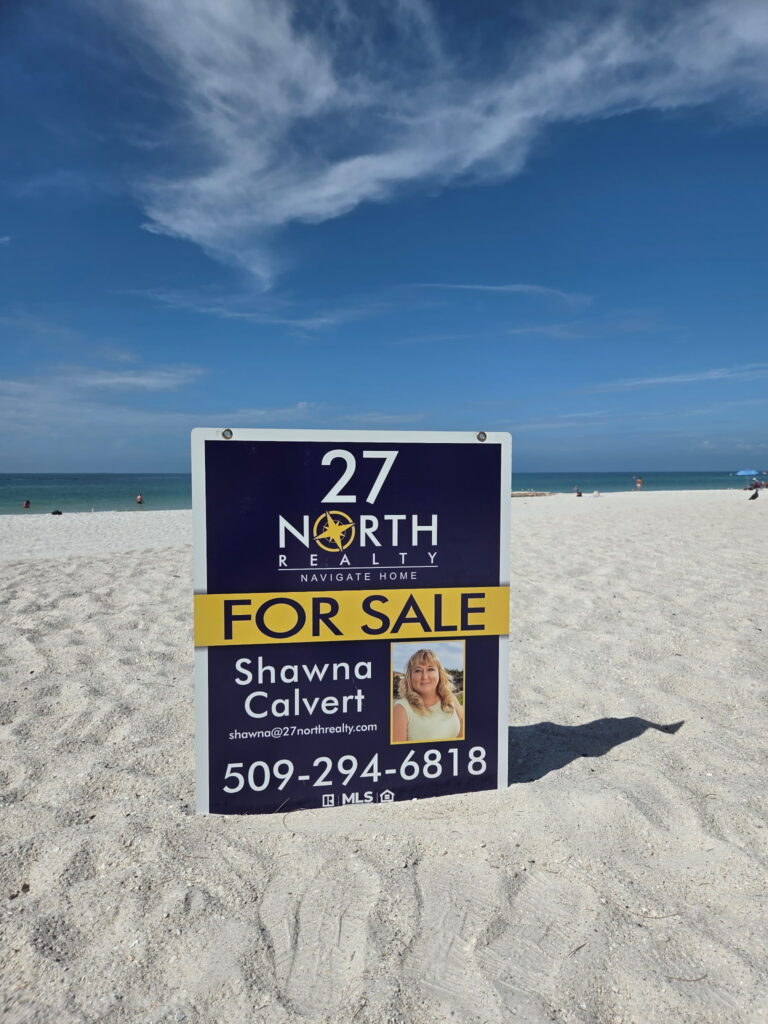
    A 27North Realty for sale sign for Shawna Calvert planted on a Florida beach
    A listing sign is the last step, not the first — the prep work happens weeks before this goes in the yard.

    What staging and curb appeal actually work in Florida?

    Florida buyers expect a specific feeling when they walk through a home, and that expectation is amplified for relocation buyers viewing your property via photos and video tours before ever setting foot inside. The bar for listing photography is high, and the staging decisions you make directly determine how that photography performs.

    Interior Priorities That Move the Needle in a Florida Market

    Light and openness are the two qualities Florida buyers respond to before they even check the price. Heavy furniture, dark window treatments, and personal collections all compress perceived square footage in photos and suppress buyer interest before a showing is ever scheduled. Clear out clutter, maximize natural light, and let the space read as large as it actually is.

    On the repair side, focus on cosmetic items that register on camera: cracked tile grout, scuffed baseboards, dated light fixtures, and worn front-door hardware. These are inexpensive to address and show up clearly in listing photos. Skip major renovations, kitchens and bathroom overhauls rarely return their full cost in a resale context, and the time they consume delays your market launch.

    Waterfront-Specific Presentation Details Buyers Notice Immediately

    For a waterfront home, the emotional close happens outside. The lanai, dock, and backyard seating area carry as much persuasive weight as the kitchen, and they need to be staged with the same intentionality. Clean the dock, pressure-wash the seawall cap, replace faded outdoor furniture cushions, and add a few potted plants to the lanai. Buyers are imagining their life on the water the moment they open those photos.

    Water-side photography is now a baseline expectation, not a premium upgrade. Aerial drone shots and photos taken from the water, showing the dock, seawall, and rear elevation of the home, are the first images relocation buyers share when they text their family “look at this one.” If those shots are missing or unflattering, your listing loses its most compelling selling point before a buyer reads a single word of the description.

    What must Florida sellers disclose?

    Florida’s disclosure laws tightened in 2025, and the changes took effect October 1, 2025 under Section 689.302, Florida Statutes. Florida law now requires residential sellers to disclose any flood damage that occurred during their ownership, not just damage tied to an insurance claim. Sellers must also disclose assistance received from any source for flood-related repairs, expanding the prior requirement that covered only federal assistance. These disclosures must be delivered at or before contract execution.

    Flood Zone Status, FEMA Maps, and Elevation Certificates

    Florida sellers must disclose known flood risk and history, and buyers, especially out-of-state relocation buyers who do extensive remote due diligence, will pull the FEMA map independently as part of their research. The disclosure framework applies to known flood damage regardless of whether the property sits in a formally designated Special Flood Hazard Area. Having an updated elevation certificate ready before your listing goes live removes a common last-minute friction point. Buyers who request one mid-contract often use the delay as leverage to renegotiate.

    What “As-Is” Means in a Florida Contract and What It Doesn’t Excuse

    Selling “as-is” is a contract position, not a disclosure shield. Florida law requires sellers to disclose known material defects regardless of contract language. For waterfront sellers specifically, this means disclosing known issues with the seawall, dock condition, drainage, and any prior flood claims or damage. Disclose it in writing, disclose it early, and keep a copy. A seller who hides a known defect can be sued for it long after closing, and a buyer who learns about it mid-inspection will renegotiate harder than one who knew going in.

    How do you prepare a waterfront home to sell?

    Waterfront deals derail for predictable reasons. Sellers who understand those reasons before listing can address them proactively, rather than watching a buyer walk away in the final weeks of a transaction. Three issues surface most consistently: dock permit status, seawall condition, and water access documentation.

    Dock Condition and Permit Status: What Buyers’ Agents Will Verify

    A buyer purchasing a waterfront home for boating access will verify that the dock and boat lift are permitted, structurally sound, and compliant with current codes. In unincorporated Hillsborough County, dock and boat lift work goes through the Environmental Protection Commission of Hillsborough County, and work in Tampa Bay waters can also require a Tampa Port Authority Minor Work Permit. Depending on the project, Florida DEP or Southwest Florida Water Management District authorization and Army Corps of Engineers sign-off can apply on top of that. Pull your permits before you list, know what was built and when, and be ready to provide documentation.

    Seawall Inspections and How Structural Issues Affect Buyer Financing

    A professional seawall inspection in the Tampa Bay area typically runs $300 to $800 for a standard residential evaluation, with more detailed assessments reaching $600 to $1,200 depending on seawall length and whether underwater inspection is included. Inspectors evaluate cap condition, panel integrity, tie-back and anchor status, weep hole drainage, soil conditions behind the wall, and overall deflection or movement. Lenders financing buyers with conventional loans may require repairs before funding if structural issues are identified mid-contract.

    Sellers who commission that inspection before listing can repair proactively, adjust their asking price to reflect condition, or disclose with documentation already prepared, all on their own schedule rather than a buyer’s timeline. Shawna works with relocation buyers navigating waterfront due diligence for the first time on a daily basis, which means she knows exactly what questions those buyers bring to a waterfront showing and which pre-listing steps eliminate the issues that kill deals. That anticipatory knowledge is what separates a waterfront listing specialist from a generalist agent who occasionally sells canal homes.

    Sunset over the water seen from a covered lanai overlooking a private dock
    Buyers picture their own evenings here, which is why the lanai and the view get photographed first.

    Should you use an agent, FSBO, an iBuyer or a cash buyer?

    Every seller’s situation is different, and the right selling method depends on your timeline, property condition, and net-proceeds priority. For waterfront and flood-zone properties in Florida, that choice carries an added layer of complexity, not every buyer channel handles these homes the same way. Here is how the four main options compare in 2026 with realistic numbers attached.

    Timelines and Net Proceeds: What the 2026 Data Actually Shows

    • Traditional agent: 60 to 90 days list-to-close; total seller costs typically 8% to 10% including commissions, closing costs, and prep spending. Usually produces the highest net for homes in good condition and remains the strongest path for sellers who want to sell your home fast without sacrificing price.
    • FSBO: 55 to 105+ days; lower explicit fees (flat-fee MLS runs $300 to $500 plus any buyer-agent concession) but higher execution risk on pricing, disclosure management, and negotiation.
    • iBuyer (Opendoor, Offerpad):7 to 21 days; service fees around 5%, with total transaction costs often landing at 10% to 15% once repair deductions and closing costs are included. Note that major iBuyers often decline properties in FEMA Special Flood Hazard Areas, making this channel less predictable for waterfront and flood-zone homes in Florida.
    • Cash buyer: 7 to 14 days; no listing fees but offers typically come in 5% to 20% below retail depending on condition. Investors often apply a 70% rule: roughly 70% of after-repair value minus estimated renovation costs. Selling a house for cash can make sense when condition issues or timeline pressure outweigh the price difference.

    For a standard Florida home in good condition, the traditional agent route typically produces the strongest net. For a property needing significant work, or for a seller prioritizing speed over price, a cash buyer can make real sense. The math shifts based on your specific situation, and running those numbers with a local advisor before committing to a method is worth the conversation.

    Why Waterfront Listings Specifically Benefit From a Specialist’s Buyer Network

    Waterfront homes have a narrower qualified buyer pool by nature. Reaching buyers who are actively searching for canal-front or bay-front homes in the Tampa Bay area, financially ready, and already motivated by the Florida waterfront lifestyle requires more than placing a home in the MLS. Agents who work with relocation buyers daily already have a pipeline of pre-qualified, lifestyle-driven buyers looking for exactly what a waterfront home offers. Fewer days on market and stronger offers follow from that direct connection in ways a generic listing strategy simply cannot replicate.

    What does a 30/60/90-day selling plan look like?

    This plan converts everything in this guide into an executable sequence. Work through each phase and you arrive at the closing table prepared rather than reactive. Understanding how to sell a house in Florida means following a structured timeline, not scrambling to respond to buyer demands after you’re already under contract.

    Days 1 to 30: Prepare, Price, and Document

    Order a pre-listing home inspection and a seawall and dock evaluation. Pull all dock and structural permits, gather your HOA and CDD documents, and request a current elevation certificate. Work with your agent to build a pricing strategy using waterfront comps, not just neighborhood averages. Begin staging, address cosmetic repairs, and clean and restore the dock and exterior living areas.

    Days 31 to 60: List, Market, and Qualify Buyers

    Launch the listing with professional photography that includes aerial shots and water-side images. Have all disclosure documents fully prepared and ready to deliver before contract execution. As offers come in, prioritize buyers with strong pre-approval letters and, for waterfront properties, lenders who have experience financing Florida flood-zone and canal-front homes. An out-of-state buyer using a national lender with no Florida waterfront experience introduces closing risk that a local lender largely eliminates.

    Days 61 to 90: Contract to Close

    Respond to inspection reports and repair requests with your pre-listing documentation already in hand. Your inspection reports and seawall assessment reduce the space for buyer leverage because there are no surprises to negotiate around. Coordinate title, satisfy any lender requirements, and request HOA and CDD estoppel letters early. Florida law gives an association 10 business days to deliver one, and if it misses that window it cannot charge you for it. Close with the confidence that the preparation work has eliminated the last-minute renegotiations that derail under-prepared transactions.

    Ready to Sell My Home in Florida? Start With the Right Preparation

    Florida real estate in 2026 rewards sellers who approach the process the way a well-informed local advisor would. That means understanding disclosure obligations before they become liabilities, handling waterfront due diligence before buyers uncover it, and pricing with precision rather than optimism. It also means choosing a selling method that matches your actual goals rather than defaulting to whatever feels familiar.

    Shawna Calvert works with relocation buyers searching for waterfront homes in the Tampa Bay and Southshore area every week. She knows the questions those buyers ask, the concerns their lenders raise, and the inspection items that stall closings on canal-front properties. When she lists a waterfront home, she arrives already having answered the questions that tend to surface mid-contract, because she’s seen them hundreds of times. If you’re preparing to sell my home in Florida and want a straight conversation about pricing, positioning, and what buyers in this market are actually looking for, reach out to Shawna and the 27North Realty team directly. The preparation you do in the next 30 days determines how that closing goes.

  • What Not to Fix Before Selling Your Florida Home

    What Not to Fix Before Selling Your Florida Home

    Getting a house ready to sell doesn’t mean renovating it. It means helping a buyer see a home that’s been looked after, understand what it’s worth, and feel confident enough to write an offer.

    I’ve walked through hundreds of these before listing day, and I’ll tell you plainly: sellers spend real money on projects buyers never even notice. Meanwhile a few small, cheap things make a house feel brighter, cleaner and easier to say yes to. Here’s where I’d tell you to save your money.

    The right preparation plan isn’t the longest list of projects. It’s the list that fits the home, its price range, its competition, and the buyers most likely to purchase it.

    Quick Answer: What Should You Avoid Fixing Before Selling?

    Most sellers should avoid completing expensive, highly personal, or unnecessary improvements simply because they’re preparing to list. Full kitchen and bathroom renovations, a new swimming pool, elaborate landscaping, luxury fixtures, and trend-driven finishes may not return their cost when the home sells.

    Instead, start with condition, cleanliness, maintenance, presentation, insurability, and the issues buyers are most likely to notice during a showing or inspection.

    There are exceptions. A damaged roof, active leak, unsafe electrical condition, failed air-conditioning system, unpermitted improvement, or another issue that could affect insurance, financing, inspection, or closing deserves a different level of attention.

    Shawna Calvert, REALTOR with 27North Realty, inside an Apollo Beach home
    Clean, bright and decluttered beats a half-finished renovation almost every time.

    How do you decide what to repair?

    Before spending money, separate possible projects into three groups.

    1. Problems That May Affect the Sale

    These can include safety concerns, active water intrusion, broken systems, permit problems, visible damage, insurance obstacles, and conditions that could affect financing or an appraisal.

    These issues should be evaluated early. The best choice may be a repair, a professional opinion, a written estimate, an appropriate disclosure, or a pricing adjustment. The correct response depends on the property and the market.

    2. Presentation Improvements

    These are the changes that help the home photograph and show well. Common examples include deep cleaning, decluttering, touch-up paint, pressure washing, replacing burned-out bulbs, trimming landscaping, repairing a loose handle, and correcting small items that make the home feel neglected.

    Presentation work is often less expensive than renovation and can have a larger effect on a buyer’s first impression.

    3. Personal-Preference Projects

    These are improvements a seller might enjoy but a buyer may not value in the same way. Examples include designer tile, specialty rooms, luxury fixtures, bold finishes, and expensive technology that isn’t expected for the home’s price range.

    These projects are where sellers are most likely to overspend.

    10 Things You May Not Need to Fix Before Selling

    1. A Full Kitchen Remodel

    Buyers care about kitchens, but that doesn’t mean every dated kitchen should be removed before listing. A seller can spend heavily on cabinets, counters, appliances, flooring, and layout changes only to discover that the buyer would have chosen something different.

    A smaller plan may be more appropriate:

    • Deep-clean cabinets, counters, appliances, and grout.
    • Replace broken or clearly worn hardware.
    • Repair damaged surfaces.
    • Improve lighting.
    • Remove excess items from counters.
    • Consider paint or a modest update only when it supports the home’s price and competition.

    The National Association of Realtors’ 2025 Remodeling Impact Report estimated 60 percent cost recovery for both a complete kitchen renovation and a minor kitchen upgrade. That’s a national estimate, not a guarantee for a particular Florida home. It demonstrates why sellers should compare the likely market benefit with the cost before beginning a major project.

    2. A Luxury Bathroom Renovation

    A clean, functional bathroom matters. A brand-new luxury bathroom may not be necessary.

    Before replacing everything, consider re-caulking, regrouting, repairing leaks, replacing a damaged fixture, cleaning glass, refreshing paint, and improving lighting. These targeted steps can make the room feel cared for without asking the seller to select finishes for the next owner.

    3. Every Older Window

    New windows can be valuable, particularly when there’s damage, water intrusion, poor operation, or an insurance concern. They can also be a major expense.

    The 2025 NAR report estimated national cost recovery of 74 percent for new vinyl windows and 71 percent for new wood windows. That means replacement may still make sense for some properties, but it shouldn’t be an automatic pre-listing decision.

    In Florida, the analysis should include the age and condition of the windows, impact rating or shutter protection, insurance implications, permitting, the home’s price range, and how competing listings are equipped.

    4. A New Swimming Pool

    A pool can be a major lifestyle feature in Tampa Bay, but installing one immediately before selling is usually a difficult way to recover the cost. Construction time, permitting, design choices, maintenance, and buyer preference all affect the result.

    If the home already has a pool, make it show-ready. Keep the water clear, clean the deck and enclosure, correct visible maintenance concerns, and have useful records available. If the home doesn’t have a pool, price and market the property for what it offers rather than trying to complete a major backyard project for an unknown buyer.

    5. High-End Landscaping

    Curb appeal matters, but elaborate landscaping may not be necessary. Buyers may worry about the maintenance required for extensive plantings or may prefer a different design.

    Focus first on mowing, edging, trimming, removing dead material, cleaning the entry, refreshing mulch where appropriate, and making the walkway easy to navigate. The goal is a cared-for exterior, not a landscape installation designed around one person’s taste.

    6. Trend-Driven Finishes

    Bold tile, highly specific colors, unusual wallpaper, and dramatic fixtures may photograph well today but can narrow the buyer pool. A seller preparing to move may not have enough time to enjoy the improvement or enough certainty that buyers will value it.

    When a finish truly needs replacement, select something appropriate for the home’s architecture, price range, and likely buyer rather than chasing the newest trend.

    7. Expensive Decorative Fixtures

    Don’t assume that a designer chandelier, premium faucet, or luxury cabinet hardware will create an equal increase in sale price. Replace fixtures that are broken, unsafe, badly damaged, or seriously inconsistent with the rest of the home. Clean and repair serviceable items before replacing them.

    Lighting temperature and brightness can matter more in photographs and showings than the price of the fixture itself.

    8. Highly Personalized Spaces

    A wine room, themed bedroom, custom hobby area, or specialized home gym may be valuable to the current owner without being valuable to the next one. Don’t spend heavily finishing a personal project just because the home is going on the market.

    Make the room clean, functional, and understandable. When practical, show how it could serve more than one purpose.

    9. Removing Closets or Built-In Storage

    Storage is important to many buyers. Converting a closet into a desk area or removing built-ins to create a niche can reduce function, even if the result looks attractive.

    Keep useful storage unless there’s a strong property-specific reason to change it. Organize closets so buyers can see their capacity.

    10. Improvements That Hide a Larger Problem

    Fresh paint shouldn’t be used to conceal water intrusion, repaired cracking, mold, or another material condition. Decorative work isn’t a substitute for understanding the cause of visible damage.

    If a seller knows about a condition that may materially affect the property’s value, the response should be discussed with the appropriate real estate and licensed professionals. The objective is to prepare the home honestly and strategically, not to hide information a buyer may need.

    Which Florida issues deserve extra attention?

    Generic home-preparation lists often miss the issues that matter in Florida. Before investing in cosmetic work, Southshore and Tampa Bay sellers should evaluate the following:

    • Roof age, condition, permit history, and possible insurance implications
    • Air-conditioning operation, age, and service history
    • Electrical panels, wiring concerns, and insurability
    • Plumbing supply and drain conditions
    • Signs of water intrusion, storm damage, or unrepaired leaks
    • Wind-mitigation and four-point inspection information, when applicable
    • Flood history, elevation information, and available flood documentation
    • Permits for additions, conversions, docks, seawalls, pools, and other improvements
    • Pool, spa, screen-enclosure, dock, boat-lift, and seawall condition when present
    • HOA or CDD requirements that may affect exterior work

    This doesn’t mean every older component must be replaced. It means the seller should understand the issue before deciding whether to repair it, document it, obtain an estimate, disclose it, or account for it in pricing.

    Shawna Calvert of 27North Realty in a coastal-style Apollo Beach home
    Small cosmetic fixes photograph well. Big-ticket replacements rarely return what they cost.

    Where do sellers actually get better value?

    The most useful preparation work is often less dramatic than a remodel:

    1. Correct active leaks, safety concerns, and broken essential systems.
    2. Deep-clean the home, including windows, floors, bathrooms, kitchen surfaces, and exterior entry areas.
    3. Remove excess furniture and personal items so rooms and storage feel usable.
    4. Complete small repairs that create an impression of deferred maintenance.
    5. Improve light with clean windows, consistent bulbs, and open sightlines.
    6. Refresh visibly worn paint when it will materially improve photographs and showings.
    7. Prepare records for major systems, permits, warranties, insurance inspections, and completed improvements.
    8. Price the home according to its current condition and the alternatives buyers can purchase.

    NAR’s 2025 report found that the projects Realtors most frequently recommended before listing included painting the entire home, painting a single room, and installing a new roof. That doesn’t mean every seller needs those projects. It reinforces the value of making decisions based on the home’s actual condition and likely buyer response.

    How should you decide before listing?

    Before approving a renovation, ask five questions:

    1. Is the project correcting a problem or simply changing a preference?
    2. Could the issue interfere with insurance, financing, appraisal, inspection, or closing?
    3. Will buyers in this price range expect the improvement?
    4. How does the cost compare with the likely difference in sale price or marketability?
    5. Would pricing the home appropriately be smarter than completing the work?

    The answers are different for every home. A dated but well-maintained kitchen in a waterfront property may be treated differently from the same kitchen in a competing new-construction market. A roof with documented remaining life is different from one creating an immediate insurance obstacle. A cosmetic issue is different from an active defect.

    Frequently Asked Questions

    Should I renovate my kitchen before selling?

    Not automatically. Start with condition, cleanliness, function, price range, and competing listings. A targeted refresh may be more cost-effective than a complete renovation, especially when buyers are likely to personalize the space.

    Should I replace an old roof before listing a Florida home?

    Roof decisions in Florida can affect insurance, financing, buyer confidence, and value. Age alone doesn’t provide the full answer. Review the roof’s condition, permit history, available inspections, insurability, replacement cost, and market competition before deciding.

    Should I fix everything found during a pre-listing inspection?

    No. A pre-listing inspection can help identify conditions, but the appropriate response may be repair, further evaluation, documentation, disclosure, pricing, or a combination. Prioritize safety, active damage, essential systems, and issues likely to interfere with the transaction.

    Is it better to sell a home as-is?

    An as-is contract doesn’t eliminate a seller’s preparation decisions or applicable disclosure obligations. A well-presented home can still be sold using an as-is contract. The important question is whether the price, condition, and marketing accurately reflect what the buyer is purchasing.

    How much should I spend preparing my home for sale?

    There’s no universal amount. The budget should be based on the home’s condition, expected price, competing inventory, likely buyer, time available, and the probable benefit of each project. Begin with a walkthrough and written priorities before hiring contractors or purchasing materials.

    Build the Plan Before Spending the Money

    The safest time to decide what to fix is before contractors are scheduled and materials are ordered.

    I help sellers separate necessary work from optional work, compare the home with current competition, and build a preparation plan around the likely buyer. Sometimes the correct plan includes repairs. Sometimes it includes cleaning, staging, better photography, documentation, and pricing. The goal isn’t to make the home perfect. The goal is to help the seller invest where the market is most likely to notice.

    For a property-specific pre-listing walkthrough in Apollo Beach, Ruskin, Riverview, or the surrounding Southshore area, contact Shawna Calvert at 27North Realty.

    Shawna Calvert
    27North Realty
    Call or text: 509-294-6818
    Email: shawna@27northrealty.com

    This article provides general real estate information and isn’t legal, tax, insurance, engineering, contracting, or inspection advice. Property conditions and transaction requirements vary. Consult the appropriate licensed professionals for advice about a specific home.

  • How to Sell a Florida Home in a Slower, Buyer-Favored Market

    How to Sell a Florida Home in a Slower, Buyer-Favored Market

    In a market where buyers have choices, your house has to compete from day one. Not week three, after two price drops. Day one.

    That means price, condition, presentation, how easy it is to get in and see it, and your terms. Buyers with options don’t forgive dark photos, deferred maintenance, confusing ownership costs, or a price that assumes the market will come rescue you. This isn’t about giving the house away — it’s about removing every reason a qualified buyer picks somebody else’s.

    What market are you actually selling into?

    A seller’s purchase price, renovation cost, mortgage balance, or hoped-for proceeds may matter personally, but buyers compare the home with today’s alternatives. Your strategy should begin with recent closed sales, active competition, pending activity when reliable details are available, and what buyers have rejected.

    Closed sales show what buyers and appraisers accepted. Active listings show your competition, but some may be overpriced and may never sell at their current number.

    Empty Overcast St. Pete Beach, FL With Lone Seagull and Distant Coastal Buildings on a Cloudy Day
    In a buyer-favored market, condition and price do the work that scarcity used to do.

    How should you price for the first wave of buyers?

    The earliest days of a listing often bring the most attentive audience. A high launch price can cause the home to miss buyers who would have acted at a more defensible number. Later reductions may not fully recreate that first burst of interest.

    Pricing should place the property where buyers are searching and where the home compares well. Read my guide to strategic pricing for Florida sellers for a deeper explanation of online search bands and market response.

    How do you build a value story?

    Buyers should quickly understand why this home deserves attention. That story might be waterfront access, elevation, a newer roof, an assumable feature when verified, a useful layout, a renovated kitchen, low community fees, or a location that shortens an everyday drive.

    For Florida homes, buyers may also compare:

    • Insurance availability and estimated cost
    • Flood zone and available elevation information
    • Roof, HVAC, plumbing, electrical, and water-heater age
    • HOA, condominium, and CDD obligations
    • Permit history and insurability of improvements
    • For waterfront homes, seawall, dock, lift, canal, bridge, and boating details

    Organized documents and accurate answers create confidence. Missing information creates uncertainty, and buyers often price uncertainty as risk.

    How do you prepare without overspending?

    A slower market doesn’t automatically justify a major renovation. Focus first on cleanliness, deferred maintenance, safety, light, odor, curb appeal, and the items that could block insurance or financing.

    Before starting expensive work, read what not to fix before selling a Florida home. The right improvements depend on the price point, competition, property condition, and likely buyer.

    How does the online listing earn a showing?

    Most buyers eliminate homes online before they schedule a visit. Professional photography should be accurate, bright, and sequenced so the layout makes sense. Video, floor plans, aerial context when appropriate, and a strong description can help buyers understand the property before they arrive.

    Don’t lead with a long list of generic upgrades. Lead with the experience and the features that are difficult to replace.

    Make showings easy

    Every unavailable time slot is a chance for the buyer to see and prefer another home. You don’t need to accept unsafe or unreasonable access, but you do need a workable plan for notice, pets, work schedules, and last-minute requests.

    Use my Florida home showing checklist to create a repeatable routine for the day before and the final hour.

    What should you do with showing feedback?

    One buyer’s opinion can be personal taste. A repeated pattern is market information. Track:

    • Online views, saves, and inquiries
    • Showing volume compared with similar listings
    • Comments that repeat across multiple buyers
    • Second showings and requests for documents
    • Offer activity and the reasons offers don’t come together

    If the listing has strong exposure but weak showings, price or the online presentation may be the problem. If showings are steady but buyers repeatedly choose other homes, price, condition, ownership costs, or a competing feature may be getting in the way.

    When do incentives actually help?

    Closing-cost assistance, a temporary rate buydown, a repair credit, or flexible timing can help a buyer when structured correctly. But an incentive isn’t a substitute for a realistic price.

    Before offering a financing-related incentive, confirm the lender’s rules and the buyer’s actual needs. A concession that sounds impressive may have little value if the buyer can’t use it.

    Should you keep cutting the price?

    In a declining price environment, small reductions that remain above the buyer’s value range can extend the listing without changing the result. If the evidence supports a change, move to a price that reaches a new buyer pool or clearly improves the home’s position against its competition.

    The question isn’t whether the seller is willing to reduce. The question is whether the new number changes buyer behavior.

    A practical 14-day review

    1. Compare showing volume with competing homes.
    2. Review online engagement and saved-listing activity.
    3. Identify repeated objections.
    4. Check new listings, pending homes, price changes, and closed sales.
    5. Confirm that photos, description, access, and property information are working.
    6. Decide whether the next move is presentation, terms, price, or a combination.

    Not every market requires a change after 14 days, but every listing deserves a deliberate review rather than passive waiting.

    Frequently asked questions

    Should I price below market value to create multiple offers?

    Not automatically. The strategy should fit the property and current competition. A compelling price can increase attention, but the goal is a defensible number that reaches the right buyers.

    How quickly should I reduce the price?

    Use local evidence rather than a universal deadline. Low activity during the most important launch period deserves prompt review, especially when comparable homes are receiving showings or offers.

    Do seller concessions work in a buyer’s market?

    They can, when they address a specific buyer need and comply with financing rules. Concessions don’t correct an unsupported list price.

    What matters more, condition or price?

    They work together. Almost any condition can sell at the right price, but improved presentation and documented maintenance can reduce uncertainty and help protect value.


    Need a clear selling strategy for today’s Florida market?
    Shawna Calvert
    27North Realty
    Call or text 509-294-6818
    shawna@27northrealty.com

  • What a Zillow Zestimate Can and Cannot Tell a Florida Home Seller

    What a Zillow Zestimate Can and Cannot Tell a Florida Home Seller

    A Zestimate can be encouraging, deflating, or oddly specific. It might say your house is worth $742,318, and that precision makes it feel authoritative.

    It isn’t. Nobody climbed on your roof, walked your dock, looked at your seawall, priced your renovation, or opened the four competing listings buyers are going to tour this weekend. Use it as a starting point — Zillow says the same thing themselves — but it is not a pricing analysis, and around here the difference between a good canal and a bad one can be six figures a computer will never see.

    Quick Answer: Is a Zillow Zestimate Accurate?

    Sometimes it can be close to a home’s eventual sale price, and sometimes it can be meaningfully different. Accuracy depends on the quality and quantity of available data, how similar nearby sales are, whether the home’s recorded facts are correct, and whether important property differences can be captured by an automated model.

    Zillow describes the Zestimate as an estimate of market value based on public records, MLS data, and user-submitted home details. Zillow also states that it’s not an appraisal and can’t be used in place of one.

    Shawna Calvert of 27North Realty at the dock rail on an Apollo Beach canal
    An algorithm has never walked your dock. That is most of the gap between a Zestimate and a real price.

    What Information Goes Into a Zestimate?

    According to Zillow, its model can incorporate information such as:

    • public property records;
    • MLS and listing data;
    • prior sales;
    • bedroom and bathroom counts;
    • square footage and lot size;
    • tax assessments;
    • location;
    • user-submitted home facts;
    • available market and comparable-sale information.

    That’s a substantial amount of data, but data can be incomplete, delayed, inaccurate, or unable to describe what a buyer experiences in person.

    Why are Florida waterfront homes hard to estimate?

    Apollo Beach waterfront value can change from one street or canal to the next. Two homes with similar square footage can have very different market appeal because of factors an automated model may not fully understand.

    Examples include:

    • direct Tampa Bay access versus a route with a fixed bridge;
    • canal depth, width, turning room, tides, and travel time;
    • boat-lift capacity and whether it fits the likely buyer’s boat;
    • dock design, permits, electrical service, and condition;
    • seawall age, material, maintenance responsibility, and visible condition;
    • bayfront, canal, lagoon, pond, lake, or water-view distinctions;
    • finished-floor elevation, flood considerations, and insurance options;
    • western or eastern exposure and the view from the outdoor living area;
    • pool, lanai, outdoor kitchen, storm protection, and major-system condition;
    • gated access, marina rights, HOA, CDD, and community amenities.

    A computer can see “waterfront” in a dataset without understanding whether the water works for a 30-foot boat, whether a bridge blocks a tower, or whether a seawall project may affect the buyer’s future cost.

    Can an algorithm see renovations and condition?

    Public records may show the same bedroom count and square footage for two homes even when one has a new roof, updated windows, a renovated kitchen, modern electrical and plumbing, and careful maintenance while the other needs major work.

    Not every renovation returns its full cost, and taste still matters. A highly personalized improvement may be expensive without commanding the same premium from buyers. An in-person review helps separate:

    • maintenance that protects marketability;
    • functional improvements buyers value;
    • cosmetic updates that improve presentation;
    • features that are overbuilt for the likely buyer;
    • deferred work that’ll affect offers or insurance;
    • personal choices that may not translate into resale value.

    Are nearby sales really comparable?

    A pricing model needs nearby data, but proximity doesn’t guarantee similarity. A good property-specific analysis asks why one sale should or shouldn’t be used.

    For example, compare:

    • water access and boat route;
    • community and ownership structure;
    • age, design, builder, and construction quality;
    • lot position, view, privacy, and orientation;
    • condition and major updates;
    • pool, dock, lift, seawall, garage, and outdoor living;
    • sale date and market conditions at the time;
    • seller concessions, financing terms, and unusual circumstances;
    • active competition buyers can choose today.

    Closed sales explain what buyers accepted in the past. Active and pending competition helps show what buyers are considering now.

    Zestimate, CMA and Appraisal: What Is the Difference?

    ToolPrimary purposeImportant limitation
    ZestimateA free automated estimate that helps consumers begin understanding possible market value.No physical inspection and limited ability to interpret unique, condition, route, view, or buyer-preference differences.
    Comparative Market AnalysisA Realtor’s property-specific analysis used to develop a listing or offer strategy from relevant sales and current competition.It’s an informed opinion, not a licensed appraisal or guaranteed sale price.
    AppraisalAn independent valuation prepared by a licensed or certified appraiser, often for lending or another formal purpose.It’s still an opinion of value based on a stated effective date, scope, data, and methodology.

    What should sellers do with a Zestimate?

    1. Check the property facts. Confirm bedrooms, bathrooms, square footage, lot size, prior sales, and other basic information.
    2. Don’t list from one number. Compare the Zestimate with a property-specific CMA, relevant sales, current competition, condition, and buyer demand.
    3. Ask why the comps were chosen. A useful pricing conversation explains the similarities, differences, adjustments, and market reaction.
    4. Separate value from strategy. A probable market-value range and the best launch price are related but not always identical.
    5. Watch current buyer behavior. Showings, inquiries, saves, competing listings, offers, and feedback provide new evidence after launch.
    6. Adjust when the evidence changes. Holding to an online estimate while buyers consistently choose better-positioned alternatives can cost time and leverage.

    Why List Price Strategy Matters Online

    Buyers often search in price bands. A small pricing decision can change which filters include the property, how it compares with nearby listings, and whether buyers perceive it as a strong match or an overpriced outlier.

    The goal isn’t simply to appear online. It’s to earn clicks, showings, and offers from qualified buyers while protecting the seller’s leverage. Read how strategic home pricing improves online visibility.

    What Buyers Should Know

    Buyers shouldn’t treat a Zestimate as proof that a listing is overpriced or underpriced. Ask for relevant comparable sales, current competition, property condition, waterfront details, insurance considerations, and the seller’s pricing history.

    A house can sell above an automated estimate because buyers value features the model didn’t capture. It can also sell below the estimate because of condition, insurance, location, competition, terms, or market changes.

    Frequently Asked Questions

    Is the Zestimate an appraisal?

    No. Zillow explicitly states that a Zestimate isn’t an appraisal and can’t replace one.

    Can the Zestimate change after a home is listed?

    It can change as Zillow receives new listing, market, public-record, MLS, or user-submitted data. A change doesn’t prove that the home’s physical value changed by the same amount.

    Should I correct inaccurate facts on Zillow?

    Accurate property data is useful, but correcting facts doesn’t guarantee a particular estimate or sale price. Follow Zillow’s current procedures and keep documentation supporting important changes.

    Can a Realtor guarantee the sale price?

    No. A careful Realtor can develop and explain a supportable pricing strategy, but the final result depends on the property, competition, exposure, buyer demand, terms, financing, inspection, appraisal, and negotiation.

    What’s the best way to learn what my Florida home may sell for?

    Combine an in-person property review with recent relevant sales, current competition, market direction, condition, improvements, ownership costs, and property-specific features.

    Use the Zestimate as a Starting Point, Not the Finish Line

    Shawna Calvert uses current market data, local buyer behavior, property condition, community details, and waterfront expertise to build a pricing strategy that can be explained and defended. The goal isn’t to argue with an algorithm. It’s to understand the home’s real competition and make a smart launch decision.

    Shawna Calvert
    27North Realty
    Call or text: 509-294-6818
    Email: shawna@27northrealty.com

    Source

    Automated estimates, comparable sales, market conditions, and property data can change. This article provides general real estate information and isn’t an appraisal or a guarantee of value.

  • How Strategic Home Pricing Improves Online Visibility in Florida

    How Strategic Home Pricing Improves Online Visibility in Florida

    Buyers meet your house on a screen long before they meet your front door, and they search inside a price range. Price the house $10,000 outside the range they picked and your photos, your renovation, your water view — none of it ever loads on their phone.

    That’s what makes pricing strategic instead of just a number you’re comfortable with. The list price decides who sees the house at all, what buyers expect when they walk in, how many showings you get, whether the appraisal holds, how much leverage you keep in negotiation, and how the home stacks up against every other option that weekend.

    Quick Answer: How Does Pricing Affect Online Visibility?

    Buyers commonly use a minimum and maximum price when searching the MLS, Zillow, Realtor.com, brokerage websites, and real estate apps. A home listed even slightly above a buyer’s maximum may be excluded from that search.

    A strategically chosen price can place the home inside the most relevant buyer searches while remaining supported by recent comparable sales, active competition, condition, location, and current demand. The goal isn’t to manipulate a portal. The goal is to position the property where qualified buyers are actually looking.

    Shawna Calvert, REALTOR with 27North Realty, on an Apollo Beach canal
    Price the home into the range buyers are actually searching and the photos do the rest.

    Why do price filters matter so much?

    Imagine that a buyer has been preapproved around $500,000 and sets a maximum search price of $500,000. A home listed at $505,000 may never appear, even if the seller would seriously consider a $500,000 offer.

    The same issue can occur at $400,000, $750,000, $1 million, or any other common search boundary. Search interfaces and available increments can change over time and may differ by portal, device, and market. Sellers shouldn’t rely on an old chart of Zillow or Realtor.com price brackets. The pricing conversation should use the current search experience and current MLS competition.

    Where does strategic pricing start?

    Search visibility can’t rescue a price that the market doesn’t support. Before thinking about thresholds, the seller and listing agent should evaluate:

    • Recent comparable sales
    • Current competing listings
    • Pending sales when reliable information is available
    • Days on market and price-change history
    • Condition, updates, layout, lot, view, and location
    • Insurance, flood, roof, and financing considerations
    • HOA and CDD costs
    • Waterfront access, canal route, seawall, dock, and lift condition
    • New-construction incentives competing with resale homes
    • The number and urgency of likely buyers

    The result should be a defensible range, not a single magic number. Once the likely range is established, the final list price can be selected with buyer search behavior in mind.

    What are the three pricing positions?

    1. Market-Entry Pricing

    This approach positions the home near the most competitive part of its supported range. It can help maximize initial visibility and encourage buyers to act while the listing is new.

    It works best when the home is well prepared, the marketing is ready on day one, and the price is strong enough to compete with nearby alternatives.

    2. Aspirational Pricing

    This places the home above the most likely market-supported range because the seller hopes a buyer will pay a premium. It may work for a truly exceptional property with limited competition, but it can also reduce search visibility and give buyers a reason to favor better-positioned homes.

    The seller should understand the cost of testing the market, including lost time, carrying expenses, and the possibility that future buyers interpret a long market history as a sign of weakness.

    3. Threshold Pricing

    This selects a price at or just below a meaningful buyer search boundary while staying within the supported value range. For example, if the analysis supports a price around $500,000, the seller should consider how $499,000, $500,000, and $505,000 would appear in common searches.

    Threshold pricing isn’t automatically better. Sometimes the exact round number appears in searches on both sides of the boundary. The right choice depends on the portal settings, price range, competition, and seller’s objectives.

    Should you price just below a round number?

    A price just below a common maximum can include the listing in searches that would exclude a slightly higher number. It can also communicate that the seller has considered the buyer’s price range carefully.

    But the tactic shouldn’t be used mechanically. A $999 difference may not matter in every market, and a price chosen solely for appearance can still fail if the home isn’t competitive. Buyers compare the complete property, not just the last digits.

    Why an Exact Threshold Can Sometimes Be Better

    Listing exactly at a threshold may allow the property to appear for buyers searching up to that amount and for buyers whose minimum begins at the same amount. A home at $500,000 may be visible to a buyer searching $450,000 to $500,000 and another searching $500,000 to $600,000, depending on how the portal treats boundaries.

    This is one reason sellers should test the actual current search tools instead of assuming that every portal behaves the same way.

    Is online visibility only about price?

    Price earns the listing a place in the search results. The rest of the presentation earns the click and showing.

    A strong online launch includes:

    • Accurate MLS data and property features
    • Professional, well-ordered photography
    • A clear lead image that matches the home’s strongest selling point
    • A description that answers practical buyer questions
    • Correct waterfront, dock, pool, community, and association fields
    • Room dimensions and property details that are verified when possible
    • Useful disclosures and supporting documents ready for serious buyers
    • A mobile-friendly listing experience

    An inaccurately completed field can remove a property from a buyer’s filtered search even when the price is right. Waterfront homes require special care because terms such as waterfront, water access, canal, bay view, and boatable water aren’t interchangeable.

    The First Two Weeks Matter, but There Is No Universal Deadline

    New listings often receive their strongest attention early because they appear fresh to buyers and agents who are already watching the market. That doesn’t mean every home must sell immediately. Luxury, waterfront, unusual, and higher-priced properties may have a smaller buyer pool and a longer normal marketing period.

    The early response should still be measured. Track:

    • Online views and saves, when the platform provides them
    • Agent inquiries and buyer questions
    • Showing requests
    • Second showings
    • Feedback themes
    • Offer activity
    • New competing listings and recent pending sales

    One metric alone isn’t enough. High views with few showings may suggest that the photos or price attract curiosity but not action. Showings without offers may point to condition, price, layout, insurance, or another property-specific concern.

    When does a price adjustment make sense?

    A price change should be a strategic repositioning, not a random reduction. Before changing the price, ask:

    1. Has the home received enough exposure to judge the response?
    2. Has new competition entered the market?
    3. Have comparable homes gone pending or closed?
    4. Is buyer feedback consistent?
    5. Would a different price cross a meaningful search boundary?
    6. Can presentation, condition, access, or showing availability also be improved?
    7. What carrying costs are accumulating while the home remains listed?

    A small reduction that leaves the home in the same competitive position may not change the result. A meaningful adjustment can place the property in a new set of searches and create a clearer value comparison.

    Price changes may also generate alerts for some users or platforms, but notification behavior varies. Sellers should treat renewed visibility as an opportunity, not a guaranteed offer.

    Southshore waterfront homes and dockside shoreline near Tampa Bay
    Southshore buyers filter by price band first, then by water access — being $10,000 over a round number hides the listing.

    How is pricing a waterfront home different?

    Two Apollo Beach homes with similar square footage can have very different values because their water access is different. Important factors may include:

    • Open-water route and travel time
    • Canal depth and tidal limitations
    • Fixed bridges and clearance
    • Seawall age, type, and maintenance history
    • Dock and boat-lift capacity
    • Lot orientation and view
    • Flood zone, elevation, and insurance
    • Community fees, restrictions, and amenities
    • Renovation quality and permit history

    A price per square foot can’t capture these differences by itself. Strategic pricing must reflect how the property actually functions for the buyer most likely to want it.

    Pricing in a Market With New Construction

    Southshore sellers often compete with builders offering rate incentives, closing-cost contributions, warranties, or design packages. The resale home may offer a better lot, established landscaping, completed upgrades, a pool, mature community amenities, or a shorter move-in timeline.

    The price strategy should compare the buyer’s complete value, not only the builder’s advertised base price. At the same time, sellers can’t ignore a builder incentive that materially reduces the buyer’s monthly payment or cash to close.

    What are the common pricing mistakes?

    • Choosing a price based on the seller’s mortgage balance or desired proceeds
    • Adding the full cost of every improvement to the expected value
    • Using an automated estimate as the only valuation method
    • Pricing above the range simply to leave room for negotiation
    • Ignoring current competition and builder incentives
    • Making repeated small reductions without changing market position
    • Assuming all online portals use permanent, identical price brackets
    • Overlooking insurance, roof, flood, or waterfront issues that affect buyer affordability

    A Practical Pricing Checklist

    1. Define the likely buyer for the home.
    2. Review recent sales and current competition.
    3. Identify the home’s advantages and limitations.
    4. Estimate realistic buyer ownership costs.
    5. Check current price filters on the major search platforms.
    6. Choose a price supported by both market evidence and search visibility.
    7. Launch with complete MLS data, strong photos, and easy showing access.
    8. Set a date to review activity and competition.
    9. Agree in advance on the evidence that would justify a price adjustment.

    Frequently Asked Questions

    Should I list at $499,000 or $500,000?

    Either can be correct. The decision should consider current filter behavior, competing listings, comparable sales, and whether the exact threshold creates visibility in adjacent search ranges.

    Will pricing below a round number guarantee more showings?

    No. It may improve inclusion in certain searches, but condition, presentation, location, competition, and buyer demand still determine results.

    Should I price high so buyers can negotiate?

    Only if the higher price remains supported by the market and fits the seller’s strategy. An unsupported price can reduce visibility and discourage buyers before negotiation begins.

    Does Zillow determine my home’s value?

    No single portal estimate determines market value. A pricing analysis should use property-specific condition, features, local sales, current competition, and professional judgment.

    How soon should I reduce the price?

    There’s no universal number of days. Review activity, buyer feedback, competing inventory, market pace, and carrying costs. The decision should be based on evidence, not panic.

    Price for the Buyer Who Is Actually Searching

    The best list price connects market value with buyer behavior. It gives the home a strong chance to appear in the right searches, makes sense beside competing properties, and supports the seller’s timing and financial goals.

    If you’re preparing to sell in Apollo Beach, Ruskin, Riverview, Tampa Bay, or the surrounding Southshore area, Shawna Calvert at 27North Realty can help you build a property-specific pricing and launch strategy.

    For preparation priorities, also read What Not to Fix Before Selling Your Florida Home.

    Shawna Calvert
    27North Realty
    Call or text: 509-294-6818
    Email: shawna@27northrealty.com

    This article provides general real estate information. Search interfaces, portal features, MLS distribution, market conditions, and buyer behavior can change. A list price should be based on current property-specific analysis.

  • Why I Don’t Give Closing Gifts

    Why I Don’t Give Closing Gifts

    Here’s something that probably sounds wrong coming from a Realtor: I don’t give closing gifts.

    No gift basket. No cutting board with your last name burned into it. Nothing waiting on the table at closing.

    I want to tell you why, because it isn’t about being cheap.

    The real work happens long before closing day

    A closing looks simple in the final photo. Everybody’s smiling, somebody’s holding keys. What that photo doesn’t show is the months before it — the pricing conversation you didn’t want to have, the staging decisions, the buyer feedback that stung, the inspection negotiation, the appraisal that came in low, the title issue nobody saw coming, the insurance deadline that landed on a Friday afternoon.

    I’d rather you remember that I was there when it got hard than remember what was on the table at the end.

    Shawna and Gregg Calvert of 27North Realty aboard their boat in Apollo Beach
    The work is the gift.

    I answer the phone

    Real estate doesn’t happen between nine and five, and the stakes are too high for you to sit there wondering whether I saw your message.

    Being responsive doesn’t mean I make up an answer on the spot. Sometimes the honest response is “let me check with the title company and call you right back.” What matters is that the question is mine now, and you’re not carrying it alone.

    Sometimes you need me to disagree with you

    Good service isn’t telling a seller whatever price wins the listing. It isn’t telling a buyer that every house is a good house.

    It’s giving you a straight opinion, showing you what it’s based on, and then respecting your decision.

    That means saying the uncomfortable thing out loud — that the market may not support your number, that this repair won’t return what it costs, that this waterfront feature needs a much closer look before you fall in love with it, that this offer looks better on the surface than it actually is.

    This doesn’t end at closing

    A lot of my clients turn into friends. We end up sharing meals and holidays, and I’ve sold homes for the same families three and four times over.

    They send me their parents, their kids, their neighbors — not because of something I handed them at a closing table, but because of how they were treated for the ninety days before it.

    And yes, we still celebrate

    Buying or selling a home in Florida is a genuinely big deal, and I’m never going to be the person who won’t toast it with you.

    I just want the celebration to be about what we pulled off together. Not about the gift.

  • How to Attract International Buyers for a Florida Luxury Home

    How to Attract International Buyers for a Florida Luxury Home

    An international buyer is comparing your house to a place in Spain, and to another one in Costa Rica. They’re weighing countries, currencies, climate, ownership costs, flights home, and what the tax and legal side looks like for a foreign buyer — all at once.

    Gorgeous photography is table stakes. What actually wins is making the property easy to find, easy to understand, and easy to buy from four thousand miles away. That means honest storytelling about the home paired with a remote-buying process that doesn’t fall apart when the buyer can’t fly in.

    Why does international visibility matter in Florida?

    Florida continues to attract a meaningful share of international homebuyer activity. The National Association of REALTORS® international transactions report tracks foreign-client purchases and consistently identifies Florida as a leading destination.

    That doesn’t mean every luxury listing should use the same global campaign. The right markets depend on the property’s price, location, lifestyle, and features. A waterfront home with protected dockage needs different positioning than a downtown condominium or a golf-course estate.

    Distant View of St. Petersburg Skyline Across Tampa Bay with Waterfront Mansions, Florida
    International buyers shop Tampa Bay against Naples, Sarasota and Miami. Presentation and documentation have to travel.

    How do you build a global-ready listing?

    An international buyer may never visit before making an offer. The listing package should answer more questions than a standard photo gallery.

    • Professional photography that shows the property in a logical sequence
    • Video and an interactive or narrated virtual tour
    • Floor plans with clear dimensions
    • Aerial media when lawful and useful for location context
    • Accurate descriptions of updates, materials, systems, and included items
    • Maps showing airports, health care, schools when relevant, dining, and daily conveniences
    • For waterfront homes, documentation of docks, lifts, seawalls, bridge restrictions, and the route to open water

    Media should help a buyer understand the home, not hide its limitations. Accuracy builds confidence and reduces surprises during due diligence.

    Sell the Florida lifestyle with useful detail

    International luxury buyers are often buying both a property and a way of living. Replace vague phrases with specific answers:

    • How long does it take to reach Tampa International Airport?
    • Is the home suited to seasonal use, full-time living, or rental activity where permitted?
    • What services are nearby for boating, property management, landscaping, pools, and storm preparation?
    • What are the community’s HOA or condominium rules?
    • What are the likely maintenance demands for a second home?
    • What insurance, flood-zone, and wind-mitigation information is available?

    For an example of the local depth serious buyers need, see my Apollo Beach neighborhood guide and waterfront living guide.

    How do you prepare for remote due diligence?

    A buyer evaluating from another country may need extra time to assemble financial documents, transfer funds, coordinate inspections, and review closing documents. Sellers can make the process smoother by organizing information before the property launches.

    • Recent surveys, permits, warranties, and improvement records
    • HOA or condominium documents and current fee information
    • Insurance history and available wind-mitigation or four-point reports
    • Utility and maintenance information
    • Dock, lift, seawall, pool, and roof documentation when applicable
    • A clear list of furnishings or personal property included or excluded

    Remote access should also be planned carefully. Live video tours, trusted local inspections, secure document handling, and reliable title and closing professionals can keep a transaction moving across time zones.

    How do you make communication easy across borders?

    Clear communication is a competitive advantage. Use plain language, avoid unexplained local abbreviations, and confirm important points in writing. When needed, coordinate qualified translation rather than relying on an automated translation for contracts or technical documents.

    A listing agent should also establish a reliable schedule for live tours, document deadlines, and responses across time zones. International buyers may need introductions to lenders experienced with foreign-national financing, tax professionals, immigration counsel, and insurance specialists. Those professionals should give advice within their own licensing areas.

    What ownership and closing questions come up?

    Buying U.S. real estate doesn’t, by itself, create immigration status or a right to live in the United States. Ownership structure, taxation, estate planning, financing, and currency transfers can also be more complex for an international buyer.

    FIRPTA is often misunderstood. It generally concerns withholding when a foreign person sells a U.S. real property interest, not simply when an international buyer purchases a home. The IRS FIRPTA guidance explains the federal framework. Buyers and sellers should obtain advice from qualified tax and legal professionals well before closing.

    Price and positioning still lead the strategy

    Global exposure can’t repair a price that’s unsupported by the market. Luxury pricing should consider recent comparable sales, current competition, time on market, replacement cost, property condition, and the value of truly scarce features such as deep-water access or an exceptional view.

    Read my guide to strategic pricing for Florida sellers and my article on why automated home values can miss important Florida details.

    International-buyer marketing checklist

    1. Identify the likely buyer profiles for this specific property.
    2. Create complete, accurate visual and documentary assets.
    3. Show location, travel access, services, and lifestyle fit.
    4. Plan live virtual tours and time-zone-friendly communication.
    5. Prepare HOA, insurance, permit, maintenance, and waterfront records.
    6. Coordinate qualified title, tax, legal, lending, and translation help when needed.
    7. Use secure procedures for identity, documents, and wire instructions.
    8. Price against the current market, not the marketing budget.

    Frequently asked questions

    Can an international buyer purchase a Florida home?

    Many international buyers purchase U.S. real estate, but financing, tax, identification, funds-transfer, and ownership questions vary. Buyers should consult qualified professionals for their circumstances.

    Does buying Florida property provide a visa?

    No. Real estate ownership alone doesn’t grant immigration status or permission to live in the United States.

    What listing assets matter most to a remote buyer?

    Accurate photos, video, floor plans, property records, community documents, inspection access, and clear information about location and ownership costs are especially useful.

    Is FIRPTA a tax on international buyers?

    FIRPTA generally addresses withholding when a foreign person disposes of a U.S. real property interest. It’s a closing and tax issue that should be reviewed with the title company and a qualified tax professional.

    This article is general real estate information, not legal, immigration, tax, or financial advice.


    Preparing a Florida luxury or waterfront home for the market?
    Shawna Calvert
    27North Realty
    Call or text 509-294-6818
    shawna@27northrealty.com

  • The St. Joseph Home-Selling Tradition: Folklore, Faith and a Practical Plan

    The St. Joseph Home-Selling Tradition: Folklore, Faith and a Practical Plan

    Somebody in your family is going to suggest burying a St. Joseph statue in the yard. It happens on maybe one listing in ten, and it’s usually a mother or a grandmother.

    For some sellers it’s sincere faith. For others it’s family tradition, or a small hopeful ritual, or just something to do while the house sits there. There’s no evidence a statue moves market value or brings a buyer — but selling a home is emotional and uncertain and tangled up with family, which is exactly why the tradition has stuck around this long. I’ve never once told a client not to.

    Why St. Joseph?

    In Christian tradition, St. Joseph is associated with family, home, workers, and protection. Over time, sellers began connecting prayers to St. Joseph with the hope of finding the right buyer and completing a move.

    The exact origin of the modern real estate ritual is difficult to pin down, and the instructions vary widely. It’s better understood as folklore and personal devotion than as a standardized religious practice.

    A large seashell resting on the sand on a Florida beach
    Tradition and a good pricing strategy are not mutually exclusive. Only one of them is reliable.

    What do people traditionally do?

    Different versions of the custom suggest placing or burying a small statue:

    • Near the for-sale sign
    • Close to the front entrance
    • In the yard facing the house or the street
    • Upside down, according to one popular version
    • Upright, according to people who consider that more respectful

    Some sellers say a prayer each day. Some keep the statue inside rather than burying it. Some promise to retrieve it after the sale and place it in a place of honor in the new home.

    There’s no single required version. Anyone participating should choose an approach that respects their beliefs, their property, and the statue.

    A respectful note about faith and folklore

    For people who view St. Joseph as a saint and spiritual figure, the practice isn’t a magic trick. The prayer and reflection may be more meaningful than the physical placement of the statue.

    For people who see it as folklore, it can still serve as a reminder to stay hopeful and patient. Either way, avoid treating another person’s faith as a guarantee, sales gimmick, or joke at their expense.

    What actually helps a home sell?

    Prayer, hope, and humor may make the process easier emotionally. The practical work still matters:

    • A price supported by current comparable sales and competition
    • Clean, accurate, professional photography
    • Strong property preparation without unnecessary overspending
    • Clear information about condition, insurance, fees, permits, and improvements
    • Reasonable showing access
    • Fast follow-up and careful negotiation
    • Timely adjustments when the market response is weak

    If you want both faith and a plan, use the tradition for encouragement and use evidence for the listing strategy.

    Don’t forget where the statue is

    If a statue is placed outdoors, mark the location and retrieve it after the home sells. Before digging, avoid utilities, irrigation, tree roots, community landscaping, and any area you don’t have permission to disturb.

    Condominium owners, tenants, and homeowners in maintained communities may not be able to bury anything outside. Keeping the statue indoors is a simple alternative.

    A practical home-selling ritual

    1. Choose the version of the St. Joseph tradition that fits your beliefs.
    2. Set an evidence-based list price.
    3. Prepare the home and complete the photography plan.
    4. Create a showing routine that gives buyers privacy.
    5. Review activity and feedback on a defined schedule.
    6. Adjust the strategy when repeated evidence calls for it.
    7. After closing, retrieve the statue and celebrate the move.

    Hope and strategy can coexist

    I’ve seen how emotional a home sale can become. Sellers may be leaving a house filled with memories, managing a divorce or estate, relocating for work, downsizing, or trying to move closer to family. A small tradition can give people a moment of steadiness.

    I’m happy to respect that tradition. I’ll also keep working on the parts we can measure: presentation, pricing, communication, buyer response, negotiation, and the details that protect the closing.

    Frequently asked questions

    Does burying St. Joseph guarantee that a home will sell?

    No. The practice is based on faith, personal belief, and folklore. A successful sale still depends on market conditions, price, preparation, exposure, terms, and buyer demand.

    Does the statue have to be upside down?

    No single version is universally accepted. Some popular instructions say upside down, while others prefer upright placement or keeping the statue indoors.

    What if I live in a condominium or can’t dig?

    You can keep the statue inside, use a planter you own, or participate through prayer without burying anything.

    What should I do after the home sells?

    Many versions of the tradition say to retrieve the statue and place it in the new home. At minimum, remember to remove it before you leave the property.

    For the practical side of the sale, read my Florida pricing guide and home showing checklist.


    Ready to combine hope with a clear selling plan?
    Shawna Calvert
    27North Realty
    Call or text 509-294-6818
    shawna@27northrealty.com

  • Florida Home Showing Checklist: What to Do Before Buyers Arrive

    Florida Home Showing Checklist: What to Do Before Buyers Arrive

    A good showing feels bright, clean and easy to walk through. That’s it. Buyers might see five houses that day, and every little distraction stacks up against you.

    You don’t need to restage the place every time somebody wants to see it. You need a routine you can run without thinking — one that protects your privacy, points buyers at what’s best about the house, and gets your stuff out of their way. Here’s mine, broken into the day before, an hour before, and the ten minutes when they’re pulling up.

    The day-before showing checklist

    Clean the rooms buyers study most

    • Wipe kitchen counters, sinks, appliances, and cabinet fronts.
    • Clean bathroom mirrors, fixtures, showers, tubs, and toilets.
    • Vacuum or sweep floors and spot-clean visible marks.
    • Empty trash and recycling, especially anything with an odor.
    • Remove laundry from sight and make every bed.

    Kitchens and bathrooms carry extra weight because buyers use their condition as a clue to the home’s overall care.

    Clear visual clutter

    Reduce what’s on counters, tables, nightstands, and the floor. Put away medication, mail, paperwork, family schedules, keys, jewelry, financial information, and anything else private or valuable.

    Don’t stuff every item into a closet. Buyers often look at storage. Use labeled bins or a tote you can take with you.

    Prepare the exterior

    • Move trash bins, hoses, tools, toys, and loose equipment out of view.
    • Sweep the entry and clean the front-door glass.
    • Check that landscaping doesn’t block the path.
    • Wipe outdoor furniture and straighten cushions.
    • For waterfront homes, make the route to the dock or water feature safe and presentable.

    Gather helpful property information

    Prepare a concise list of meaningful improvements, ages of major systems, transferable warranties, and permit information when available. Keep the claims accurate and documentable. Your agent can decide what belongs in a showing handout or listing materials.

    Sleek and modern open space luxury villa
    Buyers decide in the first thirty seconds. Most of this checklist happens before they walk in.

    One hour before buyers arrive

    Set the light

    Open blinds and curtains where privacy and the view allow. Turn on interior lights and lamps, including in closets, the laundry area, garage, and other dim spaces. Replace burned-out bulbs and use consistent color temperatures where possible.

    Manage temperature and humidity

    Florida buyers notice a warm, humid house immediately. Set the air conditioning to a comfortable level without creating an extreme temperature. Make sure ceiling fans are clean and operating properly if you use them.

    Remove pet evidence

    Take pets with you when possible. Store food bowls, litter boxes, crates, toys, and waste. Check the yard. Some buyers have allergies or may be nervous around animals, and pets can also escape during a showing.

    Use scent carefully

    Clean air is better than a strong fragrance. Avoid heavy plug-ins, candles, or sprays that may cause headaches or make buyers wonder what’s being covered. Address the source of odors, ventilate when weather permits, and keep the result neutral.

    Highlight the best feature in each space

    Stand at the entrance to each major room. Is the first view a television, a pile of belongings, or the home’s strongest feature? Adjust furniture and clutter so buyers notice the water view, pool, fireplace, natural light, or useful layout.

    Ten minutes before the showing

    • Do a final walk from the driveway through the home.
    • Put down toilet lids and hang clean towels neatly.
    • Clear the kitchen sink and put away the dish rack.
    • Check mirrors, faucets, and countertops for last-minute spots.
    • Turn on lights and open the planned window coverings.
    • Set phones, televisions, and smart speakers to silent.
    • Lock away medication, documents, firearms, and valuables.
    • Confirm pets and everyone in the household are ready to leave.
    • Take your showing tote, keys, and personal devices.

    Give buyers privacy

    Sellers should usually leave for the appointment and allow a cushion around the scheduled time. Buyers are more comfortable speaking openly, examining rooms, and imagining themselves living there when the seller isn’t present.

    Plan to stay away at least 15 minutes beyond the scheduled window unless your agent tells you otherwise. Showings sometimes begin late or run longer than expected.

    What not to do before a showing

    • Don’t follow buyers from room to room.
    • Don’t use strong fragrances to cover an odor.
    • Don’t leave confidential documents or valuables visible.
    • Don’t block closets, garages, docks, or other areas buyers reasonably expect to see.
    • Don’t make unverified claims about improvements, insurance, permits, schools, or property boundaries.
    • Don’t leave candles burning.

    After-showing reset

    When you return, check that doors and windows are secure, reset the thermostat if needed, put away any handouts, and make a note of supplies that need attention. Your agent can gather useful feedback without treating every personal preference as a required change.

    Look for patterns across several showings. Repeated comments about condition, light, odor, access, or pricing are more useful than a single buyer’s taste.

    For waterfront and pool homes

    Waterfront features need their own showing plan. Make sure exterior paths are safe, gates operate correctly, dock areas are tidy, and pool equipment isn’t creating avoidable noise or clutter. Never conceal a known material issue. Work with your agent on appropriate disclosures and access.

    If you’re deciding where to spend time and money before listing, read what not to fix before selling a Florida home and my guide to strategic pricing.

    Frequently asked questions

    Should sellers leave during a home showing?

    Usually, yes. Buyers tend to stay longer, speak more freely, and evaluate the home more comfortably when the seller isn’t present.

    Should I use candles or air fresheners?

    Use scent sparingly. A neutral, clean-smelling home is safer than a strong fragrance, which can bother buyers or suggest an odor is being masked.

    What should I do with pets?

    Take them with you when possible. At minimum, coordinate a secure plan with your agent and remove food, toys, litter, and yard waste.

    How early should I be ready?

    Aim to be completely ready at least ten minutes before the showing window. Buyers and agents may arrive a few minutes early.

    Should I leave a list of upgrades?

    Yes, if the information is concise, accurate, and documented. Include meaningful improvements and system updates rather than a long list of routine maintenance.


    Preparing to sell a Florida home?
    Shawna Calvert
    27North Realty
    Call or text 509-294-6818
    shawna@27northrealty.com