
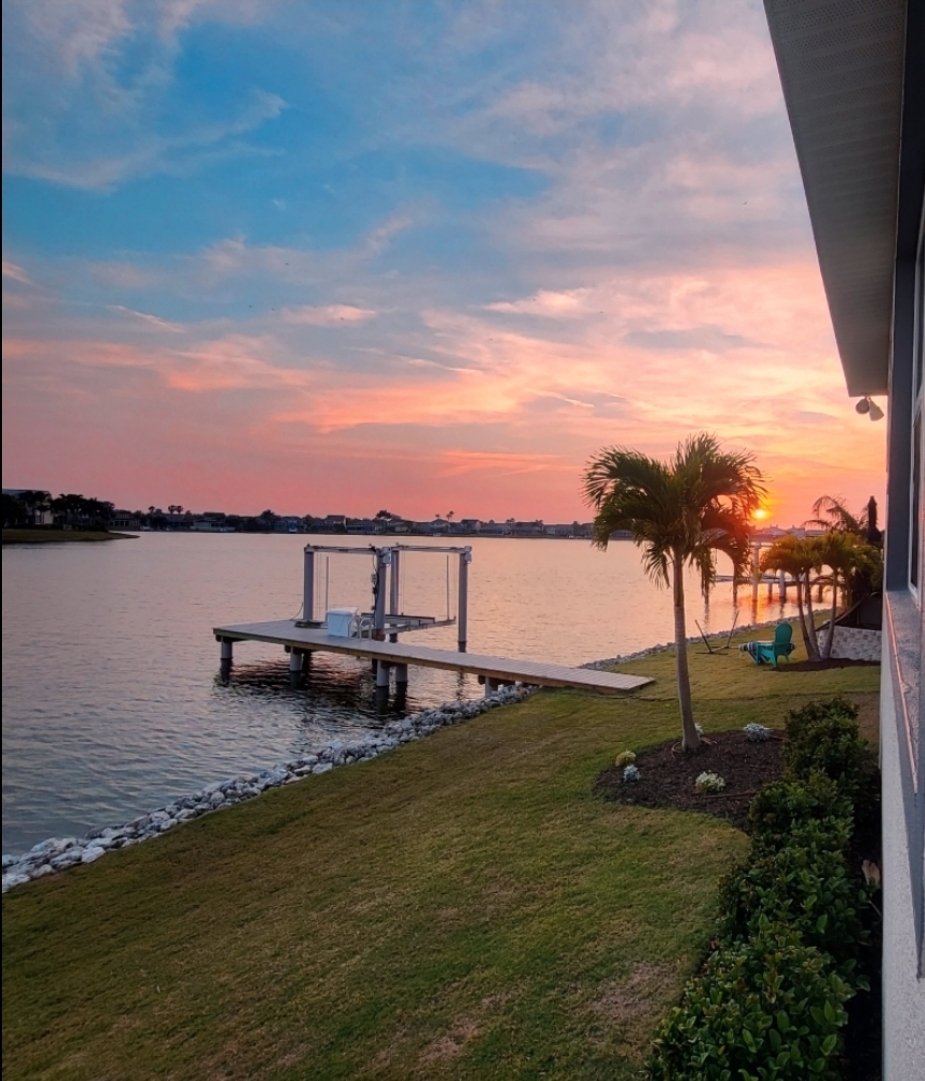
Buyers meet your house on a screen long before they meet your front door, and they search inside a price range. Price the house $10,000 outside the range they picked and your photos, your renovation, your water view — none of it ever loads on their phone.
That’s what makes pricing strategic instead of just a number you’re comfortable with. The list price decides who sees the house at all, what buyers expect when they walk in, how many showings you get, whether the appraisal holds, how much leverage you keep in negotiation, and how the home stacks up against every other option that weekend.
Quick Answer: How Does Pricing Affect Online Visibility?
Buyers commonly use a minimum and maximum price when searching the MLS, Zillow, Realtor.com, brokerage websites, and real estate apps. A home listed even slightly above a buyer’s maximum may be excluded from that search.
A strategically chosen price can place the home inside the most relevant buyer searches while remaining supported by recent comparable sales, active competition, condition, location, and current demand. The goal isn’t to manipulate a portal. The goal is to position the property where qualified buyers are actually looking.

Why do price filters matter so much?
Imagine that a buyer has been preapproved around $500,000 and sets a maximum search price of $500,000. A home listed at $505,000 may never appear, even if the seller would seriously consider a $500,000 offer.
The same issue can occur at $400,000, $750,000, $1 million, or any other common search boundary. Search interfaces and available increments can change over time and may differ by portal, device, and market. Sellers shouldn’t rely on an old chart of Zillow or Realtor.com price brackets. The pricing conversation should use the current search experience and current MLS competition.
Where does strategic pricing start?
Search visibility can’t rescue a price that the market doesn’t support. Before thinking about thresholds, the seller and listing agent should evaluate:
- Recent comparable sales
- Current competing listings
- Pending sales when reliable information is available
- Days on market and price-change history
- Condition, updates, layout, lot, view, and location
- Insurance, flood, roof, and financing considerations
- HOA and CDD costs
- Waterfront access, canal route, seawall, dock, and lift condition
- New-construction incentives competing with resale homes
- The number and urgency of likely buyers
The result should be a defensible range, not a single magic number. Once the likely range is established, the final list price can be selected with buyer search behavior in mind.
What are the three pricing positions?
1. Market-Entry Pricing
This approach positions the home near the most competitive part of its supported range. It can help maximize initial visibility and encourage buyers to act while the listing is new.
It works best when the home is well prepared, the marketing is ready on day one, and the price is strong enough to compete with nearby alternatives.
2. Aspirational Pricing
This places the home above the most likely market-supported range because the seller hopes a buyer will pay a premium. It may work for a truly exceptional property with limited competition, but it can also reduce search visibility and give buyers a reason to favor better-positioned homes.
The seller should understand the cost of testing the market, including lost time, carrying expenses, and the possibility that future buyers interpret a long market history as a sign of weakness.
3. Threshold Pricing
This selects a price at or just below a meaningful buyer search boundary while staying within the supported value range. For example, if the analysis supports a price around $500,000, the seller should consider how $499,000, $500,000, and $505,000 would appear in common searches.
Threshold pricing isn’t automatically better. Sometimes the exact round number appears in searches on both sides of the boundary. The right choice depends on the portal settings, price range, competition, and seller’s objectives.
Should you price just below a round number?
A price just below a common maximum can include the listing in searches that would exclude a slightly higher number. It can also communicate that the seller has considered the buyer’s price range carefully.
But the tactic shouldn’t be used mechanically. A $999 difference may not matter in every market, and a price chosen solely for appearance can still fail if the home isn’t competitive. Buyers compare the complete property, not just the last digits.
Why an Exact Threshold Can Sometimes Be Better
Listing exactly at a threshold may allow the property to appear for buyers searching up to that amount and for buyers whose minimum begins at the same amount. A home at $500,000 may be visible to a buyer searching $450,000 to $500,000 and another searching $500,000 to $600,000, depending on how the portal treats boundaries.
This is one reason sellers should test the actual current search tools instead of assuming that every portal behaves the same way.
Is online visibility only about price?
Price earns the listing a place in the search results. The rest of the presentation earns the click and showing.
A strong online launch includes:
- Accurate MLS data and property features
- Professional, well-ordered photography
- A clear lead image that matches the home’s strongest selling point
- A description that answers practical buyer questions
- Correct waterfront, dock, pool, community, and association fields
- Room dimensions and property details that are verified when possible
- Useful disclosures and supporting documents ready for serious buyers
- A mobile-friendly listing experience
An inaccurately completed field can remove a property from a buyer’s filtered search even when the price is right. Waterfront homes require special care because terms such as waterfront, water access, canal, bay view, and boatable water aren’t interchangeable.
The First Two Weeks Matter, but There Is No Universal Deadline
New listings often receive their strongest attention early because they appear fresh to buyers and agents who are already watching the market. That doesn’t mean every home must sell immediately. Luxury, waterfront, unusual, and higher-priced properties may have a smaller buyer pool and a longer normal marketing period.
The early response should still be measured. Track:
- Online views and saves, when the platform provides them
- Agent inquiries and buyer questions
- Showing requests
- Second showings
- Feedback themes
- Offer activity
- New competing listings and recent pending sales
One metric alone isn’t enough. High views with few showings may suggest that the photos or price attract curiosity but not action. Showings without offers may point to condition, price, layout, insurance, or another property-specific concern.
When does a price adjustment make sense?
A price change should be a strategic repositioning, not a random reduction. Before changing the price, ask:
- Has the home received enough exposure to judge the response?
- Has new competition entered the market?
- Have comparable homes gone pending or closed?
- Is buyer feedback consistent?
- Would a different price cross a meaningful search boundary?
- Can presentation, condition, access, or showing availability also be improved?
- What carrying costs are accumulating while the home remains listed?
A small reduction that leaves the home in the same competitive position may not change the result. A meaningful adjustment can place the property in a new set of searches and create a clearer value comparison.
Price changes may also generate alerts for some users or platforms, but notification behavior varies. Sellers should treat renewed visibility as an opportunity, not a guaranteed offer.
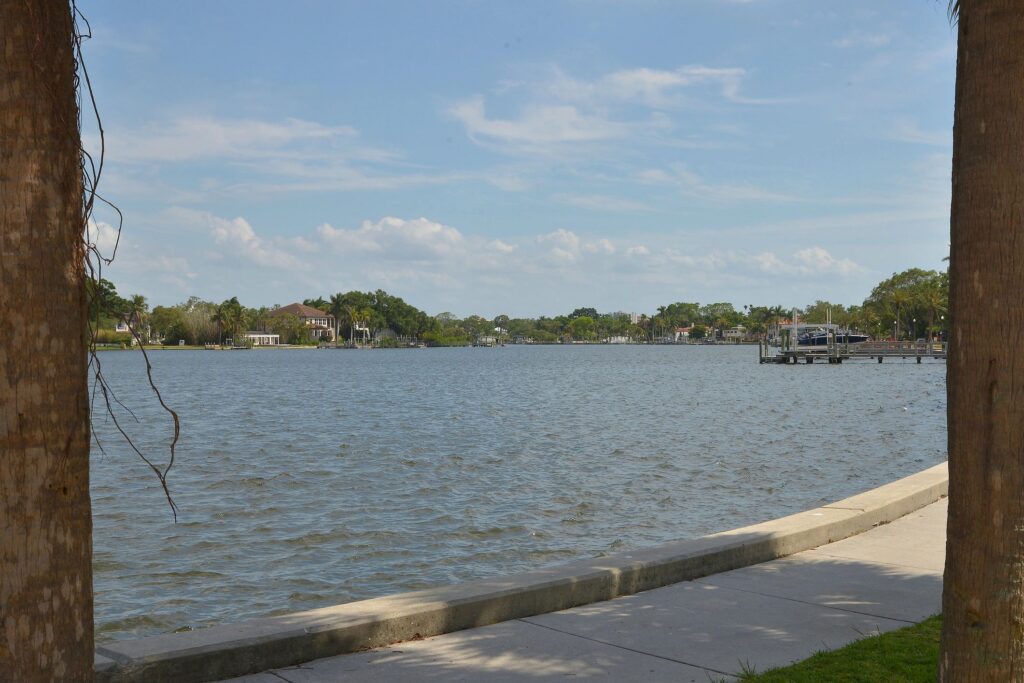
How is pricing a waterfront home different?
Two Apollo Beach homes with similar square footage can have very different values because their water access is different. Important factors may include:
- Open-water route and travel time
- Canal depth and tidal limitations
- Fixed bridges and clearance
- Seawall age, type, and maintenance history
- Dock and boat-lift capacity
- Lot orientation and view
- Flood zone, elevation, and insurance
- Community fees, restrictions, and amenities
- Renovation quality and permit history
A price per square foot can’t capture these differences by itself. Strategic pricing must reflect how the property actually functions for the buyer most likely to want it.
Pricing in a Market With New Construction
Southshore sellers often compete with builders offering rate incentives, closing-cost contributions, warranties, or design packages. The resale home may offer a better lot, established landscaping, completed upgrades, a pool, mature community amenities, or a shorter move-in timeline.
The price strategy should compare the buyer’s complete value, not only the builder’s advertised base price. At the same time, sellers can’t ignore a builder incentive that materially reduces the buyer’s monthly payment or cash to close.
What are the common pricing mistakes?
- Choosing a price based on the seller’s mortgage balance or desired proceeds
- Adding the full cost of every improvement to the expected value
- Using an automated estimate as the only valuation method
- Pricing above the range simply to leave room for negotiation
- Ignoring current competition and builder incentives
- Making repeated small reductions without changing market position
- Assuming all online portals use permanent, identical price brackets
- Overlooking insurance, roof, flood, or waterfront issues that affect buyer affordability
A Practical Pricing Checklist
- Define the likely buyer for the home.
- Review recent sales and current competition.
- Identify the home’s advantages and limitations.
- Estimate realistic buyer ownership costs.
- Check current price filters on the major search platforms.
- Choose a price supported by both market evidence and search visibility.
- Launch with complete MLS data, strong photos, and easy showing access.
- Set a date to review activity and competition.
- Agree in advance on the evidence that would justify a price adjustment.
Frequently Asked Questions
Should I list at $499,000 or $500,000?
Either can be correct. The decision should consider current filter behavior, competing listings, comparable sales, and whether the exact threshold creates visibility in adjacent search ranges.
Will pricing below a round number guarantee more showings?
No. It may improve inclusion in certain searches, but condition, presentation, location, competition, and buyer demand still determine results.
Should I price high so buyers can negotiate?
Only if the higher price remains supported by the market and fits the seller’s strategy. An unsupported price can reduce visibility and discourage buyers before negotiation begins.
Does Zillow determine my home’s value?
No single portal estimate determines market value. A pricing analysis should use property-specific condition, features, local sales, current competition, and professional judgment.
How soon should I reduce the price?
There’s no universal number of days. Review activity, buyer feedback, competing inventory, market pace, and carrying costs. The decision should be based on evidence, not panic.
Price for the Buyer Who Is Actually Searching
The best list price connects market value with buyer behavior. It gives the home a strong chance to appear in the right searches, makes sense beside competing properties, and supports the seller’s timing and financial goals.
If you’re preparing to sell in Apollo Beach, Ruskin, Riverview, Tampa Bay, or the surrounding Southshore area, Shawna Calvert at 27North Realty can help you build a property-specific pricing and launch strategy.
For preparation priorities, also read What Not to Fix Before Selling Your Florida Home.
Shawna Calvert
27North Realty
Call or text: 509-294-6818
Email: shawna@27northrealty.com
This article provides general real estate information. Search interfaces, portal features, MLS distribution, market conditions, and buyer behavior can change. A list price should be based on current property-specific analysis.