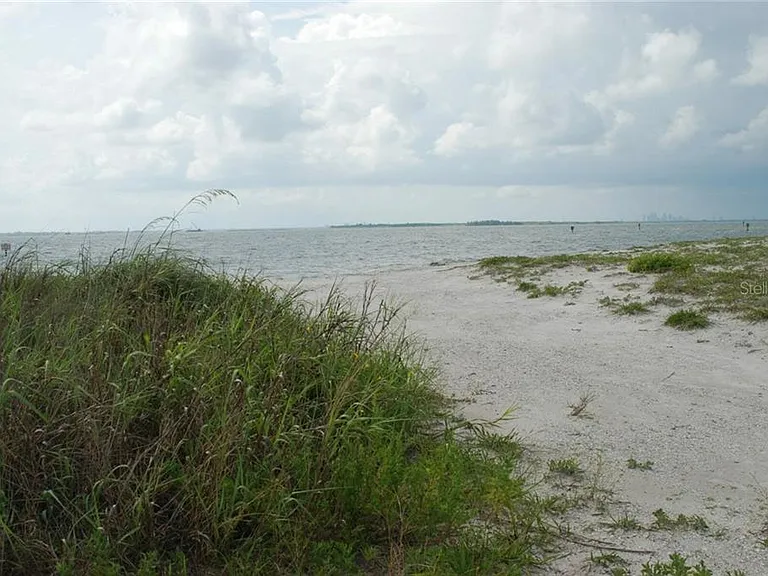
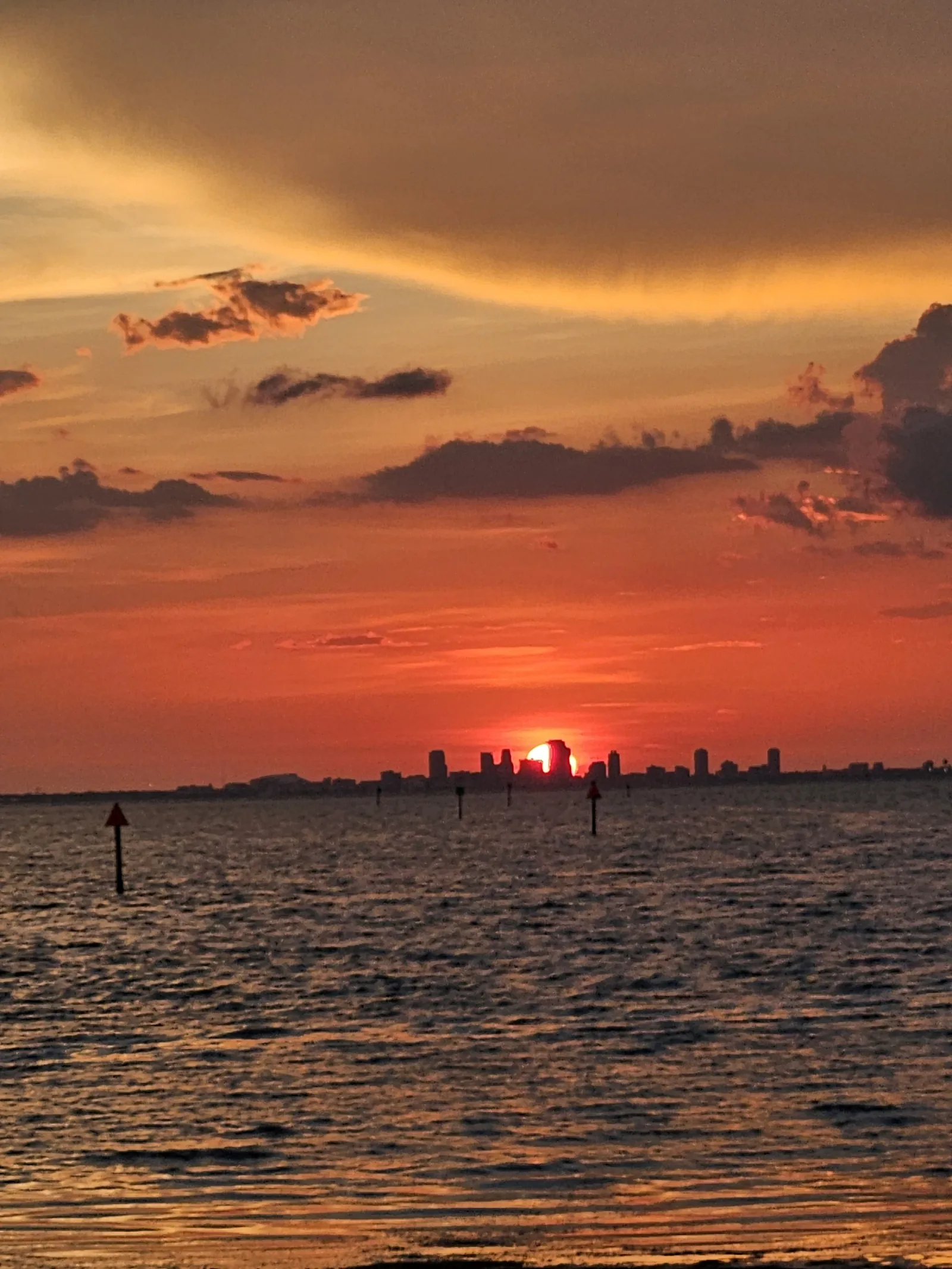
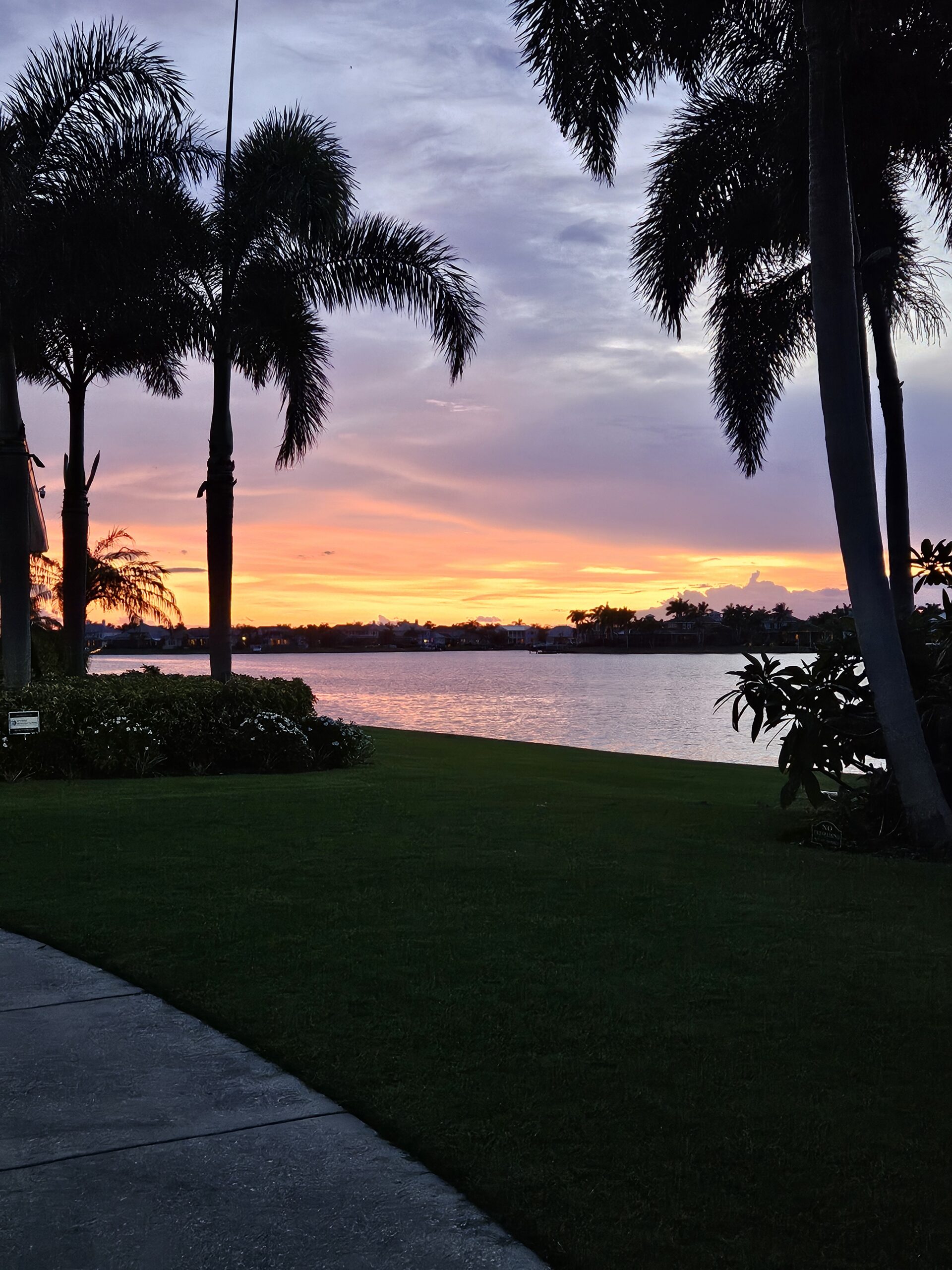
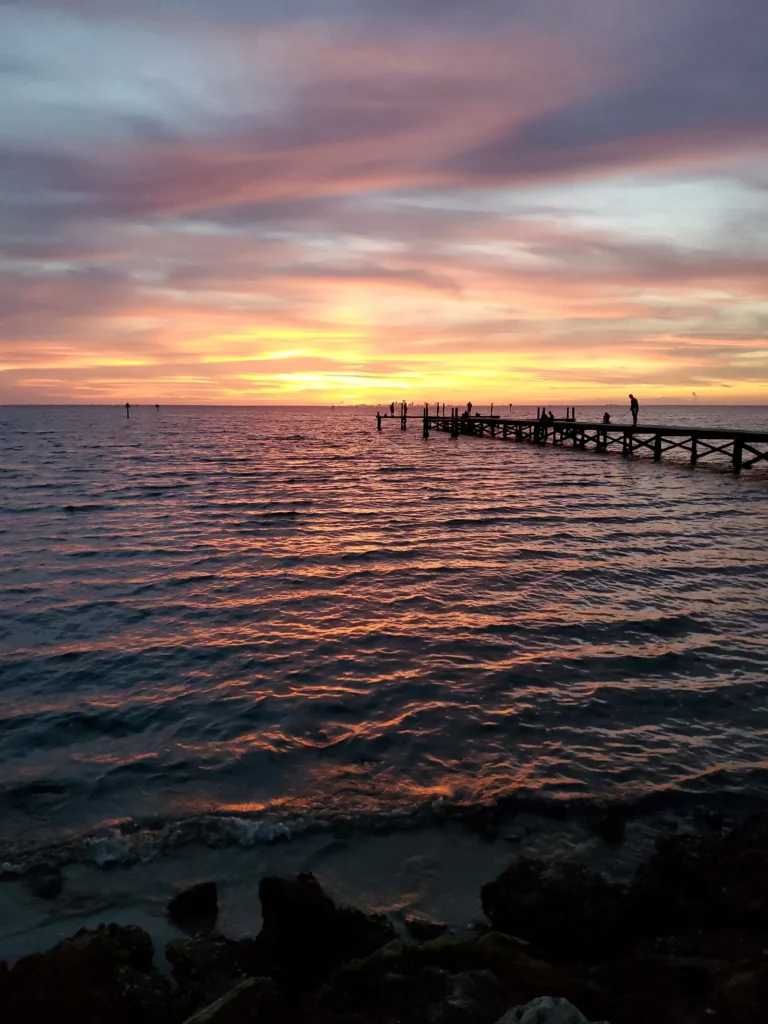
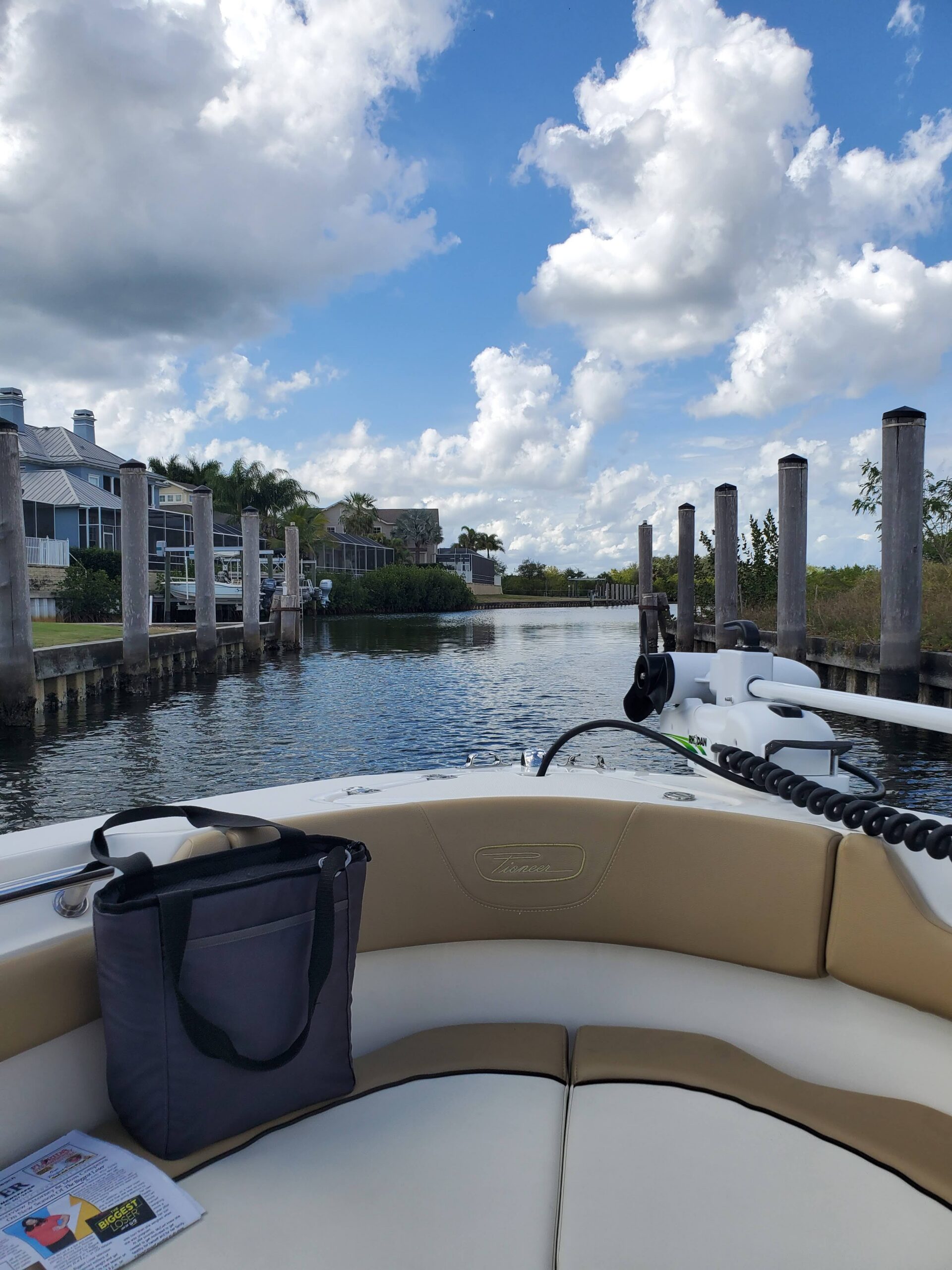
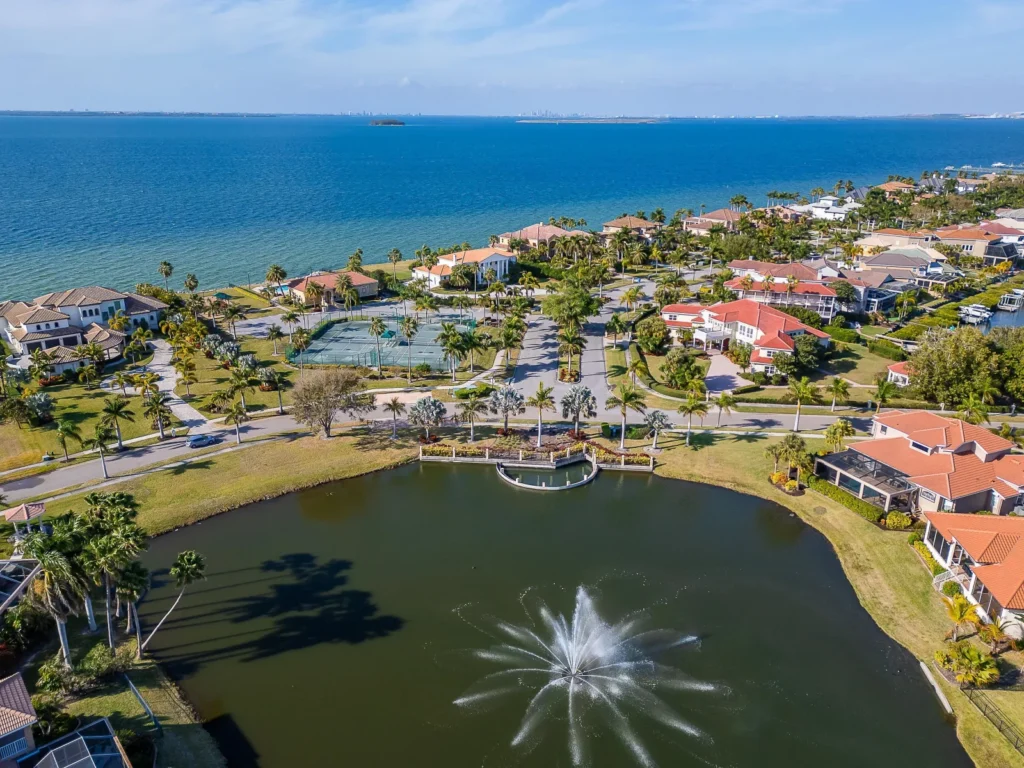
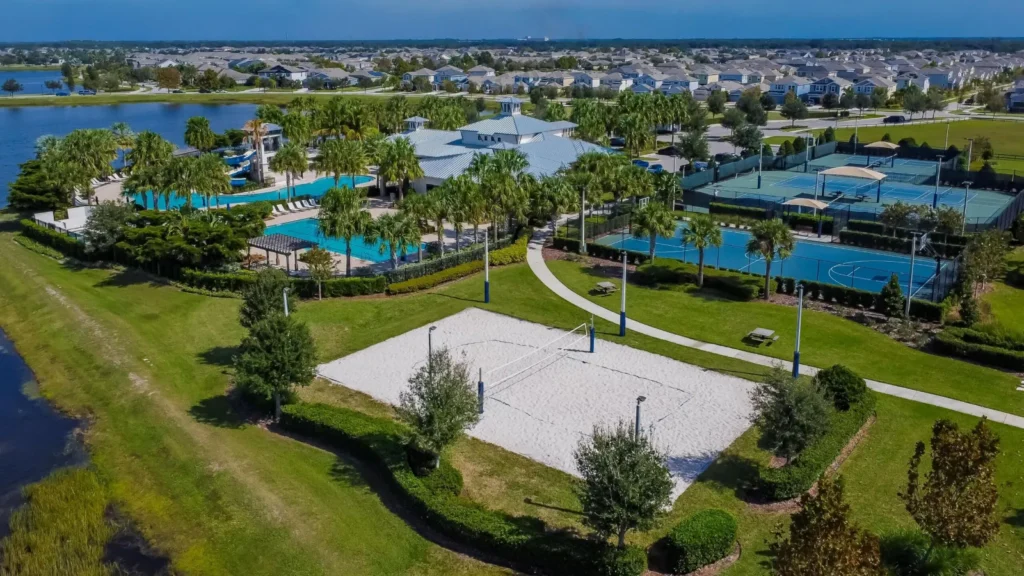
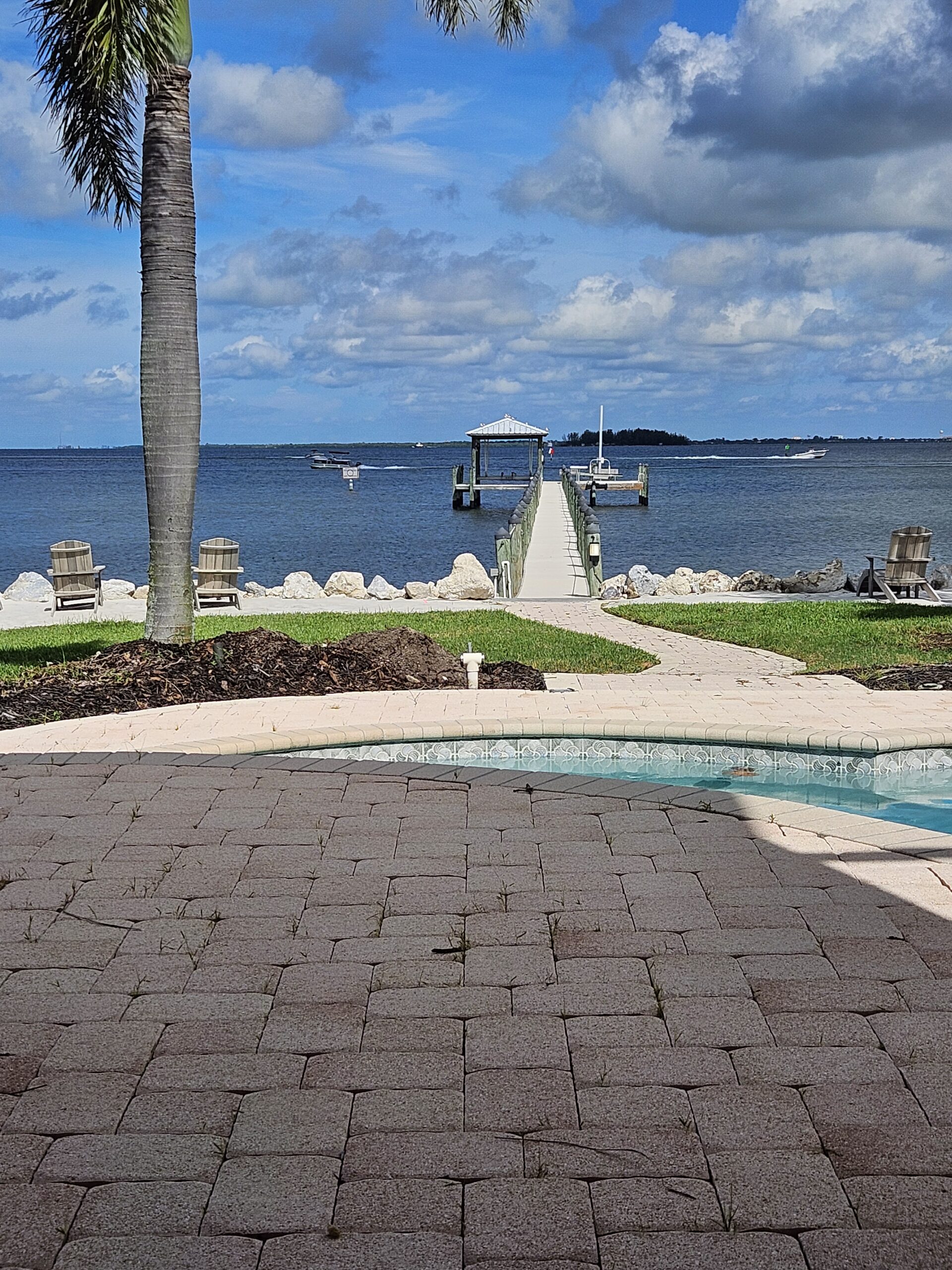
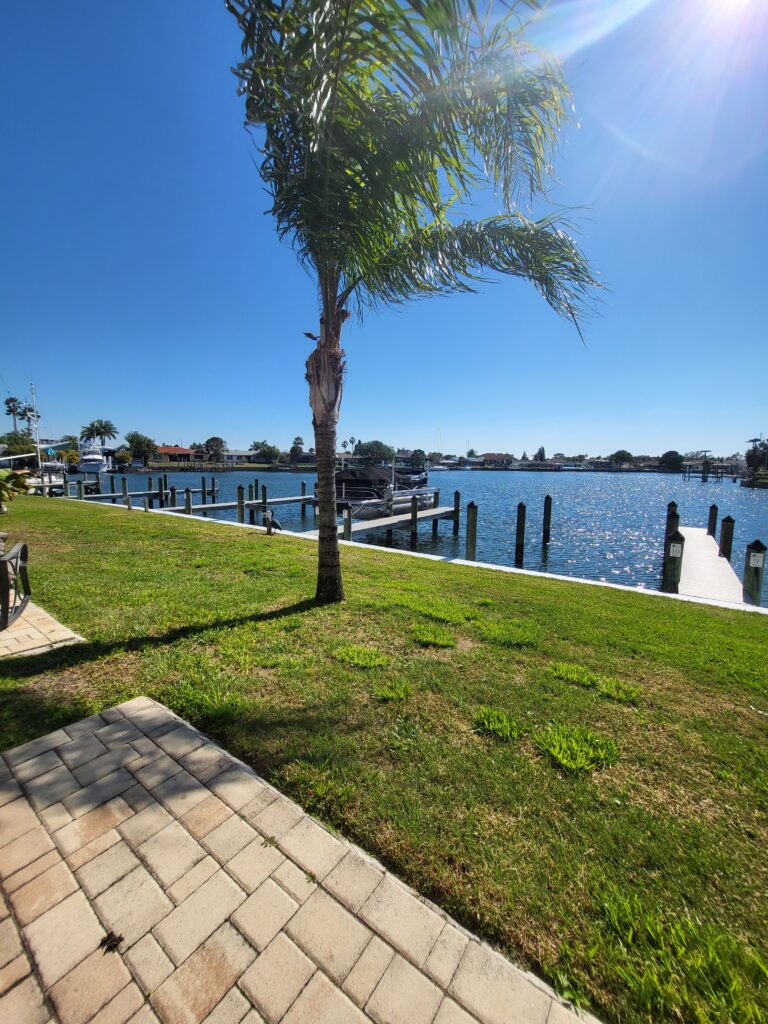
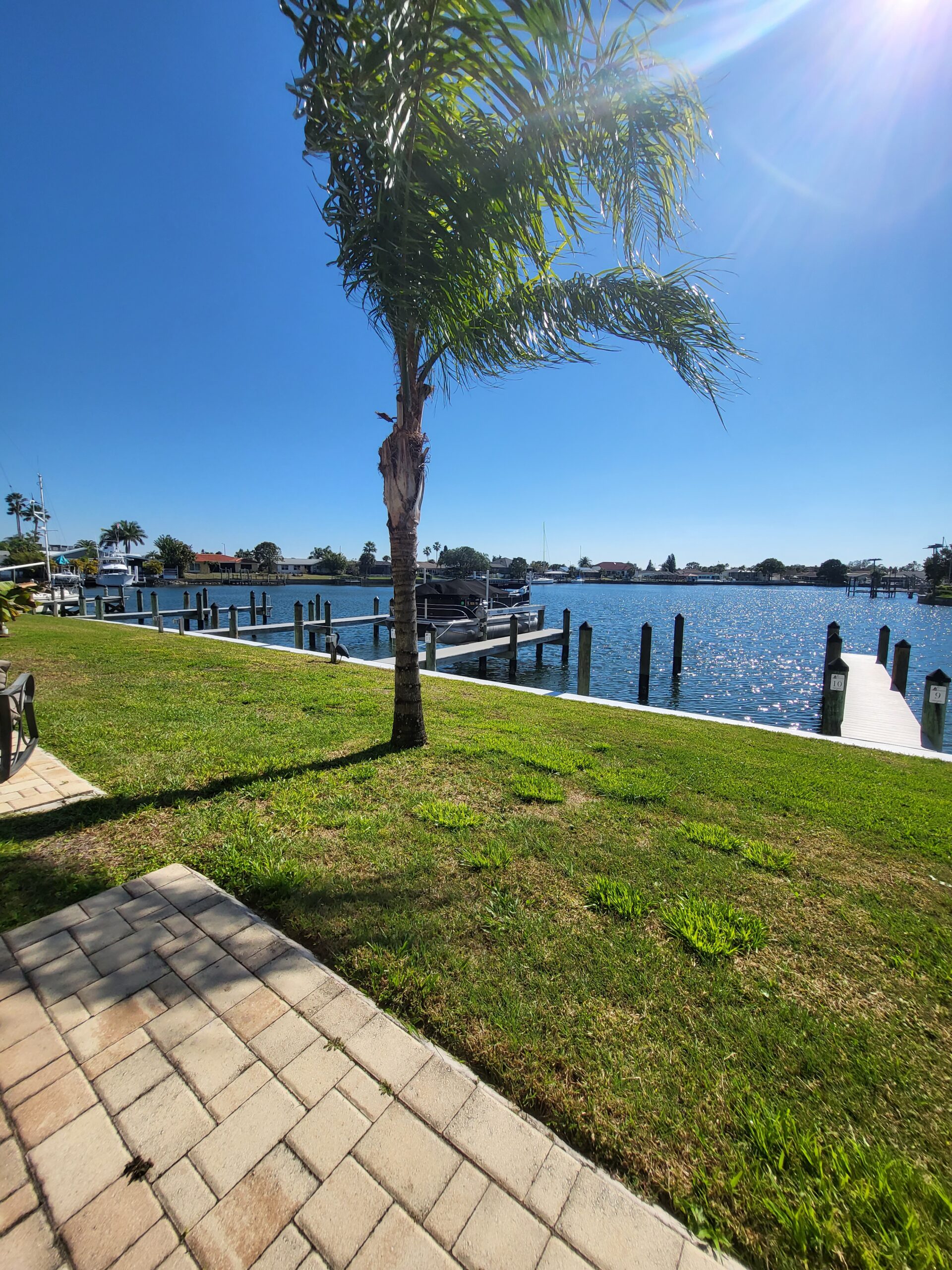
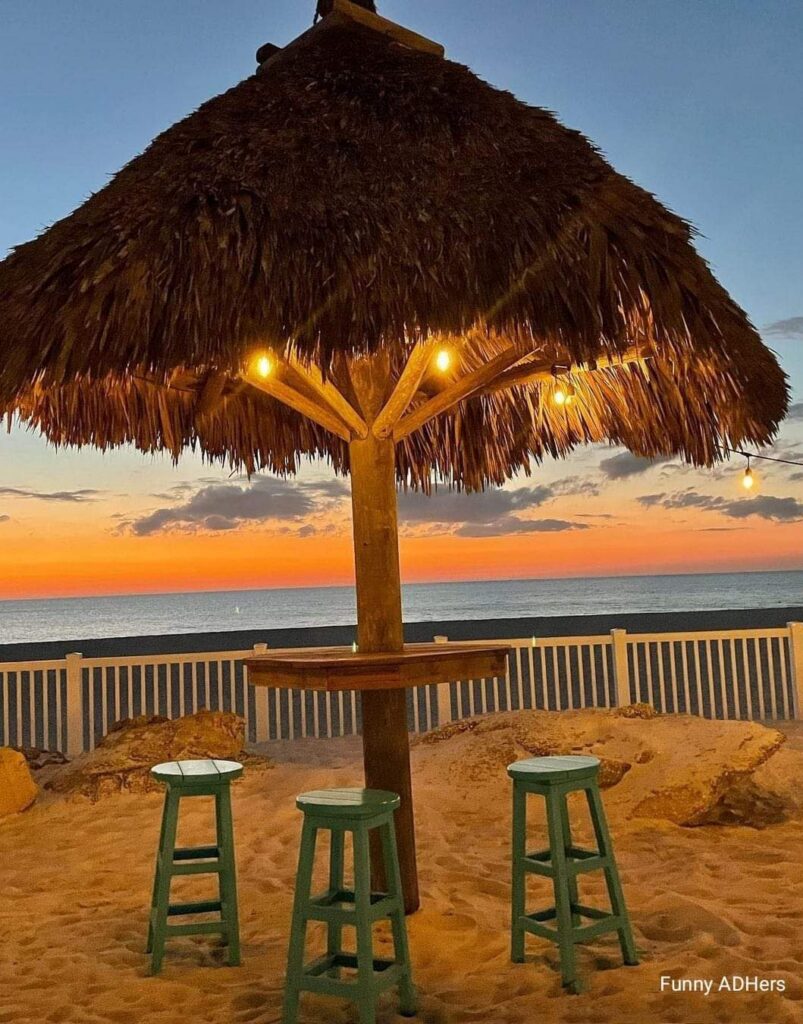
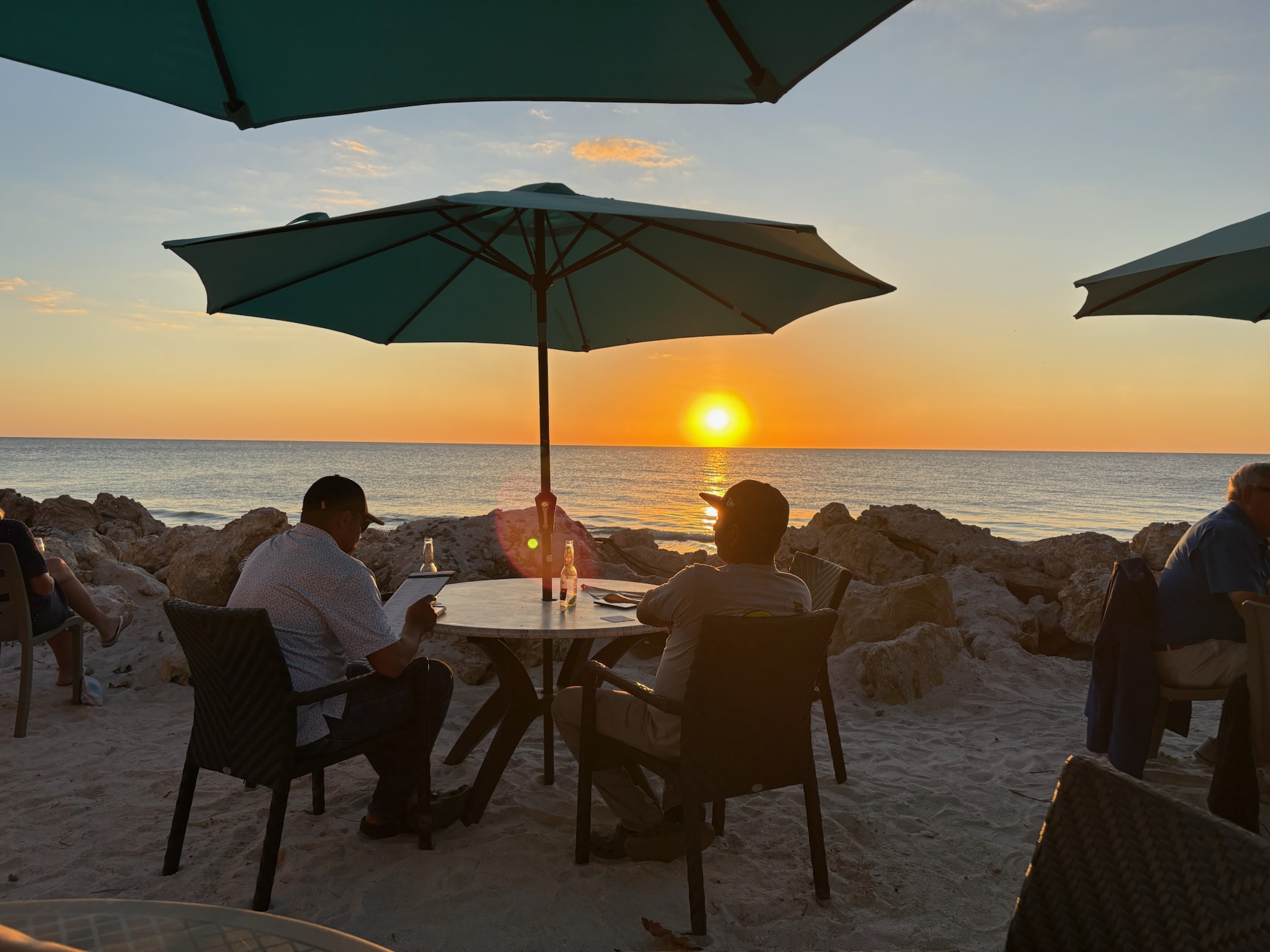
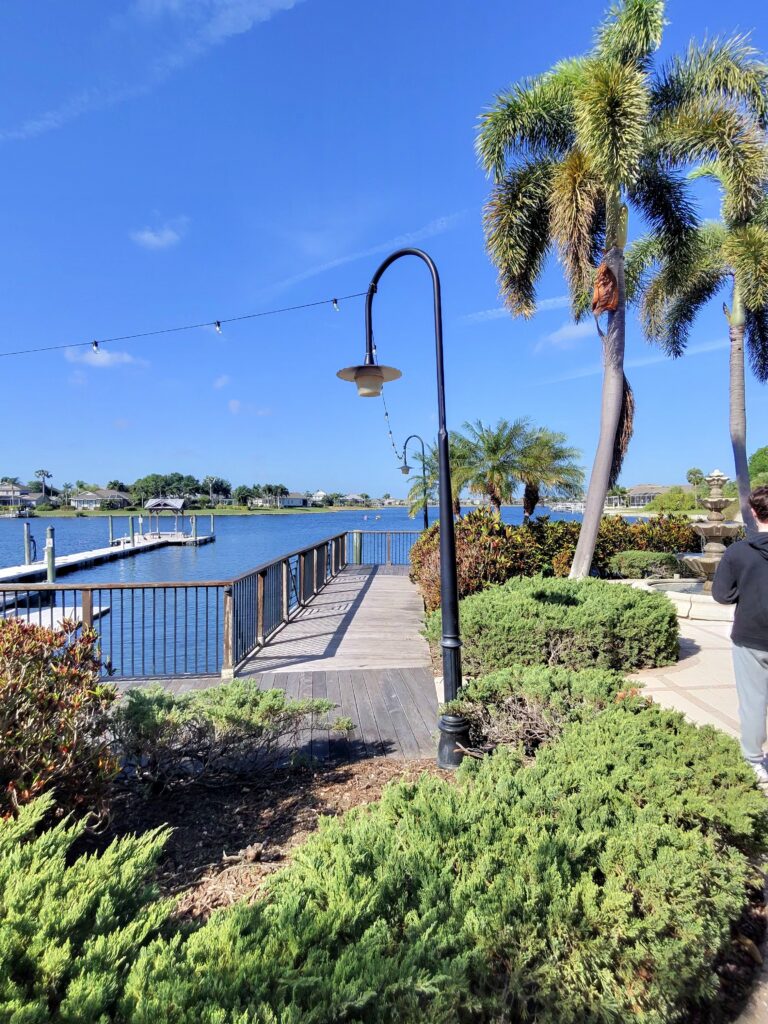
The shoreline at the Apollo Beach Nature Preserve.
Yes, there is, and it’s beautiful. It’s one of the first things people ask me when they’re thinking about moving here, usually right after “Can you swim there?” The honest answer is that you can’t swim at our beach. You can walk it, bring your dog, hunt for shells and watch some of the best sunsets on Tampa Bay. Here’s what our beach is really like, where locals get in the water instead, and the world-famous beaches that are an easy day trip away.
What is the beach in Apollo Beach like?
Our beach is part of the Apollo Beach Nature Preserve at the end of Surfside Boulevard. It’s a 63-acre county preserve with a stretch of soft, white sand right on Tampa Bay. It’s the kind of place you go for a long walk at the end of the day, with your shoes in your hand.
You can walk the shoreline, go shelling, fish, picnic under the pavilion and bring your dog. Dogs are welcome on the beach, which surprises a lot of people. Behind the beach, walking trails wind through restored wetlands, and it’s a great spot for birding.
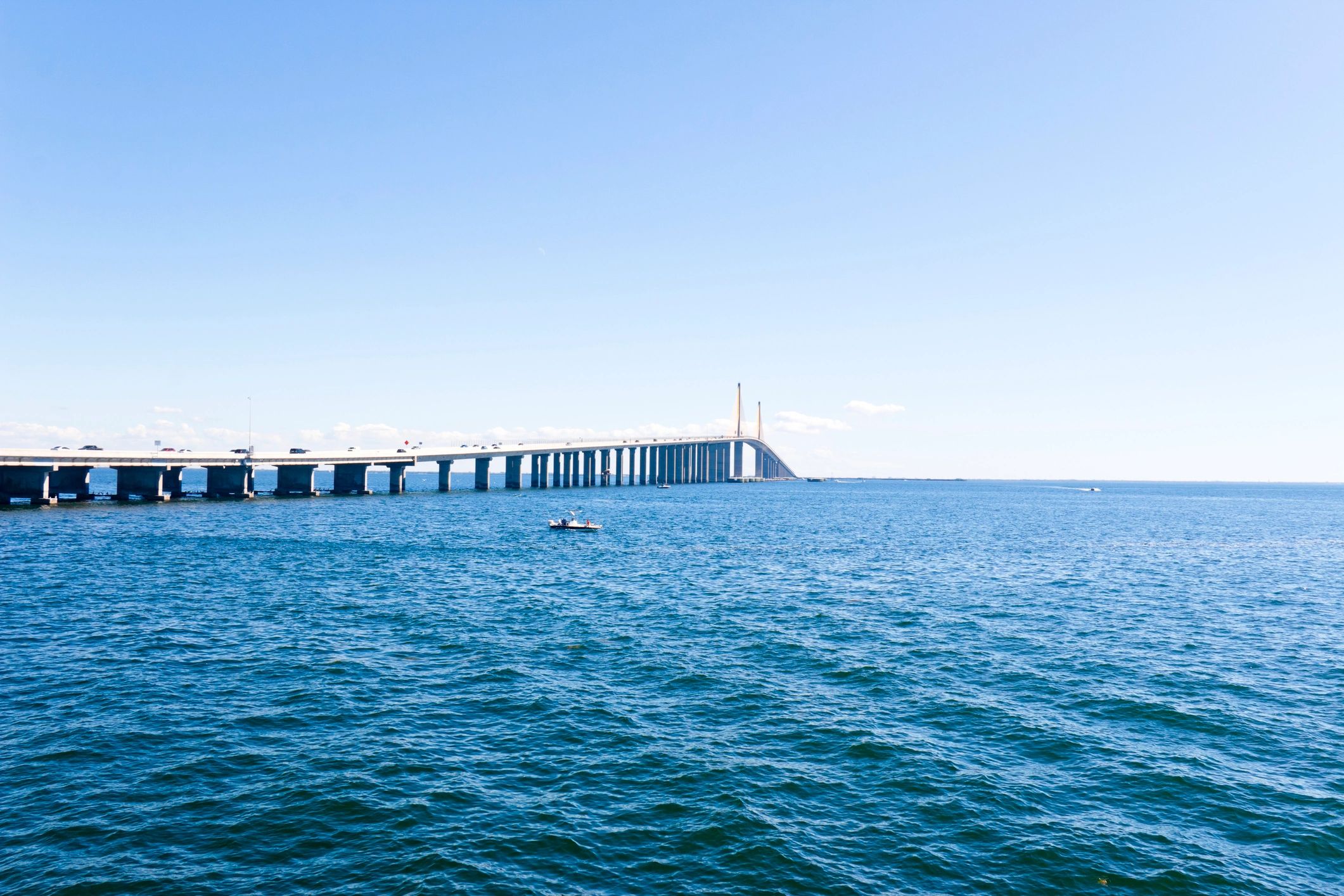
The best part is the view. From the preserve’s 37-foot observation tower you can see the Tampa skyline, St. Petersburg across the bay, and the Sunshine Skyway Bridge stretching out to the south. The tower has a ramp instead of stairs, so almost anyone can get to the top. The preserve is open every day from 8 a.m. until sunset.
Why can’t you swim at the Apollo Beach Nature Preserve?
The water looks calm, and that’s what makes it dangerous. Just offshore the bottom drops off suddenly, and there are strong currents under the surface that you can’t see from the sand. The county posts the beach as no swimming and no wading, and it means it.
Tragically, we learned this the hard way. In June 2021, three lives were lost here: a father, his young son, and a man who went into the water to try to save them. The county added more warning signs afterward. So please enjoy the sand, the sunset and the shelling, and stay out of the water.
What else is near the beach?
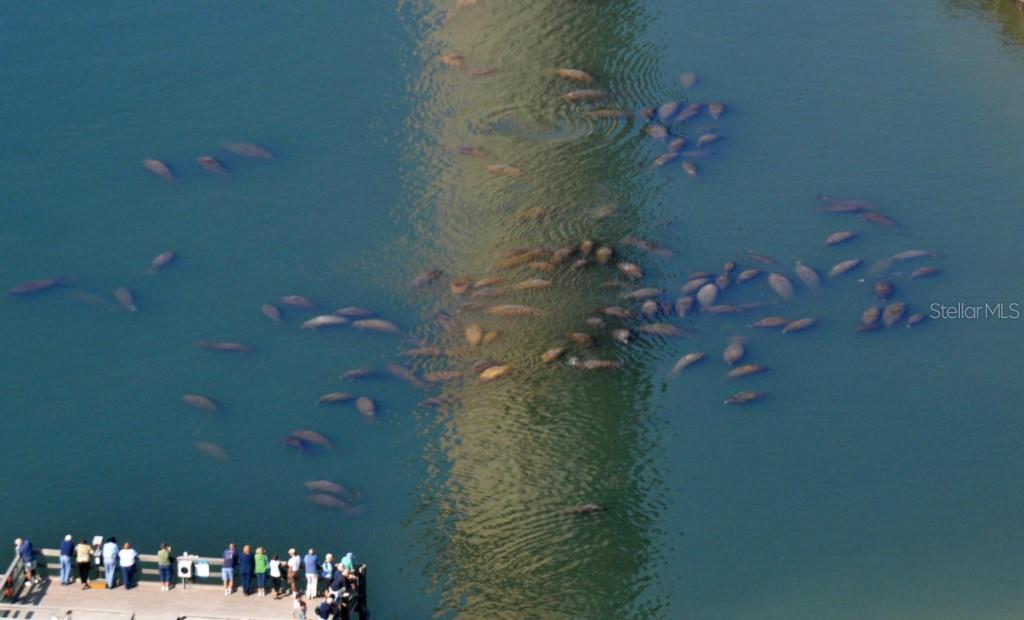
Manatees gathered at the Manatee Viewing Center in Apollo Beach.
Just down the road is the TECO Manatee Viewing Center, and if you’re new to the area it’s a must. In the cooler months, hundreds of manatees gather in the warm water coming off the power plant. You watch them from a long boardwalk, and on a cold morning the water can be packed with them.
The Manatee Viewing Center is open daily from November 1 through April 15, from 10 a.m. to 5 p.m. Parking and admission are free. It has its own 50-foot observation tower along a coastal trail, so between the preserve and the Manatee Viewing Center we have two viewing towers looking out over the bay. There’s also a stingray touch tank the kids love, and a little café.
Where can you swim near Apollo Beach?
We have options close to home.
E.G. Simmons Conservation Park in Ruskin has about 700 feet of beach on Tampa Bay with a designated swimming area. It also has picnic shelters, a playground, a boat ramp, kayaking and camping, and entry is $2 per car. The county sometimes closes the beach to swimming when water testing shows high bacteria, so check the county’s beach advisories before you pack the car.
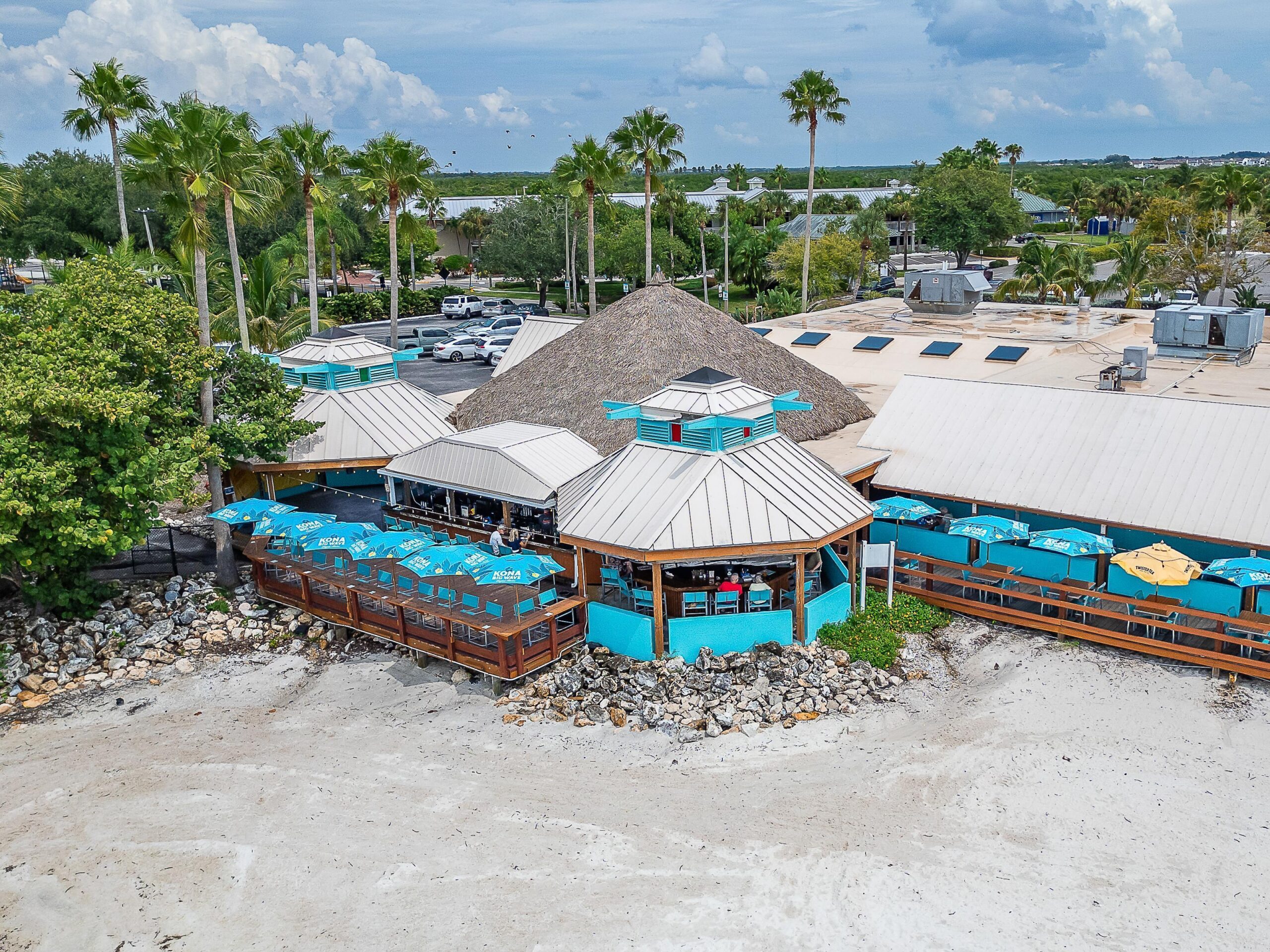
Little Harbor in Ruskin has a beach right on the bay by the Sunset Grill, with a long dock for watching the sun go down over St. Pete and live music at night. It’s one of my favorite spots. Just know the beach lots there are paid parking now, with free parking for restaurant guests.
The beach and Sunset Grill at Little Harbor in Ruskin.
And here’s something that makes one of our neighborhoods truly special. Symphony Isles is the only community in Apollo Beach with its own private beach you can swim in. It’s for residents, right on Tampa Bay, and it’s a really neat perk. If a swimmable beach right outside your front door is on your wish list, that’s the community I’d show you first.
How far is Apollo Beach from the Gulf beaches?
This is one of my favorite things to tell people. You live on the quiet side of the bay, and some of the most famous beaches in the country are a short drive away when you want to make a whole day of it.
Fort De Soto Park, about 45 minutes away across the Skyway, has wide, natural beaches, calm water on the bay side and a historic fort to explore. It’s often named one of the best beaches in America.
St. Pete Beach, about 45 minutes away, has the big, lively Gulf beach, with beach bars, restaurants and hotels.
Anna Maria Island, about 50 minutes south, feels like old Florida: small cottages, a trolley, a pier and a slower pace.
Siesta Key, about an hour south, is famous for its powdery white sand. It’s so fine it stays cool under your feet even in summer.
Caspersen Beach in Venice, a little over an hour south, is where you go to hunt for shark teeth. Venice calls itself the Shark Tooth Capital of the World. Fossilized teeth wash up along the shoreline, and every once in a while someone finds a piece of a megalodon tooth. Bring a sifter (locals call it a Florida snow shovel) and plan to lose track of time. It’s a wonderful day with the grandkids.
So is Apollo Beach a beach town?
It is, just not the way people picture it. We’re a boating town first, with canals, docks and the whole bay right out the back door. Our own beach is for walks, dogs, shells and sunsets, and the swimming beaches are close by. If you’re still getting to know the area, my Apollo Beach guide and neighborhood guide are good places to start.
I’d love to know how you picture your days here. Are you the early-morning beach walk with the dog type, or do you see yourself packing up the boat and heading out to a sandbar for the whole afternoon? Tell me, and I’ll show you the neighborhoods that fit.
If you are trying to determine whether you can afford a home in Apollo Beach, the mortgage payment is only the starting point.
The real cost depends on the home itself, its flood exposure, the age of the roof and major systems, whether it is in an HOA or Community Development District, whether it has a pool, and whether it sits on the water. Your cars, storage habits, landscaping expectations, and boating lifestyle matter too.
This is why two Apollo Beach homes with the same price can have very different monthly carrying costs. One may have newer construction, a CDD, lower routine maintenance, and resort-style amenities. Another may have no CDD but require more private upkeep. A waterfront property may offer an incredible boating lifestyle while adding flood coverage, seawall, dock, lift, mangrove, and boat-maintenance expenses.
The goal is not to make Apollo Beach sound expensive. It is to help you compare homes based on the complete lifestyle and budget instead of the list price alone.
The short answer: What should you include in an Apollo Beach housing budget?
In addition to principal and interest, plan for:
Property taxes based on what you are likely to pay after the purchase
Homeowners insurance
Flood insurance when required or advisable
HOA dues and CDD assessments
Electricity, water, sewer, trash, internet, and irrigation
Air-conditioning service and Florida-specific home maintenance
Lawn, fertilizer, pest, pool, and landscaping services
Roof, exterior, window, and storm-protection reserves
Waterfront expenses such as seawall, dock, lift, mangrove, boat, and fuel costs
Automobile insurance, which tends to cost more in Florida
Storage and lifestyle adjustments that many people overlook before moving south
The correct total is property-specific. Never rely only on a listing portal’s estimated payment, the seller’s current tax bill, or a generic online insurance average.
Property taxes: Do not budget from the seller’s current bill
This is one of the biggest surprises for buyers moving to Florida.
A longtime Apollo Beach owner may have a much lower tax bill than a buyer will have after purchasing the same home. Florida’s Save Our Homes benefit limits annual increases in the assessed value of a homesteaded property to the lower of 3% or the change in the Consumer Price Index. It does not freeze the tax bill, and it does not cap the tax rate itself.
When ownership changes, the property’s capped assessment generally resets to market value as of the following January 1. The new owner may then apply for homestead exemption, and eligible Florida homeowners may be able to transfer, or “port,” part of their Save Our Homes benefit from a prior Florida homestead.
That explains why two similar homes on the same street can show very different tax bills. The owner with the lower bill may simply have owned and homesteaded the property for many years. That low assessment does not automatically transfer to the buyer.
The Hillsborough County Property Appraiser specifically warns that a change in ownership resets assessed value to full market value. Before making an offer, estimate taxes using the expected purchase price, intended exemptions, and any portability benefit rather than copying the seller’s current payment.
CDD and HOA fees: Why an amenity-rich community may have a low HOA
An HOA is a private association that enforces community rules and pays for the services assigned to it. A CDD is a special-purpose unit of local government that can finance, operate, and maintain community infrastructure and amenities. CDD assessments generally appear as non-ad valorem charges on the annual property-tax bill.
In many local master-planned communities, the CDD carries much of the cost of infrastructure and major amenities. That is one reason a community can have an extensive amenity package and still charge a comparatively modest HOA fee. The CDD is not “free,” of course. Part of the community cost has simply moved to the tax bill.
Waterset is a useful local example. The community’s own published FAQ states that it has three CDDs, a comparatively low annual HOA fee, and CDD charges that vary by home type and lot size. The community includes the kind of amenities buyers often describe as resort-style.
Here is the insider detail many buyers miss: CDD assessments are commonly allocated by a property’s assessment category, which may reflect lot width, lot size, home type, or an equivalent residential unit. They are not normally calculated as a percentage of the home’s resale price. The exact method is district-specific, so “CDD is always based on lot size” is too broad for every Florida district. In Waterset, however, home type and lot size are expressly part of the current published structure.
A larger lot or different product type can therefore carry a different CDD assessment even within the same overall community. Before comparing two homes, check the actual tax bill, identify the correct CDD, and review the district’s current assessment chart. Waterset, for example, has separate district sites and publishes adopted budgets and assessment schedules.
Also separate the CDD’s two basic cost concepts:
Debt service: Repayment of bonds used to build qualifying infrastructure
Operations and maintenance: The annual cost of operating and maintaining district facilities and services
Debt service may eventually end according to the applicable bond schedule. Operations and maintenance can continue and may change with the district budget.
Homeowners insurance: The address matters more than the average
Florida homeowners insurance can be a meaningful part of the monthly payment, but a statewide average is not a reliable quote for an Apollo Beach property.
Insurers may consider the home’s replacement cost, roof age and material, wind-mitigation features, opening protection, age and condition of electrical, plumbing, HVAC, and water-heater systems, prior claims, occupancy, and distance from the coast. A four-point inspection or wind-mitigation inspection may materially affect eligibility or premium.
The practical rule is simple: obtain a real insurance quote for the exact address before the inspection or insurance contingency expires. If the roof is older, request quotes immediately. Do not wait until the week of closing to discover that a carrier will not accept the roof or that the premium changes the debt-to-income calculation.
Impact windows, qualified shutters, roof-to-wall attachments, and other wind-mitigation features may help, but the credit depends on what an inspection documents and what the insurer recognizes.
Flood insurance: An assumable policy may be valuable, but verify the details
Flood insurance is separate from standard homeowners insurance. Whether it is required by a lender depends in part on the flood zone and loan, but a property can experience flooding outside a high-risk flood zone. Buyers should evaluate the home’s elevation, flood zone, flood history, prior claims, foundation, and storm-surge exposure even when a lender does not require coverage.
One of the most valuable and least understood opportunities is the possible assignment of an existing National Flood Insurance Program policy when title transfers. FEMA’s NFIP terminology recognizes written assignment of a policy when title transfers, subject to program rules and exceptions. FloodSmart guidance for insurance professionals also explains that building coverage may be transferred to a buyer, while the seller’s contents coverage does not transfer.
Why can that matter? Under FEMA’s risk-based pricing transition, an existing policy may still be moving gradually toward its full-risk premium. Statutory limits generally restrict how much many NFIP premiums can increase in a single year. If the policy is eligible for assignment, the buyer may be able to continue that policy’s existing transition path instead of immediately starting with a new policy at the current full-risk amount. On the right property, the difference can be meaningful.
However, buyers should not assume that every flood policy transfers or that a seller’s low premium is guaranteed to remain unchanged. Private flood policies follow their own contracts. NFIP policy assignment, coverage limits, elevation information, claims history, lender requirements, and future premium path must be confirmed in writing with the insurance agent or carrier.
Before relying on an existing policy, ask for:
The current declarations page
Confirmation of whether the policy is NFIP or private
Written confirmation that the policy can be assigned
The current premium and renewal date
Building and contents coverage details
Deductibles
Claims history and available flood-loss information
The elevation certificate, if available
A projection of the buyer’s premium after assignment
A separate new-policy quote for comparison
Do this before the offer or during the inspection period. An older, favorably transitioning NFIP policy may be an asset, but only after it is verified.
Car insurance belongs in the relocation budget too
Buyers often price the house, taxes, and homeowners insurance but forget to re-quote their automobiles before moving to Florida.
Florida vehicle coverage can be substantially different from what a household paid in another state. The Florida Legislature’s 2025 insurance analysis reported that Florida had the country’s highest average annual cost for minimum motor-vehicle coverage at the time, citing an average of $1,529 per vehicle. More recent marketplace data published by Experian in September 2026 estimated average Florida full coverage at approximately $2,738 per year, or $228 per month, although the actual cost varies widely by driver, vehicle, ZIP code, limits, deductibles, mileage, and claims history.
There has been some improvement. The Florida Office of Insurance Regulation reported that the state’s five largest auto-insurance groups indicated an average rate change of negative 6.5% for 2025 after much larger increases in earlier years. Even so, “rates are improving” does not mean your Florida quote will match what you currently pay elsewhere.
Get an Apollo Beach quote for every household vehicle before finalizing the relocation budget. Match the same liability limits and deductibles for a fair comparison.
Electricity, air conditioning, water, and irrigation
Air conditioning is not a seasonal luxury here. It is part of everyday home operation for much of the year, and it also helps control indoor humidity.
Electric costs vary with square footage, ceiling height, insulation, window exposure, thermostat preferences, HVAC efficiency, pool equipment, electric-vehicle charging, and whether the home has solar panels. Pool pumps, older HVAC systems, and large waterfront homes can change the bill substantially.
Ask the seller for the most recent 12 months of electric bills when possible. One summer bill is not enough, and an average from a vacant home may not reflect your household.
Water costs also depend on the property. A home with irrigated landscaping, a pool, several occupants, or a separate irrigation source will operate differently from a smaller low-maintenance property. Confirm whether the home uses public water and sewer, septic, reclaimed water, a well for irrigation, or another setup.
The Florida service list many relocating buyers do not expect
You can perform many of these tasks yourself, but owners often build a network of recurring service providers that they did not routinely use before moving to Florida.
Depending on the home and lifestyle, that list may include:
Lawn mowing and edging
Fertilizer and weed treatment
Interior and exterior pest control
Termite monitoring or treatment
Pool cleaning and chemical service
Periodic palm and landscape trimming, which may be separate from weekly lawn service
Irrigation inspection and repair
Air-conditioning maintenance
Housecleaning
Exterior and window washing
Roof and gutter cleaning where appropriate
Pressure washing for driveways, lanais, cages, and exterior surfaces
Mangrove trimming by a qualified provider when legally permitted
Boat refueling or mobile fuel delivery
Annual and scheduled boat, engine, lift, and dock maintenance
Not every homeowner hires every service. The point is to decide which jobs you will realistically do yourself and price the rest before choosing the home.
A pool home with extensive landscaping may require multiple vendors. The company that cuts the lawn may not fertilize it, treat pests, repair irrigation, or perform periodic landscape trimming. A clean weekly lawn bill can therefore represent only one part of the outdoor-maintenance budget.
Waterfront living has its own operating budget
Waterfront ownership is not just a higher purchase price. It may include ongoing and long-term costs for:
Seawall inspection, repair, and eventual replacement
Dock and decking maintenance
Boat-lift service and replacement components
Electrical and water service at the dock
Mangrove management under applicable rules
Boat insurance
Fuel or mobile refueling
Engine service and annual maintenance
Bottom cleaning, detailing, storage, or marina costs when applicable
Storm preparation and post-storm inspection
The best waterfront value is not necessarily the least expensive house. A property with the right canal depth, route to the bay, bridge clearance, seawall, permitted dock, correctly sized lift, and documented maintenance may be less expensive to own than a cheaper property that requires major marine work.
Storage and groceries: A lifestyle cost most relocation guides miss
Florida homes generally do not have basements, and many homes offer less interior storage than buyers are accustomed to in other parts of the country. Garages are valuable, but heat and humidity can make them a poor place for certain papers, fabrics, electronics, photographs, wine, and temperature-sensitive belongings.
This matters if you are moving from a home with a basement, large attic, oversized pantry, or extensive seasonal storage. You may need to:
Downsize before moving
Add garage cabinetry or climate-conscious storage
Rent an off-site storage unit
Choose a home with a larger pantry, closets, attic access, or three-car garage
Shop in smaller quantities because there is less space to store bulk purchases
Apollo Beach has everyday grocery options, but large-scale bulk shopping is less convenient than living beside a warehouse club. Many residents make planned trips outside the immediate area or shop more frequently for fresh food and smaller quantities.
That adjustment is not necessarily negative. Having fewer things can be liberating, especially when your Florida lifestyle shifts toward the lanai, pool, boat, and outdoors. It is simply better to make the decision intentionally than to discover after closing that everything from the basement does not fit.
Same-day and drone delivery are changing convenience in South Shore
South Shore’s location near major distribution facilities can make same-day delivery available for many items, depending on inventory and the delivery address.
Amazon also launched Prime Air drone delivery from Ruskin in 2026. Amazon says a hub can serve nearby communities within a limited radius, and current operations depend on exact address eligibility, item size and weight, daylight, and suitable weather. That means parts of the Apollo Beach area may qualify, but buyers should enter the exact address in Amazon rather than assume every home is eligible.
It is a genuine convenience for small, urgent purchases. It does not replace normal grocery planning, larger-item delivery, or the need to consider local storage.
A practical Apollo Beach cost worksheet
Before making an offer, calculate the following for the exact property:
Cost category
What to verify
Mortgage
Loan amount, rate, term, mortgage insurance, and lender fees
Property taxes
Estimated post-sale assessment, homestead eligibility, portability, and current millage
CDD
Correct district, lot or product category, debt service, operations and maintenance, and bond schedule
HOA
Current dues, what they include, pending increases, and special assessments
Homeowners insurance
Address-specific quote based on roof, systems, wind mitigation, and replacement cost
Flood insurance
Flood zone, elevation, history, NFIP or private quote, and possible policy assignment
Auto insurance
Florida quote for every vehicle using matching coverage limits
Electricity
Twelve months of bills, HVAC age, pool equipment, solar, and EV charging
Water and irrigation
Utility type, occupancy, pool, irrigation source, and landscaping
Routine service
Lawn, fertilizer, pests, termites, pool, HVAC, cleaning, windows, and pressure washing
Home reserves
Roof, HVAC, appliances, paint, storm protection, and general repairs
Waterfront reserves
Seawall, dock, lift, mangroves, boat insurance, fuel, and maintenance
Storage and shopping
Downsizing, shelving, storage unit, pantry capacity, and bulk-shopping trips
So, is Apollo Beach expensive to own?
Apollo Beach can offer tremendous value for buyers who want Tampa Bay access, boating, newer master-planned communities, resort-style amenities, pools, and more home than they may find closer to downtown Tampa or St. Petersburg.
But the smartest comparison is not simply Home A at $600,000 versus Home B at $600,000. It is the complete cost and lifestyle:
Which property will be easier to insure?
What will the buyer’s taxes be after reassessment?
Does the CDD fund amenities you would otherwise pay for elsewhere?
Is the lower HOA truly lower, or is part of the community cost on the tax bill?
Will you maintain the lawn and pool yourself?
Does the waterfront infrastructure already fit your boat?
How much storage do you actually need?
Are you prepared for higher auto insurance and a different pattern of home services?
When you compare those answers, the least expensive home to buy and the best home to own are not always the same property.
Frequently asked questions
Are CDD fees in Apollo Beach based on lot size?
Often, but the exact assessment methodology is district-specific. Waterset states that its CDD fees vary by home type and lot size. Other districts may use lot width, unit type, equivalent residential units, or another benefit-based category. Verify the property’s actual assessment and district schedule.
Why can a CDD community have a low HOA fee?
The CDD may finance or maintain infrastructure and amenities that would otherwise fall to the HOA. This can allow the HOA dues to remain comparatively low while the community offers extensive or resort-style amenities. Buyers must add both the HOA and CDD to understand the total cost.
Will I pay the same property taxes as the seller?
Probably not. A longtime homesteaded owner may have a capped assessed value under Save Our Homes. After a sale, the assessed value generally resets to market value the following January 1. Estimate taxes based on the purchase and your own exemptions or portability.
Can I assume the seller’s flood insurance policy and rate?
Some NFIP building policies may be assigned when title transfers, subject to program rules. This may preserve the policy’s existing transition toward the full-risk premium and can produce meaningful savings. It is not automatic. Confirm eligibility, premium, coverage, claims, and future increases in writing with the agent or carrier.
Is car insurance more expensive in Florida?
It often is. Florida has ranked among the country’s most expensive states for vehicle insurance, although recent rate filings have shown some improvement. Obtain address-specific quotes for every vehicle before moving.
What home services should I budget for in Apollo Beach?
Common services include lawn care, fertilizer, pest and termite service, pool service, landscaping, irrigation, HVAC maintenance, cleaning, window washing, and pressure washing. Waterfront owners may also need mangrove, dock, lift, seawall, refueling, and boat-maintenance providers.
Before you tour an Apollo Beach home
Send us the address before you tour. The Calvert Home Team can help you identify the questions to ask about taxes, HOA and CDD charges, flood zone, elevation, insurance, roof age, utilities, seawall, dock, lift, canal access, and whether the home fits your budget, boat, and lifestyle.
Property-specific details, insurance, taxes, permits, community fees, flood information, and boating conditions must always be independently verified before you rely on them.
If there’s one question I hear more than almost any other from people thinking about a move to Apollo Beach, it’s some version of: “Okay, but how bad is the commute?”
Fair question. You’re picturing a laid-back waterfront town (golf carts, boat docks, sunsets over the bay) and wondering if you’ll trade all of that for an hour stuck on I-75 every morning.
Here’s the good news: you won’t.
How long is the commute from Apollo Beach to downtown Tampa and MacDill?
From most of Apollo Beach, you’re looking at roughly 35 to 40 minutes to downtown Tampa, and about the same to MacDill Air Force Base. That’s a completely normal commute by Tampa Bay standards. For a lot of our military families and downtown professionals, it’s an easy trade for waterfront living, wide open roads to the interstate, and a mortgage that goes a lot further than it would closer into the city. If you want the bigger picture first, here’s what Apollo Beach is actually like to live in.
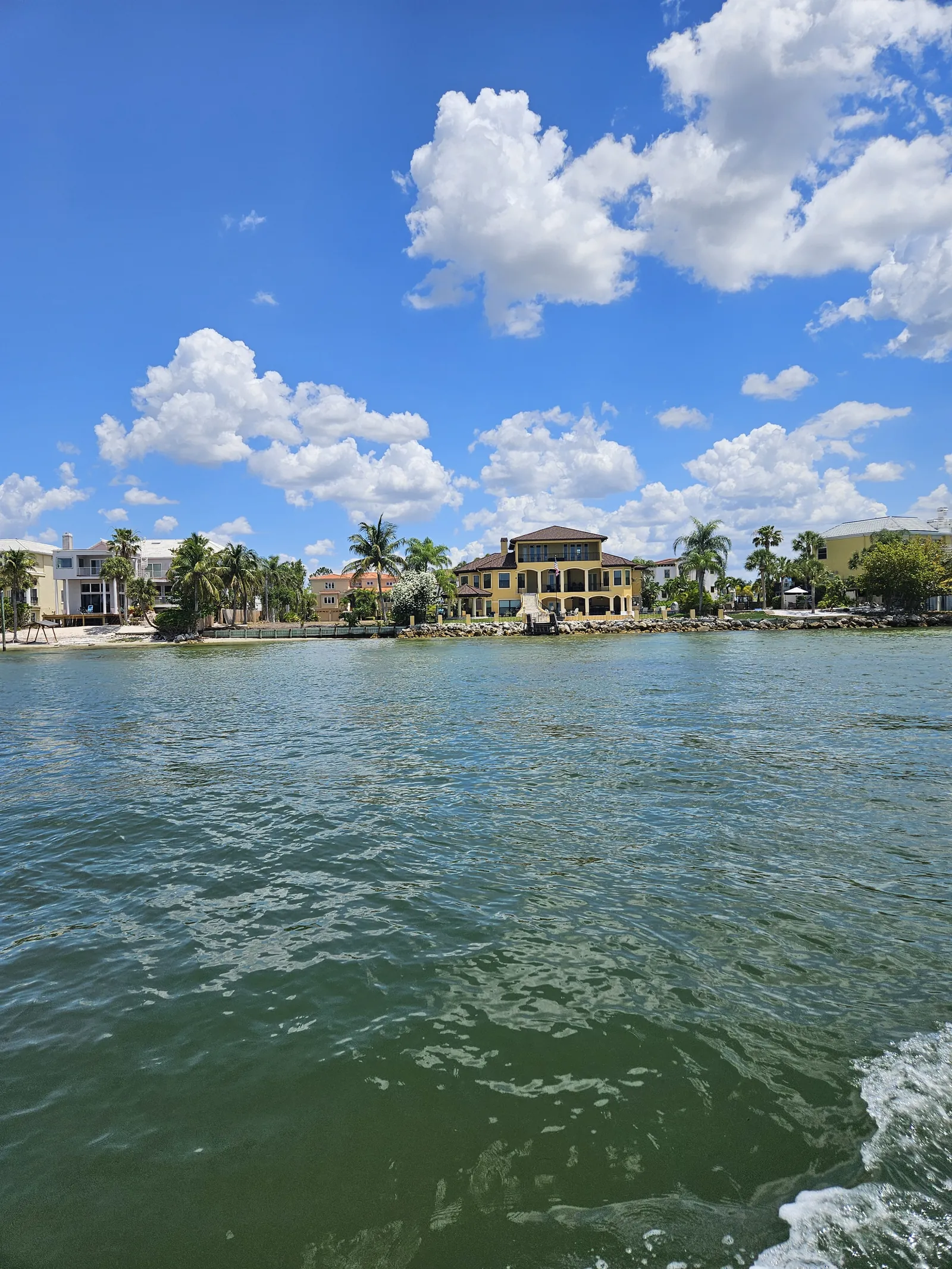
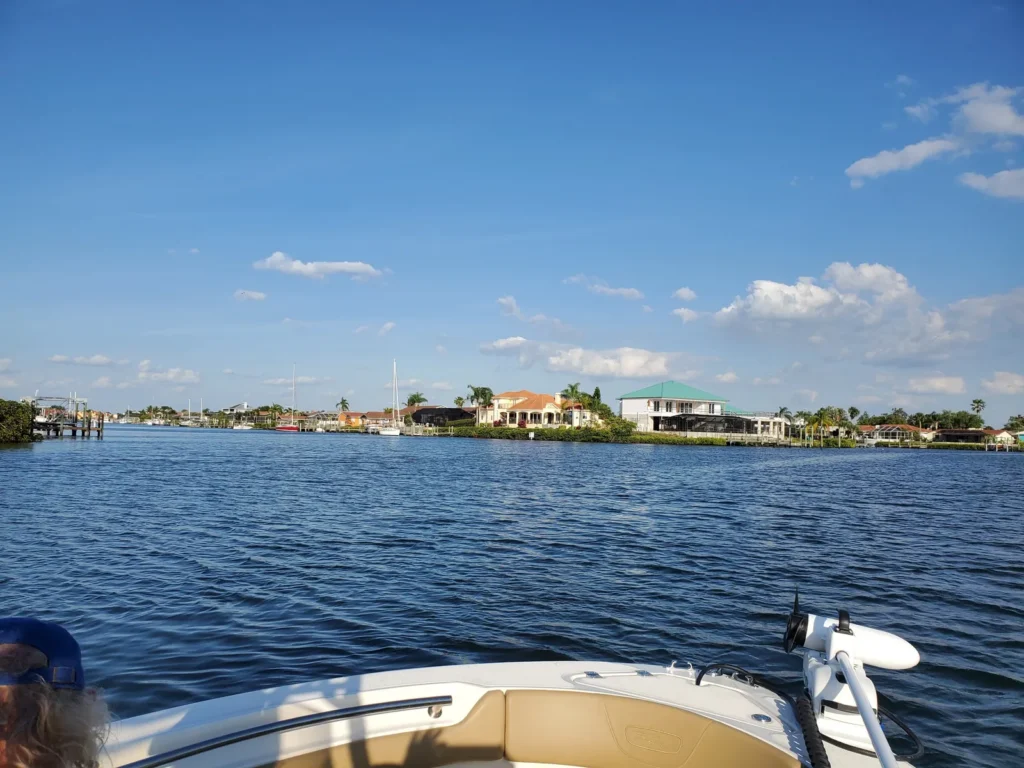
Apollo Beach from the water. This is what you come home to after the drive.
How far is Apollo Beach from the airports?
Apollo Beach sits in a genuinely unique spot on the map, almost dead center between three international airports. Tampa International is about 40 minutes away. So is Sarasota Bradenton International. So is St. Pete-Clearwater International.
Most people in Tampa Bay have to pick one airport and stick with it. Here, you’ve basically got three on-ramps to anywhere in the world, all roughly the same drive. If you fly for work, host out-of-town family, or just like having options when fares spike around the holidays, that’s a genuinely nice perk of where we sit.
What’s worth doing in Tampa on a night out?
Plenty. Tampa’s downtown has changed a lot in the last several years. Water Street Tampa and the Riverwalk turned the whole waterfront into somewhere you’ll actually want to walk around, Armature Works is a great food hall for date night, and there’s always something happening at Benchmark International Arena, home of the Lightning. Ybor City is a short hop away for nightlife and Cigar City history, and Busch Gardens is there when the grandkids come to visit.
What about St. Pete and Clearwater?
Head the other direction and you’re in St. Pete and Clearwater territory: the murals and rooftop bars along Central Avenue, the St. Pete Pier, the Dalí Museum if you’re feeling cultured, and Clearwater Beach if you just want your toes in the sand. All of it is roughly 40 minutes from your driveway.
So no, moving to Apollo Beach doesn’t mean giving up the city. It just means you get to leave it behind at the end of the night.
Do you even need to leave Apollo Beach?
Honestly, less and less. Apollo Beach has grown up a lot, and it isn’t slowing down. Walmart is already open, Target is coming in 2027, and Costco is on the way too. The everyday errands that used to mean a drive to Brandon are quickly becoming a five-minute trip. There’s a Starbucks for your morning fix, and the dining scene here has genuinely exploded.
Are there waterfront restaurants you can boat to near Apollo Beach?
Yes, three of them. Finn’s and Circles are right here in Apollo Beach, and Hooks is just down the shoreline at Little Harbor in Ruskin. At all three you can pull the boat right up to dinner, which still makes me smile every time I see it happen.
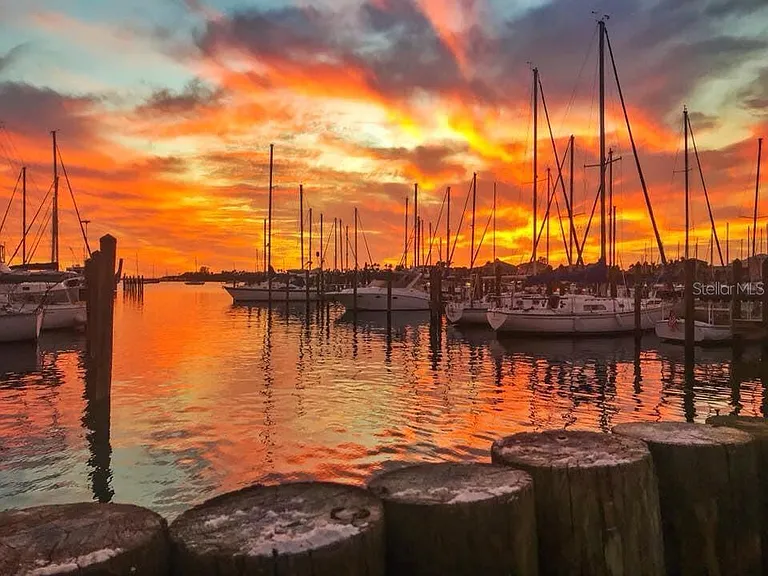
Sunset at the marina beside Circles in Apollo Beach.
Beyond those three, there are more than 15 other restaurants between Apollo Beach and Ruskin, covering everything from fine dining to casual family spots to the fast-food staples everyone needs in a pinch. Take a look at the full entertainment and shopping picture for more.
And if you’re in the mood for something a little more? Tampa, St. Pete, and Sarasota are all right there, about 40 minutes away, easy.
That’s Apollo Beach. Close enough to everything, far enough from the noise.
Who should you call about moving to Apollo Beach?
I’m Shawna Calvert, REALTOR and Team Leader of The Calvert Home Team at 27North Realty, and the #1 agent in Apollo Beach by total sales volume (Stellar MLS, Jan 2025-Aug 2026). If you’re weighing the commute, the airports, or which neighborhood fits your life best, I’m happy to talk it through.
If you’re Canadian and shopping the Tampa Bay area, you’re in better company than you probably realize. In the first quarter of 2026, Tampa ranked fifth in the country for international home-shopping activity. Only Miami, Orlando and two markets outside Florida drew more. Canadians made up 58.8% of Tampa’s international demand, up 4.6 points from the year before.
Most of what gets written for Canadian buyers is written about Miami, Naples or Fort Myers. Apollo Beach and the Southshore communities south of Tampa rarely get a mention, which is a shame, because for a lot of Canadian buyers this is the better fit: deep-water canals, boat lifts, a real neighbourhood feel, and prices that haven’t gone the way Sarasota’s have.
Here’s what actually matters when you’re buying in Apollo Beach as a Canadian. Not the brochure version.
How long can a Canadian stay in Florida each year?
Two separate rules govern how long you can be here, and they have nothing to do with each other. People conflate them constantly, and it causes real problems.
What does the six-month visitor rule actually mean?
This is the immigration clock. As a Canadian visitor you’re generally admitted for up to six months at a time. That’s a border officer’s decision rather than an entitlement, and it says nothing at all about taxes. Plenty of Canadians assume that staying inside the immigration limit keeps them clear of the IRS. It doesn’t.
What is the Substantial Presence Test?
This is the tax clock, and it’s the one that catches people. The IRS Substantial Presence Test counts:
all your U.S. days this year, plus
one-third of last year’s days, plus
one-sixth of the year before that
If that weighted total hits 183 and you were here at least 31 days this year, the IRS can treat you as a U.S. tax resident, and that means on your worldwide income.
Do the arithmetic. Four months a winter, every winter, gets you there: 120 + 40 + 20 = 180. One extra week and you’re over.
What is Form 8840, and do I have to file it every year?
Form 8840 is the Closer Connection Exception, and it’s the fix. You can use it if you were physically here fewer than 183 actual days this year, kept your tax home in Canada, and have stronger ties there: home, family, bank, doctor, driver’s licence. It’s due June 15 of the following year if you had no U.S. wages, April 15 if you did.
It is not automatic. You have to file it. Every year.
What is FIRPTA, and how much does the IRS hold back when I sell?
Everyone researches the purchase. Almost nobody researches the sale.
When a foreign person sells U.S. real estate, the buyer is required to withhold a percentage of the gross sale price and send it to the IRS. Not your profit. The gross price.
Sale price
Buyer signs residence affidavit
Withholding
Under $300,000
Yes
0%
$300,001 to $1,000,000
Yes
10%
Over $1,000,000, or no affidavit
Either way
15%
FIRPTA withholding on a sale by a foreign person. The affidavit is the buyer confirming they’ll live in the property at least half the days over the next two years.
Sell an $800,000 canal home with no affidavit and $120,000 goes to the IRS at closing, regardless of whether you made a dollar. You get it back when you file, eventually.
Can I reduce FIRPTA withholding before closing?
Yes, by filing Form 8288-B for a withholding certificate in advance. The IRS takes roughly 90 days to process one, which means the time to start that paperwork is when you list, not when you’re already under contract. Miss that window and your money sits with the IRS until you file a return for the year.
This is the single most expensive thing Canadian sellers learn too late.
Can a Canadian get a mortgage on a Florida home?
Yes. Financing works, but not the way it does at home. You don’t need U.S. credit history, though you do need a lender who does this routinely.
There are two paths: the U.S. arms of Canadian banks, which can often use your Canadian credit file, or U.S. foreign-national mortgage programs. Either way, expect a larger down payment than a U.S. buyer would put down, and rates that reflect the added underwriting. Ask for the specific number early, because it varies more by lender than people expect, and it changes what you can shop for.
Cash is common here, and it’s a real negotiating advantage in Southshore.
Which costs do Canadian buyers underestimate?
Four of them, consistently.
Why don’t Canadians get Florida’s homestead exemption?
Because Florida’s homestead exemption and its 3% Save Our Homes assessment cap both require Florida permanent residency. As a non-resident you don’t get either. Your assessed value can rise up to 10% a year instead of 3%, and that 10% cap doesn’t cover school district taxes at all. Over a decade, the gap between 3% and 10% is not small.
Worth watching: Amendment 3 goes to Florida voters on November 3, 2026. Should 60% approve it, the non-homestead assessment cap drops from 10% to 5% starting January 1, 2027. The much larger homestead exemptions in that same amendment still wouldn’t apply to you, but the tighter cap would.
What does insurance actually cost on an Apollo Beach home?
More than the number in your head, and there’s no honest average anyone can give you. Windstorm and flood are separate from your standard policy, and they’re the line item that surprises people most, especially on the water. Get real quotes on a specific address before you fall in love with it. Never a regional average, because two homes on the same street can price very differently.
What is a CDD fee, and why is it on top of my HOA dues?
A CDD is a Community Development District, and many Southshore communities carry one. The assessment pays off the infrastructure the developer built, meaning roads, drainage and amenities, and it lands on your tax bill rather than your HOA statement. It isn’t optional, and buyers miss it constantly when they compare two homes that look identically priced.
How much does the exchange rate matter?
Enough to plan around. You’re buying a USD asset with CAD, so the purchase, the carrying costs and the eventual sale all move with the rate. That’s an exposure, and it cuts both ways.
Can I rent the house out while I’m back in Canada?
Plenty of Canadians offset costs by renting in the off-season. Two things matter before you count on it.
How is a Canadian owner’s rental income taxed?
Gross rental income paid to a foreign owner is subject to 30% withholding unless you make an election to be taxed on a net basis, after expenses and depreciation. That election almost always produces a better result, but it requires filing. Nobody applies it for you.
Will my community even allow it?
Southshore HOAs vary widely on minimum lease terms. Some allow monthly, many require three, six or twelve months, and short-term rental is off the table in a lot of neighbourhoods. Read the specific community’s documents before you buy on a rental assumption, because the rules differ from one gate to the next.
What happens to a Florida property when a Canadian owner dies?
This is the one almost nobody raises, and it deserves a conversation.
A non-resident who isn’t a U.S. citizen has a dramatically smaller U.S. estate tax exemption than a citizen does. We’re talking tens of thousands of dollars of U.S.-situs assets, not millions. A canal home in Apollo Beach clears that threshold comfortably.
The Canada and U.S. tax treaty provides meaningful relief, and how you take title matters. Put this question to a cross-border accountant before you close, because it’s far easier to structure at purchase than to fix later.
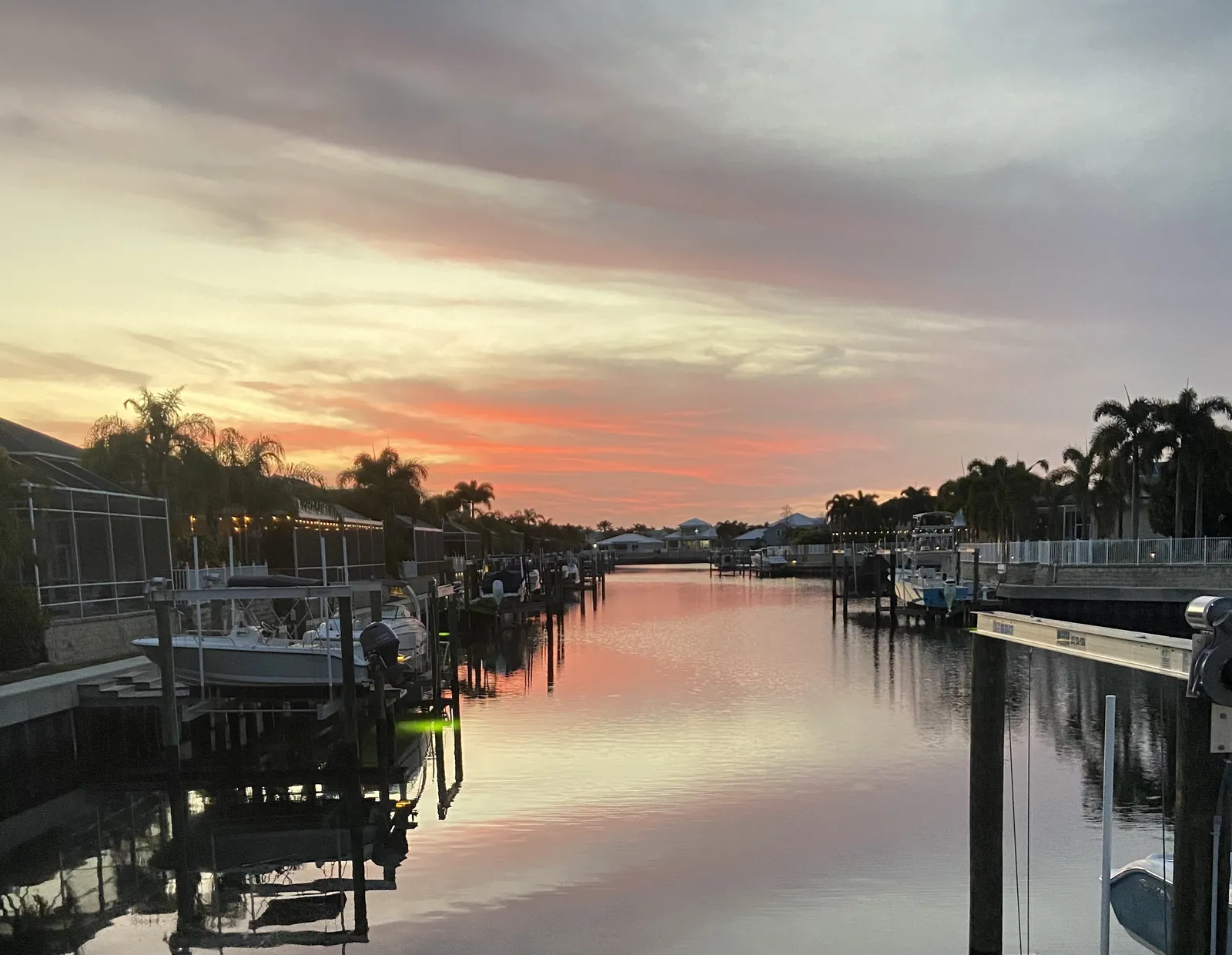
A canal home in Apollo Beach at sunset, dock and boat lift in view.
What should I check on an Apollo Beach waterfront home?
This is Apollo Beach, so the waterfront questions are the real questions.
Elevation and flood insurance come first. Before anything else, know the property’s elevation and get a real flood quote on that address. Two homes on the same canal can carry very different numbers.
Then the water. How deep is the canal at low tide, not at high tide, which is what listings tend to imply? What’s the bridge clearance between the property and open water? And what’s the lift capacity, meaning the weight the boat lift is rated to carry, which is a different question from whether it was ever permitted?
If your boat doesn’t fit under the bridge, or the lift can’t carry it, the waterfront is decorative.
Where should a Canadian buyer start?
Decide roughly how many days a year you’ll actually be here. That answers the tax-residency question before it becomes a problem.
Talk to a cross-border accountant early, before you make an offer rather than after. Title structure and estate planning are cheap to get right at the start.
Get insurance quotes on real addresses, not averages.
Then go look at houses.
Canadian buyer FAQ
Can a Canadian buy a house in Florida?
Yes. There’s no citizenship requirement and no visa requirement to own U.S. real estate, and Canadians buy in Florida every day. Owning a home gives you no additional right to stay in the country, though. Ownership and immigration status are completely separate systems.
How many days can a Canadian spend in Florida without becoming a U.S. tax resident?
Fewer than you’d guess, because the IRS weights prior years. Add all your U.S. days this year, one-third of last year’s and one-sixth of the year before; at 183 or more, with at least 31 days this year, you meet the Substantial Presence Test. Four consecutive winters of four months each puts you at 180.
Do I have to file Form 8840 every year?
Yes, if you’re relying on the Closer Connection Exception. The form isn’t a one-time registration and it isn’t automatic. File it by June 15 of the following year when you’ve had no U.S. wages, or April 15 when you have.
How much tax is withheld when a Canadian sells a Florida home?
Under FIRPTA the buyer withholds from the gross sale price: 0% under $300,000 with a buyer residence affidavit, 10% from $300,001 to $1,000,000 with that affidavit, and 15% above $1,000,000 or whenever no affidavit is signed. Filing Form 8288-B in advance can reduce it, but allow about 90 days.
Can a Canadian get a mortgage in Florida without U.S. credit?
Yes. The U.S. arms of Canadian banks can often read your Canadian credit file directly, and U.S. foreign-national mortgage programs exist for exactly this. Both usually want a larger down payment than a domestic buyer would make, so ask for the specific figure before you set a budget.
Do Canadians pay higher property taxes in Florida?
The tax rate is the same, but the protections aren’t. Florida residents get the homestead exemption and a 3% annual assessment cap; non-residents get neither, so an assessment can climb up to 10% a year, and that cap excludes school district taxes. Over ten years the difference compounds meaningfully.
Can I rent out my Apollo Beach home when I’m not there?
Usually, within limits. Your rental income faces 30% withholding on the gross unless you elect net-basis taxation, and your HOA sets the minimum lease term. Southshore communities range from monthly minimums to twelve-month minimums, and several prohibit short-term rental entirely, so check the documents before you buy on a rental assumption.
Do I need a U.S. bank account to own a home in Florida?
It isn’t legally required, but it makes ownership far simpler. Utilities, HOA dues, CDD assessments, insurance premiums and property tax bills all want a U.S. payment method, and paying each one from Canada means conversion costs every time. Most Canadian banks can open a U.S. account for you before you close.
Is Apollo Beach in a flood zone?
Much of waterfront Apollo Beach sits in a FEMA special flood hazard area, but the zone and the base flood elevation change parcel by parcel. Never take a neighbour’s premium as a guide to yours. Pull the elevation certificate and get a quote on the exact address you’re considering.
Which Apollo Beach community suits a Canadian buyer best?
It depends on the boat and on how much you want handled while you’re away. MiraBay is the amenity-heavy, golf-cart-friendly option; Bimini Bay is smaller and quieter on deep water; Andalucía is guarded and gated. All three are true navigable waterfront with Tampa Bay access.
This is general information, not tax or legal advice. Cross-border ownership touches U.S. and Canadian tax law, immigration rules and Florida property law at the same time, so work with a cross-border accountant and a Florida real estate attorney on your specific situation.
Shawna Calvert is a REALTOR® and Team Leader of The Calvert Home Team at 27North Realty in Apollo Beach. RateMyAgent ranked her #10 in its 2026 national Top 100 and named her Florida Agent of the Year, Hillsborough County Agent of the Year, and Apollo Beach Agent of the Year for the second year running. She has more than 290 verified five-star reviews there, and Stellar MLS ranks her the #1 agent in Apollo Beach by total sales volume for January 2025 through August 2026. She and her team work MiraBay, Bimini Bay, Andalucía, Waterset, Covington Park, Harbour Isles and Symphony Isles, and they answer the elevation and flood questions before you ask them.
Most advice about how to find a realtor in Florida tells you to look for letters after someone’s name. I have been selling real estate here for years, and not one buyer has ever asked me about a designation. Not once.
When I see a long list of certifications on an agent’s profile, what I read is an agent with a lot of free time. The ones I respect are busy because they are working. What you actually need to know is simpler than any of that: does this person do this every week, in the places you are looking, with the kind of property you want to buy?
Here is what I would check if I were hiring an agent from another state, and the questions I would ask on the first call.
How do you find a realtor in Florida who actually knows this market?
Florida stacks up things that do not exist in most markets. Flood zones assigned parcel by parcel. Windstorm and flood insurance as separate policies from your homeowners coverage. CDD assessments that sit on the tax bill alongside HOA dues. Homestead exemption timing that depends on when you close. And on the water, canal depth, bridge clearance, lift capacity and community dock rules that decide whether the boat you own even fits behind the house.
If you are buying from out of state, you are relying on someone else to raise the things you do not know to ask about. A local buyer who misses something can drive back and look again. You cannot. That is the whole job, and it is why a friendly agent with no local depth is a genuine risk to your money.
Do real estate designations actually matter?
In my experience, no. Buyers do not ask about them, and I have never seen one change the outcome of a transaction. Coursework does not tell you whether an agent has stood on a seawall, pulled a community master dock plan, or explained a CDD to a buyer who was three days from closing. Volume and location do.
There is one exception worth knowing about. Some designations are national and some are issued by a single local association, so an impressive looking certification may have nothing to do with the market you are buying in. If an agent leans on a credential, ask who issued it and what it required. The answer is usually a weekend.
What should you actually check before you hire someone?
When you are working out how to find a realtor in Florida who is worth hiring, start with how much they close and where. Ask for a number: how many transactions last year, and how many of those were in the communities you are considering. An agent who works the same handful of neighborhoods every week knows which ones carry a CDD, which canals have a bridge problem, and how quickly a listing moves in each one. An agent whose closings are scattered across four counties is learning your market at your expense.
If you are buying waterfront, ask specifically how many waterfront transactions they closed, not just how many homes. Waterfront is its own skill set. For reference, I close more than 100 homes a year and more than 50 of those are waterfront, which is why I can tell you what a seawall costs before you order the inspection.
There is an easier way to check all of this than asking. The Homes.com app shows an agent’s actual transaction history and the communities they work in, so you can see for yourself how much someone closes and where, instead of taking their word for it. Look up whoever you are considering before the first call. Look me up too.
There is an easier way to check all of this than asking. The Homes.com app shows an agent’s actual transaction history and which communities they work in, so you can see for yourself how much someone closes and where, instead of taking their word for it. Look up whoever you are considering before the first call. Look me up too.
How do you verify a Florida agent’s license?
Every Florida license is public. Go to MyFloridaLicense.com, the state Department of Business and Professional Regulation site, and use the license search. Enter the agent’s name, confirm the license is active, see which brokerage holds it, and check whether there are any disciplinary actions on the record. It takes about five minutes and it is worth doing before you hand anyone your time.
What should you ask on the first call?
Ask questions with real answers, and listen for specifics rather than reassurance. Ask what the difference is between an HOA fee and a CDD fee, and how each one shows up in a monthly payment. A good answer explains that a CDD sits on the tax bill, funds the community and pays down the development bonds, and is usually based on lot size.
If you want a boat, ask how they check that it will actually work. A good answer covers the depth at the dock at low tide with the lift down, the bridges between you and open water, the community master dock plan, and the pound capacity of any lift already there. If the answer is that the listing says direct access, keep looking.
Ask how flood zone works and what it will cost on the specific house you are considering. A good answer sends you to the parcel, not to an average. Ask about homestead exemption timing, because closing in December instead of January changes when the benefit shows up. And ask what happens when you cannot be here in person, for a showing, an inspection, or a walkthrough. You want to hear a process, not a promise.
What does the brokerage name tell you?
Almost nothing. A recognizable brand means a marketing budget, not local knowledge, and any large franchise has both excellent agents and agents who are out of their depth. The name on the sign does not tell you which one you are talking to. The transaction history does.
What are the warning signs?
Pressure to sign a buyer agreement before your questions have been answered. Vague answers about flood zones, insurance or CDD fees. Reviews that are all generic praise with no mention of a specific deal, or a cluster of reviews from one month and nothing since. And the biggest one: an agent who treats your questions as an inconvenience. That does not improve once you are under contract. It gets worse, at the exact moment you need answers.
Should you just call the listing agent?
Buyers from other states are often told never to do this. In Florida I think it is frequently the better move, and I work both sides of a deal more than most agents do. The legal term here is transaction broker. Under Florida statute 475.278 that means I deal honestly and fairly with both of you, account for the money and disclose what materially affects the property. What I do not do is argue one of you down on behalf of the other.
The advantages to you are real. I already know what the seller wants, and I do not just mean the price. That includes whether they need time in the house after closing, whether they have somewhere lined up, and what they will fix and what they will not. Getting that home sold is what I am there to do. And I can show it to you without a buyer broker agreement, so you can walk through the house you actually called about without signing a contract with an agent you met ten minutes ago.
What you give up is an advocate arguing only your side, and some buyers want that. That is a fair thing to want, and if it is what you want, hire someone for it. But if you are looking at one specific house and you want straight answers about it quickly, calling the agent who already knows that house is not a trap. Ask which relationship you are in, get it in writing, and ask directly what changes about the advice you get. Any agent worth hiring will answer that without flinching.
Shawna Calvert on the water off Apollo Beach. Knowing the market means knowing the water.
What does it look like when someone gets it right?
Everything about how to find a realtor in Florida comes down to one behavior. The right agent tells you the uncomfortable things early, while you can still walk away cheaply. Flood zone and a real insurance quote before you are emotionally attached. The full monthly number, including taxes, insurance, HOA and CDD, before the list price sets in your head. An honest read on what a community is actually like to live in rather than what the brochure says. That is not a sales approach. It is just the job done in the right order.
Where should you start?
That is how to find a realtor in Florida who is worth your time. If you are moving to the Tampa Bay area, Southshore, or anywhere else in the state, call me before you start looking at houses. We will go through flood zones, what the monthly cost really is, which communities fit how you want to live, and if there is a boat involved, whether the water behind the house works for it. You can also read how I work with buyers on my relocation services page.
Southshore is not one place. When someone searches Southshore Tampa, they are usually picturing a single town. It is actually six or more communities, and they do not price the same, flood the same, or feed into the same schools. The gap between the label and the address is where most relocations go wrong.
I work with out-of-state buyers every week who are trying to make this decision from a thousand miles away. Most of them start by asking where Southshore is. The better question is which Southshore community fits the way you actually live. That is the question this article answers.
Below I cover what each community is actually like, real commute numbers, how school zones get assigned, what your flood zone does to your insurance bill, the monthly costs nobody puts on the listing sheet, and how to buy here without flying down first.
What does Southshore actually mean?
The six communities you are really choosing between
Southshore is a regional nickname, not a city. It covers the communities south of Tampa: Apollo Beach, Ruskin, Riverview, Wimauma, Sun City Center and Gibsonton, running down to the Manatee County line. You will see ZIP codes 33534, 33569, 33570, 33572, 33573, 33579 and 33598 across the area, and some of those spill into neighboring places. A buyer looking for a canal home with a boat lift in Apollo Beach and a buyer looking for new construction in a Riverview master-planned community are not shopping the same market, even though both will say they are moving to Southshore.
Matching the community to how you live
Apollo Beach is where the boaters land. Canal homes with direct access to Tampa Bay, lifts in the back yard, and a slower marina feel. Riverview pulls growing families, mostly newer construction in master-planned communities with easy access to shopping and healthcare. Ruskin and Wimauma are the most affordable way into the area, which is why budget-focused buyers end up there. Sun City Center is its own world, built for active adults 55 and up, with golf cart streets, resort amenities and a social calendar nothing else down here comes close to.
Why the address matters more than the community name
Your lender, the school district, FEMA and your insurance underwriter all work off a specific address. None of them care what the community is called. Buyers who pick an area by name and skip the address-level check get surprised by their school assignment, their flood zone or their insurance requirement. Two houses in the same subdivision can land differently on all three. Start with an address, check each system on its own, and assume nothing.
Community layout tells you a lot before you ever tour a house — where the water is, where the amenities sit, how far the commute starts.
What does the commute really look like?
Getting to downtown Tampa
Plan on 25 to 40 minutes off-peak and 30 to 50 or more at rush hour from most of Southshore to downtown Tampa. The Selmon Expressway is the fastest way in. Where you land inside Southshore matters more than people expect. Northern Riverview sits noticeably closer to the on-ramp than southern Ruskin or Wimauma, and you feel that difference every weekday morning.
Getting to the airport and the job corridors
Tampa International runs about 25 to 35 minutes off-peak, taking I-75 north to I-275 west, and can stretch to 55 at peak depending on where you start. USF, Westshore and the South Tampa medical corridors follow the same pattern. If you are commuting to downtown or the airport side of town, northern Riverview buys you real time back compared with the southern edge of Southshore.
How do you verify the school before you pick the house?
How Hillsborough County assigns schools
Every Southshore community is in Hillsborough County Public Schools, one of the largest districts in the country. Assignments are made by address, not by neighborhood. Two houses across the street from each other can feed different elementary schools. Families assume the community name settles it more often than you would think. Run your exact target address through the district’s school finder before you get attached to anything.
Schools serving Apollo Beach, Riverview and Ruskin include Apollo Beach Elementary, Thompson Elementary, Eisenhower Middle, East Bay High and Lennard High, among others. There are charter options too, including Waterset Charter School and Dorothy C. York PK-8 Magnet. Your parcel decides, not your subdivision.
Look past the rating number
Boundaries move faster here than in established neighborhoods because Southshore keeps growing. New construction in Riverview and Apollo Beach has driven new school builds and boundary changes in recent years. Ask your agent about boundary history and current capacity in the area you are considering. A zone that was accurate six months ago may already be different.
How do flood zones and insurance work here?
How the zones break down here
Zone AE sits inside the 1% annual-chance floodplain, and if you have a federally backed mortgage on an AE property, flood insurance is required. Zone X is lower risk with no federal requirement, which is not the same thing as flood-free. In Southshore, the waterfront and canal-adjacent homes in Apollo Beach and Ruskin are the ones most likely to be AE or coastal VE. Inland Riverview and Wimauma more often fall in Zone X, and the insurance picture there is completely different.
What flood insurance actually costs
On Apollo Beach canal-front and waterfront homes, 2026 NFIP premiums commonly run anywhere from around $1,500 into the $12,000 range, driven by elevation, foundation type and how close you sit to open water. Inland Riverview homes in Zone X generally run $400 to $1,200 a year, with a lot of low-risk properties landing between $650 and $900. That spread is the single biggest cost surprise for buyers coming from out of state.
Put flood insurance into your monthly number before you write an offer, not after. On any waterfront or canal-front home, ask the seller for the elevation certificate. It can lower your premium, and either way it tells you what you are actually buying before you are under contract.
Evacuation zones are a separate thing
FEMA flood zones and hurricane evacuation zones are two different systems run by two different agencies. Evacuation zones are set by state and local emergency management, not FEMA. Waterfront and canal homes in Apollo Beach and Ruskin usually sit in higher-priority evacuation zones because of storm surge. Look up both the flood zone and the evacuation zone for the specific address using the Hillsborough County lookup tool. The community name will not tell you.
Master-planned communities like Waterset trade water access for amenities and lower entry prices.
What does it cost to buy in Southshore?
Southshore Tampa housing market: price ranges by community
Apollo Beach as a whole has been running roughly $485,000 to $510,000 in median price across current data sources, and canal-front and bay-front homes sit well above that depending on the water access. Riverview new construction covers a wide range, and builder incentives come and go with the market. Ruskin and Wimauma are the most accessible entry points down here. Whatever the community, the number that matters is your total monthly cost, not the price on the listing sheet.
CDD fees, HOA dues and property taxes
Florida master-planned communities often carry a Community Development District fee and an HOA, and buyers mix the two up constantly. In Waterset, in Apollo Beach, plan on roughly $300 to $400 a month combined for HOA and CDD in many sections, with the CDD assessment itself running about $1,590 to $4,148 a year depending on the section and the lot size. Riverview master-planned communities land in a similar range, with CDD fees around $1,750 a year as a benchmark in some neighborhoods.
Out-of-state buyers who plug a price into a basic mortgage calculator and leave out CDD and HOA routinely underestimate their payment by hundreds of dollars a month. Going the other way, Florida’s homestead exemption lowers your assessed value and takes a real bite out of the tax bill after your first full year. File for it as soon as you close and establish Florida as your primary residence.
Can you buy from out of state without flying down?
The remote process that actually works
Buying remotely is normal here now, not a workaround. Most of my out-of-state buyers come from the Northeast, the Midwest and the West Coast. What works is a sequence: virtual community tours first, then address-level flood and school verification, then detailed video walkthroughs, then inspection reports we go through together so you know what the findings actually mean. The difference is having someone on the ground looking at the house for you, not just handling paperwork after you have already picked one.
Your Southshore pre-move checklist
Work this sequence and you will stay ahead of the things that catch relocating buyers off guard:
Pick your community by lifestyle and life stage before you start looking at listings.
Verify the school zone with the Hillsborough County school finder using a specific address.
Pull the FEMA flood zone designation for every property on your shortlist.
Get flood insurance quotes early, before you are under contract.
Ask for a clear breakdown of CDD versus HOA fees in every community you consider.
Request the elevation certificate on any waterfront or canal-front home.
File for homestead exemption as soon as you close and establish Florida residency.
Working with someone local before you get here
This is the work my team and I do at 27North Realty. Community matching, flood zone education, CDD breakdowns and school verification are not extras we add when a buyer asks for them. They are where every relocation conversation starts. That matters most for buyers who cannot fly down three times and need one local source of truth instead of stitching together answers from national websites that do not know the difference between a Zone AE canal home in Apollo Beach and a Zone X subdivision in Wimauma.
If you are thinking about the move, get connected with someone local early. You want address-level answers before you write an offer, so that by the time you are standing in your first showing you are already confident in the community, the numbers and the decision.
It comes down to five verifications
Southshore is not one place, and the right fit depends on your lifestyle, your budget, how much commute you will tolerate and how you feel about flood risk. Before you commit to a community, verify five things: the community personality against your life stage, the school zone for that exact address, the FEMA flood zone and the evacuation zone, the total monthly cost including CDD and HOA, and the real commute from that address to where you work.
Run your all-in numbers with a Florida lender who understands CDD fees and flood insurance line items, and talk to someone local who can give you address-level answers. That is the work I do every week with buyers who are still sitting in another state, no flight to Tampa required.
Shawna Calvert | The Calvert Home Team at 27North Realty
Apollo BEACH | TAMPA Bay
Relocation Reality Check
Florida time is real, and it is one of the better reasons to move here.
Welcome to Florida Time.
The one thing nobody warns you about before you move here, and why it might just be the best business opportunity you have ever seen.
Shawna Calvert |May 2026 | The Calvert Home Team at 27North Realty
You did your research. You visited twice, maybe three times. You fell in love with the sunsets, the water, the pace of life. You made the move. And then you tried to get someone to call you back about your pool.
Let me introduce you to something no relocation guide will ever put in writing: Florida Time. It is a real thing. It is alive and well in every zip code from Hillsborough to Sarasota, and the sooner you make your peace with it, the happier you are going to be in your new paradise.
Florida Time is not laziness. It is not rudeness. It is the natural consequence of what happens when one of the fastest-growing states in the country adds thousands of new residents every single week, and the contractor, plumber, pool guy, and pressure washer who were perfectly busy two years ago are now so overwhelmed they genuinely do not need to market themselves, return calls promptly, or even finish a job before a backordered part sends them to three other houses for three weeks while yours sits waiting. They are not ignoring you. They are just fine. And so is their schedule, and their bank account, and their fishing boat on Saturday.
They do not need your business. That is not personal. That is Florida in 2026.
So How Do You Actually Get Someone Out Here?
Ask a neighbor. And not just any neighbor. Ask someone who has been here long enough to have a guy. Better yet, ask them to make the introduction. There is a magic phrase that unlocks doors in South Shore that no amount of five-star Google reviews or Angi listings can replicate. It sounds like this:
“Hi, Shawna Calvert told me to call you.” That one sentence tells a vendor everything they need to know. Someone they already trust vouched for you. You are not a stranger calling from a Zillow listing. You are a real person in the community with a real referral, and now you have just moved to the top of the mental queue.
Name-dropping is not rude in Florida. It is currency. The right name attached to your call is the difference between a callback that afternoon and a voicemail that gets forgotten before dinner. Use it freely and without apology.
The Hidden Opportunity Nobody Is Talking About
Here is where this gets interesting. Florida Time is not just a quirk to survive. For the right person, it is a wide-open invitation.
Think about what the market is actually telling you. Population growth is outpacing the local service industry at a rate that would make any MBA student sit up straight. Demand is enormous. Supply of reliable, responsive service providers is genuinely limited. And the bar, if we are being completely honest, is sitting on the ground.
If you are someone relocating to Florida and you are wondering what kind of work you could build here, the answer is simple: almost anything. Pick a trade, a skill, a service. And then do one thing your competition largely refuses to do.
Answer your phone.
That is it. Answer your phone, return texts the same day, show up when you say you will, and finish what you start. You will have more business than you can handle within sixty days. I am not being dramatic. I have watched it happen over and over again in this community.
The need is real across every category you can imagine:
· Pool Service
· Lawn Care
· Pressure Washing
· House Cleaning
· Home Organizing
· Handyman Work
· Plumbing
· Babysitting
· Errand Running
· Pet Care
· Move-In Help
· Painting
The families moving into Waterset, MiraBay, Cypress Mill, Crosswind Ranch, and every other growing community across South Shore are arriving from all over the country. They do not have a guy yet. They need a whole list of guys. And girls. And anyone who picks up the phone and cares about doing good work.
A Servant Heart Is a Business Strategy Down Here
I have lived in this community long enough to watch what actually works. The service providers who build thriving businesses here are not necessarily the most skilled or the most experienced. They are the ones who treat every customer like that customer matters. They follow up when the job is done. They check in when there was a problem. They remember your name. They show up for you even when they are busy, because you are not just a job ticket to them.
That is a Go Giver spirit, and it is absolutely electric in a market where the alternative is not calling you back for two weeks because the part is on order and they honestly forgot which house you were.
If you come to Florida with a skill in your hands and a servant heart in your chest, you are holding a lottery ticket. The population is here. The money is here. The need is undeniable. All you have to do is show up, do what you said, and give people a reason to call you again and hand your number to every neighbor they know.
Answer your phone. Show up. Finish what you start. In Florida right now, that alone will build you something extraordinary.
And if you are still in the middle of your move and wondering who to call for literally anything, ask me. I have been building that list for years, and I share it freely. That is what neighbors are for.
Southshore is easy to fall for online. Waterfront, new construction, palm trees, a price that makes sense after wherever you’re coming from.
The part that decides whether you’re happy here isn’t in the photos. It’s water access, flood and insurance costs, HOA and CDD rules, what your Tuesday actually looks like, and where you expect to be in five years. Here are the seven questions I’d want answered before I moved my own family.
At 27 North Realty, we help buyers cut through the noise with practical local guidance. Here are seven smart questions that can help you make a more confident move to Apollo Beach, Ruskin, Riverview, Wimauma, Sun City Center, or Gibsonton.
1. Do you want true waterfront access or just a water view?
In Florida, “waterfront” can mean very different things. Some homes offer open bay access, some sit on canals with bridge limits or depth concerns, and others simply overlook a pond or conservation area. If boating matters to you, details like canal depth, dock setup, lift capacity, and boat size restrictions should be part of your search from day one. Our Apollo Beach waterfront buying guide explains the full due-diligence checklist.
Seven questions worth answering before you pick a Southshore community.
2. How will flood zones and insurance affect your budget?
Two homes with similar prices can carry very different long-term costs depending on elevation, flood zone, and insurance requirements. Buyers moving from out of state are often surprised by how much these factors can shape affordability. Looking at the full monthly picture early helps you avoid frustration later.
3. What kind of community rules are you comfortable with?
CDD fees and HOA rules, gated access, boat storage limits, and exterior restrictions can all vary from one neighborhood to the next. Some buyers want a highly maintained community with strong amenities. Others want more freedom and fewer rules. Neither is wrong, but the right fit depends on your lifestyle.
4. Which area matches the way you actually live?
Apollo Beach, Ruskin, Riverview, Wimauma, Sun City Center, and Gibsonton each offer a different pace, housing mix, and daily experience. Some areas appeal to waterfront buyers. Others are better for newer master-planned communities, commuter convenience, or active adult living. A smart move isn’t just about the house. It’s about how the area fits your routine.
5. Are you buying for today or for the next five years?
Your next home should support more than your immediate move. Think about guest space, home office needs, school preferences, storm preparation, storage, and whether you may want a pool, dock, or more outdoor living later. A home that works now but limits you quickly can become an expensive short-term solution.
6. How much local guidance will you need during the search?
Relocation buyers often need more than listing alerts. They need straight answers about neighborhoods, insurance, taxes, commute patterns, waterfront details, and the tradeoffs between one community and another. Working with a local expert can save time, reduce second-guessing, and help you spot issues that are easy to miss from a distance.
7. Are you getting advice from someone who knows this market deeply?
Southshore Tampa Bay isn’t a market where broad advice is enough, especially for waterfront buyers. 27 North Realty is built around practical local knowledge, relocation support, and real experience helping buyers make informed decisions. When the goal is a confident move, local insight matters.
The best Florida move starts with clear answers, not guesswork.
Frequently asked questions
What areas are considered Southshore Tampa Bay?
Southshore commonly refers to communities in southern Hillsborough County around Tampa Bay, including Apollo Beach, Ruskin, Riverview, Wimauma, Sun City Center, and Gibsonton. Each has a different housing mix, commute pattern, and lifestyle.
What should an out-of-state buyer compare first?
Start with the complete monthly cost, insurance and flood details, commute, community rules, property condition, and the neighborhood’s fit with your daily routine. Then compare individual homes.
Is every waterfront home suitable for the same boat?
No. Canal depth, tides, bridges, dock configuration, lift capacity, and the route to open water can all limit practical boating access. Confirm property-specific details before making an offer.
Ready to explore Southshore Tampa Bay?
If you’re comparing communities, weighing waterfront options, or trying to understand the real cost of moving to Florida, contact Shawna at 27 North Realty. You’ll get practical guidance to move forward with more clarity and less stress.
You researched the communities. You compared the homes. You survived the move. And then you tried to get somebody out to look at your pool.
Welcome to Florida Time. It’s real, it’s in every zip code from Hillsborough to Sarasota, and it isn’t rudeness — it’s what happens when one of the fastest-growing states in the country runs short of skilled hands. The fix isn’t lowering your standards. It’s getting referred, asking the right questions up front, describing the job properly, calling earlier than you think you need to, and never relying on just one person for anything that matters.
Quick Answer: How Do You Find Reliable Florida Home Service Providers?
Ask established local contacts for specific referrals.
Confirm that the provider regularly handles your type of property and project.
Verify required Florida and local licenses.
Request proof of appropriate insurance.
Get the scope, price, payment schedule, materials, permits, and timeline in writing.
Check recent references and completed work.
Avoid high-pressure decisions and unusually large upfront payments.
Keep a home-vendor file and backup contacts before an emergency.
New neighbors are the fastest way to find a good lawn service, a roofer or an AC company.
Why is scheduling contractors different in Florida?
Demand Is Seasonal
Pool, lawn, air-conditioning, roofing, pressure-washing, marine, and storm-preparation companies can become especially busy at predictable times. Schedule routine work before peak heat, hurricane preparation, or holiday periods when possible.
Storms Can Change Priorities
After severe weather, safety, active leaks, electrical hazards, tree damage, and homes that can’t be occupied take priority. A routine project may move while contractors respond to urgent work. This is one reason to build relationships before a storm.
Parts, Permits, and Specialty Labor Matter
A vendor may diagnose a problem quickly but still wait for equipment, manufacturer approval, engineering, municipal review, association approval, or a specialist. Ask what controls the timeline instead of assuming silence means no work is happening.
Waterfront Homes Require Specialized Experience
A general home-repair referral may not be appropriate for a seawall, dock, boat lift, marine electrical system, dredging question, or canal-access concern. Ask for professionals who understand waterfront property, applicable permits, tidal conditions, materials, and local construction.
Where should you start looking?
A trusted introduction is valuable because it identifies someone who has completed similar work for a real local customer. Ask the person giving the referral:
What exact work did the provider complete?
How recently was it done?
Did the final cost match the written scope?
Did the provider communicate changes?
Would you hire the same person again?
Was the work permitted and inspected when required?
A referral is a starting point, not a substitute for due diligence. The right vendor for a neighbor’s small repair may not be licensed, insured, staffed, or equipped for your larger project.
How do you verify a Florida license?
The Florida Department of Business and Professional Regulation provides an official license search. Depending on the work, licensing may involve state, county, city, specialty, or trade-specific requirements. Some providers can legally perform one type of service but not another.
Before hiring:
Ask for the individual’s and business’s legal names.
Ask what license applies to the proposed work.
Search the official DBPR record by name or license number.
Confirm the license status, business relationship, and discipline information shown.
Check local contractor, permit, and business requirements.
Ask who will obtain permits and schedule inspections.
Don’t rely only on a logo, vehicle, business card, advertisement, or screenshot of a license. Verify the current record through the official source.
What insurance should a contractor carry?
“Licensed and insured” isn’t a complete answer. Ask for current proof and confirm that the business name matches the contract. Appropriate coverage depends on the project and may include general liability, workers’ compensation, commercial automobile, marine, or other specialized insurance.
For a substantial project, ask your insurance professional or attorney what documentation is appropriate and whether certificates or additional protections should be requested. A certificate alone doesn’t explain every term or exclusion.
Why write a scope before comparing prices?
Three prices aren’t comparable when each provider is pricing a different job. A useful written scope identifies:
The exact area, system, or problem
Measurements, quantities, models, colors, and materials
Preparation, protection, removal, and cleanup
Permits, engineering, surveys, association approval, or utility coordination
Who supplies equipment and materials
Start assumptions and estimated duration
Payment milestones
Warranty terms and exclusions
How hidden conditions or change orders will be handled
Who’s responsible for damage or unfinished work
Photographs and a short written description can help a provider determine whether the request fits before scheduling a visit.
What should you ask before hiring?
How often do you perform this exact type of work?
Who will supervise and who will be on the property?
Will any work be subcontracted?
What license and insurance apply?
Are permits or inspections required?
What conditions could change the price or schedule?
What deposit is required and why?
When are progress and final payments due?
What warranty is provided in writing?
How will updates be communicated?
Can you provide recent local references?
What are the warning signs?
Pressure to sign immediately because the offer disappears today
A request for a large cash payment before a clear scope
Refusal to identify the legal business or license holder
A license number that belongs to another person or business
Instructions to obtain a permit as the homeowner without explaining the consequences
No written contract for substantial work
A price far below every comparable proposal without a clear reason
Frequent changes to the payment recipient or bank account
Promises that permitting, engineering, insurance, or association rules don’t matter
Requests to misrepresent project value, scope, or damage
Urgent storm repairs can create pressure, but urgency makes verification more important, not less.
How to Improve the Chance of a Fast Response
Reliable vendors are more likely to respond efficiently when the request is easy to understand.
State your city and neighborhood.
Describe the problem in one or two clear sentences.
Share useful photographs when requested through an appropriate channel.
Identify the equipment model, age, and error message when known.
Explain whether the issue is active, urgent, or routine.
Offer reasonable appointment windows and access information.
Ask for the next step and expected response time.
Follow up once clearly rather than sending many different messages.
Respectful, organized communication helps a good provider decide quickly whether to schedule, request more information, or refer you to a better fit.
Florida yards, docks and AC systems all need people you trust. Line them up before you need them urgently.
Build a New-Home Vendor File
Create the file during the first month after moving, before an air conditioner stops or a storm forms.
Category
Information to keep
Emergency and utilities
Electric, water, gas, internet, county services, alarm, and emergency contacts
Home systems
HVAC, plumbing, electrical, roofing, appliances, garage door, irrigation, and pest service
Exterior
Landscaping, tree care, gutters, pressure washing, windows, pool, screens, and fencing
Warranties, manuals, permits, invoices, serial numbers, paint colors, and service dates
Backup options
At least one alternate contact for critical systems
Record who referred each vendor, what work was completed, the final cost, and whether you’d hire the provider again.
What changes in an HOA or gated community?
Many Apollo Beach, Ruskin, Riverview, and Southshore communities have architectural, access, work-hour, parking, insurance, or vendor-registration requirements. Before scheduling exterior work, ask the association or management company about:
Architectural review and approval
Gate access and vendor registration
Allowed work hours and days
Parking, dumpsters, portable storage, or material delivery
Required licenses and certificates
Roof, paint, fence, landscape, dock, or seawall standards
Deposits, review fees, and inspection procedures
Association approval doesn’t replace government permits, and a permit doesn’t replace association approval.
Waterfront Provider Checklist
For seawalls, docks, lifts, or related marine work, ask for experience with the exact system and location. Useful questions include:
Does the project require submerged-land, environmental, county, federal, or association review?
Will an engineer, surveyor, electrician, or other licensed professional be needed?
How will tides, canal access, neighboring structures, and equipment staging affect the work?
What materials are proposed and why?
How will the boat and property be protected?
What does the warranty cover?
Don’t allow a general vendor list to replace project-specific marine due diligence.
Frequently Asked Questions
Should I hire the cheapest Florida contractor?
Price matters, but compare identical scopes, qualifications, insurance, materials, permits, supervision, timeline, and warranty. A low proposal may be appropriate or may omit necessary work.
How much should I pay upfront?
There’s no single amount for every project. Payment terms should match the scope, materials, law, and reasonable milestones. Obtain legal or consumer-protection guidance before committing to a substantial or unusual payment schedule.
Can a handyman perform any repair?
No. Work that requires a professional or contractor license can’t be made unlicensed simply by calling the provider a handyman. Verify requirements for the actual task.
Does an HOA-approved vendor guarantee quality?
No. An association list or access approval may help identify vendors familiar with the community, but homeowners should still review scope, qualifications, insurance, references, and terms.
What if a provider doesn’t call back?
Send one clear follow-up, confirm that your request fits the business, and move to a qualified backup when necessary. Don’t wait indefinitely for urgent safety, water, electrical, or property-protection work.
Can my real estate agent recommend local providers?
A locally experienced agent can often share names based on past client or property experience. The homeowner should still independently evaluate and hire the provider.
Build Your Local Network Before You Need It
The most useful welcome gift for a new Florida homeowner is a reliable list of people to call. Build that list thoughtfully, update it after every project, and share good experiences with neighbors. Local relationships work best when they’re supported by clear expectations and proper verification.
27North Realty helps relocating buyers understand Apollo Beach, Ruskin, Riverview, Southshore communities, waterfront considerations, and the practical details of settling into a new Florida home.
This article provides general relocation and property-management information. It isn’t legal, licensing, engineering, insurance, construction, marine, association, or consumer-protection advice. Requirements vary by project and location. Verify current rules with the appropriate agency and qualified professionals.
Moving to Florida isn’t just a change of address, and the things that catch people off guard are almost never the things they worried about.
1. Heat and humidity change how you use a home
The lifestyle really is as good as you’re hoping. But you’ll make better decisions — about budget, about neighborhood, about which house — if somebody tells you the practical stuff first. Here are seven surprises worth planning for.
Also budget for routine pest control, air-conditioning service, and landscaping. These are ordinary ownership costs here, not unusual surprises.
Nobody moves here for the humidity. These are the surprises worth planning for anyway.
2. Storm planning starts before hurricane season
A strong plan begins with the property, insurance options, evacuation zone, flood information, shutters or impact protection, roof condition, trees, drainage, and a place for outdoor furniture. Insurance availability and cost can differ substantially between two homes that look similar online.
3. The neighborhood can matter as much as the city
Apollo Beach and the surrounding Southshore area include gated waterfront communities, non-HOA canal neighborhoods, master-planned communities, established suburban streets, condominiums, and 55-plus options. The city name alone doesn’t tell you about boating access, HOA and CDD costs, rules, lot size, commute pattern, or amenities.
A useful home search starts with your daily life: boat or no boat, gated or flexible, newer or established, social amenities or privacy, maintenance tolerance, commute, schools when relevant, and total monthly cost.
4. HOA and CDD are different questions
An HOA governs a community through recorded documents, rules, budgets, and assessments. A CDD is a special-purpose local government that can fund and maintain community infrastructure and amenities, with assessments commonly appearing on the property-tax bill. A home can have one, both, or neither.
Review current fees and documents for the specific property. Don’t rely on an old listing or a general neighborhood description. My Florida CDD fee guide explains what buyers should verify.
5. Waterfront living requires property-specific due diligence
Waterfront isn’t one category. Canal width and depth, bridge clearance, route to open water, tides, dock and lift capacity, seawall condition, permits, flood exposure, and boat restrictions can all affect whether a home fits your needs. Two houses in the same community can have different practical boating access.
6. Service providers can book up at the exact time you need them
Inspectors, insurance agents, movers, cleaners, contractors, pool companies, lawn services, and marine specialists can become busy during peak moving periods and after storms. Build a vendor list early, verify licensing and insurance where applicable, obtain written scopes, and avoid large pressure-driven decisions.
7. The social side of Florida living is a real part of the decision
In many Southshore neighborhoods, people connect through pools, clubhouses, boating, golf carts where allowed, food-truck nights, school activities, clubs, and waterfront events. Other neighborhoods are quieter and more private. Neither is better for everyone.
Visit at different times of day. Drive the route to work, grocery stores, medical care, and the places you use weekly. A home that fits on paper should also fit the rhythm you want.
A Florida relocation checklist before you choose a home
Price the complete payment, including insurance, taxes, HOA, CDD, and maintenance.
Get insurance guidance early and verify flood and evacuation information.
Read HOA and condominium documents before the applicable deadline.
Inspect the roof, HVAC, electrical, plumbing, moisture, drainage, and waterfront features.
Test the commute and daily errands at realistic times.
Match the community to your lifestyle before narrowing by finishes.
Keep reserves for moving, repairs, and the first year of Florida ownership.
What’s the biggest surprise for people moving to Florida?
The complete ownership cost is often the biggest surprise. Insurance, taxes after a sale, HOA or CDD assessments, cooling, maintenance, and storm preparation should all be calculated before choosing a price range.
Should I rent before buying in Florida?
Renting can provide flexibility, but it isn’t automatically the best choice. Compare your timeline, moving costs, available inventory, rent, purchase costs, and how confident you’re about the location.
Are all Apollo Beach homes in an HOA?
No. Apollo Beach includes HOA communities and older canal or suburban areas without an HOA. Verify the actual property records and documents.
Can an online listing tell me whether my boat will fit?
No. Verify the dock, lift, depth, width, bridges, route, restrictions, permits, and conditions for the specific property and vessel.
Planning your Florida move? I help buyers narrow Southshore and Tampa Bay options by lifestyle, property details, waterfront needs, and the complete ownership picture.
Retiring here means warm water, boats, fishing, and sunsets you don’t get tired of, with Tampa, Brandon, Riverview and the Sarasota beaches all an easy drive away. That part is genuinely as good as it sounds.
What decides whether you’re happy is less romantic: how the community is structured, what insurance costs, your flood exposure, the property taxes, how far you are from the doctors you’ll actually use, how much maintenance you want to do, and what you want a normal Wednesday to look like. Some retirees want an active-adult community with a full calendar. Others want a dock, a quiet street, and to be left alone. Both exist here, and they’re not interchangeable.
Quick Answer: Is Apollo Beach a Good Place to Retire?
Apollo Beach can be a great place to retire if you love warm weather, boating, fishing, being outside and the easygoing pace of the Southshore. It may not be the right fit if you want a walkable downtown, a classic Gulf beach outside your door, lots of public transportation, or as little storm and insurance planning as possible.
The smart move is to try the lifestyle on before you buy. Visit neighborhoods at different times of day, drive to the doctor and the grocery store, add up the full cost of owning, and look at both 55+ communities and neighborhoods open to all ages.
Retirement here is built around the water — the question is which community fits the way you actually spend your days.
What does retirement in Apollo Beach feel like?
Apollo Beach sits on Tampa Bay in southern Hillsborough County. Life here revolves around canals, boating, waterfront homes, community amenities, eating outside and easy access to the rest of Tampa Bay.
It isn’t a classic beach town with a row of hotels, a boardwalk and a walkable tourist strip. If that’s what you picture, compare Apollo Beach with the Gulf beach towns before you decide. Apollo Beach is more about neighborhoods and boats.
Day to day, you’ll drive. Groceries, restaurants, doctor’s appointments, the airport, shows and visits with family may take you north toward Riverview, Brandon or Tampa, or south toward Ruskin, Parrish and Sarasota. Drive times can change a lot with traffic, construction and the time of day.
Why start with the lifestyle instead of the house?
Before choosing a community, decide what you want your week to look like.
Do you want organized clubs, fitness classes, pools, pickleball, and social events?
Do you want to keep a boat behind your home?
Would you rather use a marina and avoid seawall or dock maintenance?
Do you want a single-family home, villa, townhome, or condominium?
Is lawn and exterior maintenance included important?
Do you want age-qualified living or a neighborhood with residents of all ages?
How close do you need to be to healthcare, family, airports, or employment?
Would you be comfortable preparing for hurricanes and possible evacuation?
A beautiful home in a community that doesn’t suit you can turn into an expensive compromise. Pick the community first.
What active-adult and low-maintenance options are there?
Del Webb Southshore Falls
Del Webb Southshore Falls is a cozy gated 55+ community in Apollo Beach with live security at the gate. People love its clubhouse, three heated pools, fitness options, busy calendar of clubs and activities, and single-story homes.
Before you buy, check the current age rules, HOA fees, what the HOA covers, rental rules, approval steps, reserves, insurance responsibilities and any big projects coming up. Amenities and fees can change.
Villa and Condominium Choices
Some buyers look at villas or condos for a lower maintenance lifestyle. The Seacrest villas in MiraBay may appeal to buyers who want the community amenities with less outside upkeep, depending on the rules and responsibilities for that specific home and association.
A condo or villa isn’t automatically maintenance free. Find out which association handles the roof, the outside of the building, landscaping, insurance, flood coverage, utilities, reserves and repairs, and whether you will pay more than one association fee.
Nearby Active-Adult Alternatives
Sun City Center is a big 55+ community nearby with a different feel: bigger scale, a golf cart culture, different kinds of homes and its own network of amenities. Other Southshore and eastern Manatee County communities are worth a look too.
Comparing Apollo Beach with Sun City Center, Ruskin, Parrish, Riverview and other areas helps you tell the difference between loving a house and loving the location and lifestyle around it.
What are the waterfront retirement options?
Apollo Beach has waterfront choices from gated communities with amenities to older canal homes with no HOA and condos on the water. Retiring on the water can be wonderful, but the water becomes part of your buying decision and your maintenance plan.
Buyers should investigate:
Canal depth, width, tides, and route to Tampa Bay
Fixed bridges and boat-clearance limits
Seawall ownership, age, condition, and replacement responsibility
Dock and boat-lift condition, capacity, electrical service, and permits
Flood zone and finished-floor elevation
Homeowners and flood insurance quotes
Storm preparation and evacuation planning
Saltwater exposure and exterior maintenance
HOA, CDD, condominium, or marina rules
Don’t pay extra for waterfront until you know the home really fits the boating or the view you want. A home can be on the water and still not work for your boat.
Gated, Amenity, and Traditional Neighborhoods
Retirees aren’t limited to 55+ communities. Some love gated waterfront neighborhoods like MiraBay, Symphony Isles, Andalucía, Bimini Bay, Caribbean Isles, Treviso or Hammock Bay as homes there come available. Others prefer an established canal home with no HOA, or a newer neighborhood open to all ages like Waterset.
Each choice changes the mix of privacy, amenities, social life, fees, rules, upkeep, boating access and who you’ll sell to someday. A gate doesn’t automatically mean less maintenance, and an HOA usually doesn’t take care of your seawall or dock.
Check the current status, construction timing, fees, who is responsible for what, and the access for the specific home. The community name alone won’t answer those questions.
What does it really cost per month?
The price or the mortgage payment is only part of what you’ll spend in retirement. Build an estimate for the specific home that includes:
Property taxes based on the buyer’s likely taxable value
Homeowners insurance
Flood insurance when required or desired
HOA, condominium, and CDD charges
Lawn, pool, pest, and exterior maintenance
Roof, HVAC, plumbing, and major-system reserves
Seawall, dock, and lift maintenance for waterfront property
Utilities and transportation
Healthcare and prescription costs
Travel and seasonal-home expenses
Don’t assume the seller’s tax bill or insurance premium will be yours. A sale, exemptions, the assessed value, your coverage, the insurer’s rules, past claims and the home’s features can all change what you pay.
How does Florida tax retirement income?
The Florida Department of Revenue says Florida has no personal income tax. That means the state doesn’t tax your wages, pension, IRA withdrawals or Social Security.
You still pay federal taxes, and everyone’s situation is different. Florida residents also pay property taxes, sales tax, insurance and other fees. Talk with a tax or financial professional about your move, especially if you’re changing your legal residence, selling property in another state, taking money out of retirement accounts or planning your estate.
Property Taxes, Homestead, and Portability
If the home is your main Florida residence, you may qualify for homestead benefits once you apply and meet the requirements. The Save Our Homes cap limits how fast your assessed value can rise, and if you move from one Florida homestead to another, portability may let you bring some of those savings with you.
Don’t estimate your taxes from the current owner’s bill. Ask the county property appraiser about exemptions, portability, deadlines and what your assessed value is likely to be after you buy.
What should retirees know about insurance and storms?
Shop insurance before you fall in love with a home. The roof’s age, the electrical and plumbing, storm features, the flood zone, elevation, how the home was built, past claims and how exposed it is on the water all affect what coverage you can get and what it costs.
If you’ll be away part of the year, ask your insurance agent about rules for an empty home, monitoring, shutting off the water and getting ready for hurricanes while you’re gone.
A practical storm plan includes:
Knowing the evacuation zone and route
Understanding community gate and access procedures
Planning for pets, medication, mobility, and medical equipment
Knowing who will secure shutters, outdoor items, boats, and docks
Maintaining digital records of insurance, property, and emergency contacts
Planning for power outages and post-storm access
The Apollo Beach pier at sunset, a five-minute drive from most of the neighborhoods in this guide.
How do you check healthcare access before you move?
Apollo Beach has local doctors and wellness providers, with more hospitals and specialists in Riverview, Brandon, Tampa and nearby areas. Which way you’ll go depends on where you live, your insurance network, traffic and the time of your appointment.
Before buying, identify:
Your primary-care and specialist options
The hospital and emergency department you’d use
Pharmacy and urgent-care access
Medicare or insurance network participation
Transportation and support for procedures
Travel time during rush hour and storms
A ten-mile distance can feel very different depending on the road and time of day. Drive the actual route.
Boating, Fishing, and Outdoor Life
For a lot of retirees, the draw is simple: more time outside. In Apollo Beach that can mean fishing, kayaking, boating, walking, the community pool, dinner outside and sunsets over Tampa Bay.
Owning a boat also means maintenance, fuel, insurance, storage, lift care and storm planning. If you want time on the water without all of that, look at marinas, boat clubs, public launches and communities away from a private canal.
Golf carts are popular in some communities and neighborhoods, but they aren’t legal on every road. Check the community rules, which roads allow them, the equipment and license requirements and your route before you count on a golf cart to get around.
What Snowbirds Should Consider
Seasonal residents should evaluate:
Association rules for occupancy and rentals
Property-management or home-watch services
Mail, vehicle, and insurance arrangements
Storm preparation when the owner is away
Humidity, pest, pool, and HVAC monitoring
Security and water-leak detection
Domicile and tax questions
Whether the neighborhood feels too quiet or too busy in each season
Visit during both the season you plan to occupy the home and a hotter, wetter part of the year if possible.
A Retirement Community Comparison Checklist
Confirm age qualifications and approval rules.
List every HOA, condominium, CDD, club, and marina charge.
Identify what maintenance is included.
Review budgets, reserves, insurance, and assessments.
Test healthcare, grocery, airport, and family routes.
Obtain property-specific homeowners and flood quotes.
Review roof, HVAC, electrical, plumbing, and wind-mitigation information.
Verify boating access and waterfront responsibilities.
Visit during different times and days.
Compare resale restrictions and likely future buyer demand.
Frequently Asked Questions
Is Apollo Beach only for boaters?
No. Waterfront living is a big part of Apollo Beach, but there are also neighborhoods off the water, 55+ communities, newer master planned communities, villas, townhomes and condos.
Does Apollo Beach have traditional Gulf beaches?
Apollo Beach is on Tampa Bay and is known more for canals, boating, fishing and waterfront neighborhoods than for a resort style Gulf beach. If a classic beach is at the top of your list, compare other coastal towns too.
Are all Apollo Beach retirement communities 55-plus?
No. Most Apollo Beach communities are open to all ages. Check the age rules for the specific home and association.
Is Florida tax-free for retirees?
No. Florida has no personal income tax, but you still pay federal taxes, property taxes, sales tax, insurance, fees and other costs.
Do I need flood insurance?
It depends on the home, its flood zone, your lender, the policy and how much risk you’re comfortable with. Get advice and quotes for that specific home before your contract deadline.
Can I use a golf cart everywhere in Apollo Beach?
No. Whether it’s legal depends on the road, local rules, your equipment, community rules and state law. Check your exact route.
Choose the Version of Apollo Beach That Fits You
Retiring in Apollo Beach might mean 55+ amenities, a low maintenance villa, a gated waterfront home, a canal home with no HOA or a regular neighborhood close to family. The best choice is the one that fits your daily routine, your comfort with risk, your budget and your plans for the years ahead.
If you’re weighing retirement options in Apollo Beach and the Southshore, Shawna Calvert at 27North Realty can help you compare communities, costs, waterfront details and the everyday tradeoffs. Tell her how you picture a normal week in retirement, and she can usually point you to the right two or three neighborhoods.
Start with the Apollo Beach area guide and then narrow the communities that fit your priorities.
This article is general real estate information. It isn’t legal, tax, financial, insurance, medical or association advice. Community rules, fees, insurance requirements, tax laws and services can change, so check the details for the specific home and your own situation.
Same city, same zip code, wildly different lives. That’s Apollo Beach.
This post covers the gated and lifestyle side of Apollo Beach — what the gates, amenities and dues actually get you. For the full directory of every community with its own guide, on the water and off, see the neighborhood directory.
One street gets you a gated saltwater community with a dock behind the house. Three minutes away is a newer master-planned neighborhood with a CDD, or a low-maintenance villa, or a 55-plus community, or a 1970s canal home with no HOA telling you what color to paint anything. This guide sorts them the way buyers actually compare them — but treat it as a starting point. Fees, rules, amenities, water access, flood information, school assignments and development plans all change, and you should verify anything that would change your mind.
Quick Answer: Which Apollo Beach Neighborhood Is Right for You?
For gated waterfront living: compare MiraBay, Symphony Isles, Andalucia, Bimini Bay, Treviso, Caribbean Isles, and the developing Hammock Bay community.
For established canal homes: explore Cobia Cay, Beach Club Estates, Dolphin Cove, Shagos Bay, Bal Harbour, Hemingway Estates, and the many older Apollo Beach canal streets without a mandatory HOA.
For newer master-planned living: compare Waterset, Harbour Isles, Covington Park, Braemar, and newer infill communities.
For low-maintenance or attached living: consider waterfront condominium, townhome, villa, and apartment communities such as Bellasol, Brisa Del Mar, Sunset Bay, Anchor Point, Yardarm, Bal Harbour, and Pilar’s Harbour.
For active-adult living: compare Del Webb Southshore Falls and Caribbean Isles, while confirming current age restrictions and ownership structure.
Andalucia sits directly on Tampa Bay, one of a handful of Apollo Beach communities with bayfront amenities.
Which Apollo Beach waterfront communities are gated?
MiraBay
MiraBay is a large gated waterfront community with townhomes, villas, single-family homes, newer construction and custom waterfront homes. You get heated resort style pools, a 24-hour fitness center, courts, trails, a clubhouse calendar and plenty for boaters. Not every MiraBay home is on the water, though, and boating access changes with the canal or lagoon, the location, the dock setup and the boat you own.
Symphony Isles
Symphony Isles is a 24-hour guard gated waterfront community known for custom homes on saltwater canals and a private, tucked away feel. For each home, compare the canal width, the depth at low tide, any bridges on the way out, the seawall’s history, the boat lift capacity and how long it takes to reach open Tampa Bay.
Andalucia
Andalucía is a guard gated waterfront community with custom homes, harbor and canal lots, community amenities and a Mediterranean look to its streets. Some homes have a private dock out back, and others rely on a slip in the community marina or have no boat access at all. Confirm exactly what comes with the home you are looking at.
Bimini Bay
Bimini Bay is a smaller gated community with colorful coastal homes, many of them on the water. Its size and style appeal to buyers who want a more close-knit neighborhood than the biggest master planned communities. Confirm whether a home has direct water access, what dock and lift come with it, what the association covers and the exact route to Tampa Bay.
Treviso
Treviso is a small gated neighborhood of newer homes, with waterfront lots and good boating potential. Buyers often compare it to other newer custom home options, but check each lot’s water connection, whether the home is finished, the association rules and any building going on nearby.
Caribbean Isles
Caribbean Isles is a gated 55+ waterfront community of manufactured homes. Owning there works differently from Apollo Beach’s custom home communities. Confirm the age rules, whether you own the land or a share, the community fees, boat access, insurance, and any limits on replacing or renovating a home.
Hammock Bay
Hammock Bay is a waterfront community still being built. Plans, available homes, builders, fees, amenities and timelines can change, so go by the current written documents rather than early marketing.
Where are the established canal-home pockets?
Apollo Beach also has plenty of waterfront homes outside the best known gated communities, including Cobia Cay, Beach Club Estates, Dolphin Cove, Shagos Bay, Bal Harbour, Hemingway Estates and many older canal streets. Hemingway Estates is on the water but isn’t gated.
Older canal homes with no HOA can give you more freedom, mature landscaping, bigger lots or a shorter ride to open water. They also need a closer look at the specific property. Check the seawall, dock, boat lift capacity, utilities, elevation, flood history, insurance, canal conditions and what the neighbors have built. Being west of US 41 is a good reminder to pay extra attention to flood zones, but you still need the official FEMA information and elevation for that exact lot.
What waterfront condos, townhomes and villas are there?
Attached waterfront homes like condos, townhomes and villas can cut down on outside maintenance and still give you water views or boating access, but the details vary a lot from one community to the next.
Bellasol: waterfront condominium living with marina-oriented features; confirm whether a dock or slip is deeded, assigned, leased, or separately transferred.
Brisa Del Mar: waterfront townhome and condominium-style options with multilevel living and community association responsibilities.
Sunset Bay: gated waterfront townhomes with an attached-home lifestyle.
Anchor Point: an established waterfront condominium community where slip availability and rules should be verified.
Yardarm: canal-side condominiums with property-specific dock and access considerations.
Bal Harbour: established waterfront condominium options, including age-restricted properties in some sections.
Pilar’s Harbour: a waterfront rental community rather than a traditional ownership condominium. Confirm current boat-slip availability and lease terms directly.
For any attached home, look at the budget, reserves, insurance, special assessments, who maintains what, rental rules, structural or milestone reports where they apply, and exactly how any boat slip is owned.
What master-planned communities are in Apollo Beach?
Waterset
Waterset is a large master planned community with newer homes, townhomes, trails, recreation, events and several builders and sections. Compare the CDD, the HOA setup, where the lot sits, the builder, traffic patterns and how far you’d be from the amenities you plan to use.
Harbour Isles
Harbour Isles is a planned community of single-family homes with ponds, conservation views, trails and community amenities. Despite the name, don’t assume a home there has saltwater boating access. The lakes are not navigable.
Covington Park and Braemar
Covington Park is an established suburban neighborhood with a variety of home styles and community amenities. Braemar is a gated neighborhood that appeals to buyers who want a smaller community with controlled access. Confirm what the association covers and which amenities go with the section you are looking at.
Additional Apollo Beach Communities
Other neighborhoods and pockets worth knowing include Island Walk, Mangrove Manor, Mangrove Point, Lake St. Clair, Inshore Landing, Estuary, Lynwood, Shagos Bay and some smaller newer subdivisions. Lake St. Clair is a gated lakefront community, but living on the lake is not the same as having saltwater boating access. Estuary and Hemingway Estates have newer waterfront homes, and Mangrove Point has newer townhomes.
Waterset trades water access for resort amenities and a lower entry price.
How do you compare Apollo Beach neighborhoods?
Decision
Questions to ask
Water access
Is it saltwater, lakefront, water view, or no water? Are there bridges, depth limits, locks, lifts, or marina rules?
Association
Is the property subject to an HOA, condominium association, CDD, age restriction, architectural review, or multiple governing entities?
Insurance and flood
What flood zone, elevation, roof age, opening protection, claims history, and association coverage apply?
Home style
Do you prefer custom, newer production, villa, townhome, condominium, manufactured home, or established no-HOA housing?
Lifestyle
Which amenities, boat access, commute, maintenance level, privacy, and social environment matter most?
Future cost
What taxes, CDD assessments, HOA dues, reserves, insurance, maintenance, and planned projects should be budgeted?
Frequently Asked Questions
Is every home in a waterfront Apollo Beach community actually waterfront?
No. Many waterfront communities also have homes off the water, pond homes, water view homes, villas and lots with different access. Check the specific lot and the route out.
Do all Apollo Beach canal homes have direct Tampa Bay access?
No. Access can be affected by bridges, canal depth, tides, lift or dock design, fixed structures, maintenance, and the dimensions of the boat.
Are all gated communities waterfront?
No. Gated means the entrance is controlled. It says nothing about water access. Braemar and Lake St. Clair, for example, are gated but are a different thing from a saltwater boating community.
Which community has the lowest fees?
Fees change, and low dues don’t always mean a lower total cost. Compare HOA dues, CDD assessments, condo reserves, insurance, upkeep, amenities and the home’s condition all together.
Choose the Community Before You Choose the House
A beautiful home can still be the wrong home if the community, the boat route, the cost of owning it or the upkeep doesn’t fit your life. Shawna Calvert lives in MiraBay and helps buyers compare Apollo Beach neighborhoods with a local’s eye for the details of each property.
Community information changes. Check the current HOA, condo, CDD, age, school, amenity, rental, marina, water access, insurance, flood and development details before you make a decision.
Apollo Beach can mean sunsets over Tampa Bay, a boat behind the house, golf carts on the neighborhood streets, and living outdoors nearly year-round.
It can also mean flood and insurance homework, August afternoons that will humble you, storm prep, CDD fees, traffic that depends entirely on what time you leave, and discovering that “waterfront” doesn’t always mean you can get a boat out. I’m not going to tell you it’s right for everybody — it isn’t. It’s right for a lot of people, if the community, the property type, the commute, and the real cost of ownership match how you actually plan to live.
Quick Answer: What Is It Like to Live in Apollo Beach?
Apollo Beach is an unincorporated Hillsborough County community on eastern Tampa Bay, south of Tampa. It combines established canal neighborhoods, gated waterfront communities, newer master-planned developments, townhomes, condominiums, villas, active-adult options, and older suburban streets.
Residents are drawn to boating, fishing, warm weather, sunsets, wildlife, community activities, and access to the broader Tampa Bay region. Daily life can feel relaxed and coastal, but Apollo Beach is still part of a growing metropolitan area. Traffic, development, construction, insurance, and service-provider availability belong in the relocation conversation.
Apollo Beach is built around the water — canals, the bay, and a marina within a few minutes of most neighborhoods.
1. Waterfront Living Comes in Many Forms
Apollo Beach is best known for water, but buyers should define what they mean by waterfront.
Direct saltwater access: a canal, lagoon, harbor, or bayfront property connected to Tampa Bay.
Community marina access: an off-water home with possible access to a shared marina or slip program.
Water view: a home overlooking water without a usable dock or navigable route.
Lake or pond frontage: attractive water behind the home that isn’t direct saltwater boating access.
Near-water lifestyle: an inland home close to marinas, preserves, restaurants, and waterfront recreation.
For direct boating, check the full route, not only the backyard. Boat length, beam, draft, height, wet weight, bridge clearance, canal depth, turning room, tides, lift capacity, dock condition, and seawall responsibility can all affect the decision.
2. Apollo Beach Is Coastal, but It Is Not a Traditional Beach Town
The name can create the expectation of miles of resort-style swimming beach. Apollo Beach’s coastal identity is different. It’s centered on Tampa Bay, residential canals, boating, fishing, wildlife, pools, marinas, preserves, and waterfront gathering places.
Hillsborough County’s Apollo Beach Nature Preserve is a 63-acre habitat with an observation tower, fishing, bird watching, picnic tables, restrooms, and bay views. The listed amenities emphasize nature and shoreline recreation rather than a traditional resort beach experience.
Tampa Electric’s seasonal Manatee Viewing Center is another local landmark. It generally operates during the cooler months, when manatees gather near warm-water discharge. Check the official schedule before visiting.
3. Neighborhood Choice Changes the Experience
Apollo Beach neighborhoods vary substantially in age, architecture, fees, amenities, access control, water access, and maintenance responsibility.
Gated waterfront communities include MiraBay, Symphony Isles, Andalucia, Bimini Bay, Treviso, Caribbean Isles, and the developing Hammock Bay community. Other established waterfront areas include Cobia Cay, Beach Club Estates, Dolphin Cove, Shagos Bay, Bal Harbour, Hemingway Estates, and numerous older no-HOA canal streets. Hemingway Estates is waterfront but isn’t gated.
Master-planned and inland options include Waterset, Harbour Isles, Covington Park, Braemar, Island Walk, Mangrove Manor, Mangrove Point, Del Webb Southshore Falls, Lake St. Clair, Inshore Landing, Estuary, Lynwood, and smaller communities.
MiraBay includes both waterfront and off-water homes, along with heated resort-style pools, a 24-hour fitness center, courts, trails, a clubhouse, activities, and boating-oriented features. Waterset offers a large master-planned environment with trails, recreation, events, and multiple builders and sections. Older canal streets may offer fewer mandatory association restrictions but greater individual maintenance responsibility.
Apollo Beach provides road access to Tampa, Brandon, Riverview, St. Petersburg, Sarasota, and surrounding employment and entertainment areas, but a map’s mileage doesn’t predict daily travel time. I-75, US 41, local construction, school traffic, bridge incidents, events, and rush-hour demand can change the experience.
Drive the route at the times you’ll actually use it. Test the trip to work, airport, medical care, family, schools, and frequent activities. A neighborhood that feels convenient at midday may feel very different on a weekday morning.
5. Outdoor Living Is a Major Part of the Appeal
Boating, fishing, paddleboarding, pool time, walking trails, pickleball, wildlife watching, grilling, and lanai living can become part of the weekly routine. Winters are a major attraction for residents moving from colder states.
Summer is different. Heat, humidity, afternoon storms, insects, salt air, and intense sun affect home maintenance and outdoor schedules. Screened lanais, shade, pool systems, landscaping, air conditioning, pest control, exterior materials, and drainage deserve more attention than many newcomers expect.
6. Florida’s Tax Picture Is Only One Part of the Budget
Florida doesn’t impose a personal state income tax, which can be attractive to some relocating households. That doesn’t mean living in Florida is tax-free or inexpensive.
Build the budget around the complete ownership cost:
future property taxes after a change in ownership;
Homestead Exemption eligibility and filing;
HOA, condominium, and CDD assessments;
homeowners, flood, wind, and other insurance needs;
roof, air-conditioning, pool, seawall, dock, lift, and landscaping maintenance;
utilities, pest control, and storm preparation;
commuting, tolls, boat ownership, or marina costs.
Neighborhoods here range from deep-water canal homes to gated communities well off the water.
7. Flood and Storm Due Diligence Is Property-Specific
Being west of US 41 is a practical visual cue that flood-zone due diligence may be especially important, but it isn’t a substitute for checking the individual parcel.
Review the current FEMA information, elevation certificate when available, finished-floor elevation, drainage, roof age, opening protection, claims history, evacuation information, and property-specific insurance quotes. Flood zone, water access, and actual elevation are different facts and shouldn’t be treated as interchangeable.
Finding a home is only the first part of relocating. New residents may need inspectors, insurance agents, lenders, title professionals, movers, contractors, pool companies, landscapers, marine contractors, cleaners, handymen, pet care, and medical providers.
Good vendors can be busy, and response times may not match what you experienced in another state. Ask neighbors and trusted local professionals for introductions, confirm licenses and insurance where appropriate, compare written scopes, avoid large unsupported deposits, and keep more than one qualified contact for essential services.
Define direct boating, water-view, amenity, and home-style priorities.
Set a complete monthly budget that includes taxes, insurance, associations, CDD, and maintenance.
Compare neighborhoods by ownership structure and daily lifestyle.
Test commute routes during real travel times.
Review flood, elevation, drainage, insurance, and storm considerations for each property.
Confirm current school assignments directly if schools matter to the move.
Visit during different times of day and, when possible, different seasons.
Inspect the property using qualified professionals appropriate to its features.
Build a local service-provider and emergency-contact list before closing.
Keep a financial cushion for repairs, escrow changes, and move-in costs.
Frequently Asked Questions
Is every home in Apollo Beach waterfront?
No. Apollo Beach includes direct saltwater homes, lake and pond homes, water-view properties, inland communities, townhomes, condominiums, villas, and traditional suburban homes.
Is Apollo Beach good for someone who doesn’t own a boat?
Yes. Many residents choose the area for the climate, community amenities, Tampa Bay location, trails, pools, restaurants, wildlife, and housing options without needing direct boat access.
Is there a traditional swimming beach in Apollo Beach?
Apollo Beach is a coastal and boating community, but newcomers shouldn’t picture it as a resort beach town. Visit the local preserves and shoreline areas in person to understand the setting.
Are all Apollo Beach communities subject to CDD fees?
No. Some communities have a CDD, some have an HOA or condominium association, some have both, and some older neighborhoods may have no mandatory HOA. Verify each property.
How do I choose the right Apollo Beach neighborhood?
Start with the life you want, not a subdivision name. Compare boating needs, home type, maintenance, fees, amenities, commute, insurance, privacy, and future plans.
Get a Local Relocation Plan
Shawna Calvert lives in MiraBay and helps buyers compare Apollo Beach, Southshore, Tampa Bay, Sun Coast, Sarasota, and surrounding Florida options. Her approach combines relocation planning with property-specific waterfront, insurance, tax, community, and maintenance questions.
Community features, fees, school assignments, development plans, travel times, insurance, flood information, taxes, and market conditions can change. Verify the details that matter to your move.
Nestled along Florida’s stunning Gulf Coast, Apollo Beach is a hidden gem that offers the perfect blend of coastal beauty, community spirit, and modern convenience. Whether you’re a longtime Floridian or considering a move to the Sunshine State, Apollo Beach has something special to offer everyone.
Coastal Living at Its Best
Apollo Beach is renowned for its waterfront lifestyle. With miles of canals and easy access to Tampa Bay, it’s a haven for boating enthusiasts, anglers, and anyone who loves being near the water. Many homes feature private docks, making it easy to set sail from your backyard. If you’re more of a landlubber, the beautiful views and quiet sunsets over the bay will still captivate your heart.
A Thriving Community
This vibrant town is more than just a picturesque setting. Apollo Beach is home to a warm, welcoming community. Residents enjoy a calendar full of local events, from farmer’s markets to outdoor concerts. The Apollo Beach Nature Preserve is a favorite spot for hiking, picnicking, and wildlife observation, offering a slice of natural Florida to explore.
A tiki bar at dusk — one of the reasons people stop looking after they visit.
Amenities and Convenience
Apollo Beach offers all the modern conveniences you need. The area has excellent schools, shopping centers, and dining options ranging from casual waterfront eateries to fine dining experiences. Plus, with easy access to Tampa and St. Petersburg, big-city attractions like museums, professional sports, and international airports are just a short drive away.
The real estate market in Apollo Beach is as diverse as its residents. From large waterfront estates to charming family homes and maintenance-free condos, there’s a property to fit every lifestyle and budget. Master-planned communities like Mirabay and Waterset offer resort-style amenities, including pools, fitness centers, and walking trails, making them particularly attractive to families and retirees alike.
Apollo Beach is more than just a place to live—it’s a way of life. Whether you’re drawn by the call of the water, the sense of community, or the opportunity to enjoy Florida’s sunshine year-round, this charming coastal town has it all.
If you’re considering making Apollo Beach your home, I’d love to help you find the perfect property to match your needs. Let’s explore this beautiful area together and discover why so many people are proud to call Apollo Beach home.
Moving to Florida is a lot more than boxes and a change of address, and the parts people forget are the ones still causing problems a year later.
The community you pick, your commute, insurance, taxes, flood considerations, your home systems, finding service providers, having a storm plan, and the filings you need to make that first year — all of it outlasts the moving truck. Here’s the timeline I’d work from. Use it to plan, then confirm the current deadlines with the actual offices, your insurer, lender, title company, tax professional, attorney, employer and schools, because those details change.
Quick Answer: What Should I Do Before Moving to Florida?
Start by picking the right area and a realistic monthly budget. Then work through your job and commute, housing, your loan, insurance, flood and storm planning, property taxes, community fees, the move itself, official paperwork, utilities, cars, pets, doctors and the people you’ll lean on once you’re here.
The biggest mistake is treating the home price as the whole decision. A good Florida relocation plan compares the life and the complete cost attached to each property.
The goal of a moving timeline is to arrive with the hard parts already handled.
Three to Six Months Before the Move
Define the Florida Life You Actually Want
“Near the water,” “close to Tampa,” and “warm weather” are useful starting points, but they aren’t specific enough to choose a neighborhood.
Write down your priorities:
daily commute and maximum realistic travel time;
direct boating access, marina access, water view, or no water requirement;
single-family home, villa, townhome, condominium, manufactured home, or rental;
new construction versus an established home;
gated, master-planned, active-adult, amenity-rich, or no-HOA living;
maintenance tolerance and renovation comfort;
primary residence, seasonal use, multigenerational needs, or investment purpose;
airport, healthcare, family, school, recreation, and shopping access;
storm, flood, insurance, and evacuation comfort.
Research Regions Before Individual Listings
Think about the kind of life you want first. Apollo Beach, Ruskin, Riverview, Gibsonton, Sun City Center and Wimauma each mix things differently: waterfront living, newer neighborhoods, 55+ communities, suburban convenience, room to spread out, commute times and price.
Apollo Beach alone has gated waterfront communities, older canal homes, big master planned neighborhoods, townhomes, condos, villas and neighborhoods off the water. Read the Apollo Beach neighborhood guide before you narrow your search.
Build a Complete Ownership Budget
Include:
mortgage principal and interest;
future property taxes after the purchase;
homeowners, flood, wind, and other applicable insurance;
HOA, condominium, CDD, marina, and special assessments;
utilities, lawn, pool, pest, and routine maintenance;
roof, air conditioning, windows, plumbing, electrical, and appliance reserves;
seawall, dock, lift, boat, and waterfront electrical costs when applicable;
commuting, tolls, parking, and vehicle needs;
moving, temporary housing, storage, and travel;
an emergency and first-year repair cushion.
The Florida property tax guide explains how taxes reset when a home sells, how the Homestead Exemption and Save Our Homes cap work, how portability lets you carry savings with you, and what a CDD assessment is.
Sixty to Ninety Days Before the Move
Organize Financing and Funds
Speak with a qualified lender about the price range and payment structure.
Ask what documents will be needed and avoid unexplained financial changes.
Keep down-payment, closing-cost, moving, and emergency funds clearly documented.
Don’t open new credit, move large sums, change employment, or make major purchases without discussing the potential effect with the lender.
If buying with cash, prepare current proof of funds and a plan for secure transfers.
Start Insurance Research Early
Insurance can affect whether you qualify for a loan, what you pay each month and whether a home makes sense at all. Ask about the roof’s age and type, shutters or impact windows, wiring, plumbing, the water heater, past claims, the flood zone, elevation, how the home was built, whether you will live there full time, and which inspections are available.
For waterfront homes or anything in a flood zone, get insurance quotes for that specific address while you are under contract. What the seller or the neighbors pay may not be what you pay.
Plan an In-Person Area Visit
Visit neighborhoods at different times of day. Drive your commute, find the grocery store and the doctor’s office, watch the traffic and get a feel for everyday errands. Try the main route and a backup.
If schools matter, confirm current assignments and programs directly with the district. Don’t rely only on a listing, third-party rating, or an old boundary map.
Once You Are Under Contract
Read Every Governing Document
Read the rules that come with the home: HOA, condo, CDD, marina, design approval, age restrictions, rentals, pets, parking, vehicles and maintenance. Find out what needs approval, what the fees are, how healthy the reserves are, and whether there are special assessments, lawsuits, insurance responsibilities or big projects coming up.
Use the Right Inspections
A general home inspection is the starting point. Depending on the home, you may also want a closer look at the roof, plumbing, electrical, air conditioning, pool, seawall, dock, boat lift, dock electrical, elevation, drainage, mold, pests, septic, well or other special systems.
If boating is part of the plan, bring your boat’s length, width, draft, height and weight. Check the whole route to open water, any bridge clearance, the depth of the canal at low tide, the boat lift capacity, how the dock is set up, who maintains the seawall, and whether a marina slip comes with the home.
Wire fraud in real estate is real. Always confirm wiring instructions by calling a phone number you already trust, follow your title company’s security steps, and never act on a last minute email that changes where to send money.
Thirty Days Before Moving
Schedule the Move and Utilities
confirm movers, dates, insurance, scope, arrival window, and payment terms;
arrange electricity, water, sewer or septic information, internet, and waste service;
transfer or establish insurance with the correct effective date;
plan pool, lawn, pest, security, and property checks if the home will be vacant;
collect gate, marina, parking, amenity, and association access instructions;
update banks, employers, subscriptions, insurance, medical providers, and important accounts.
Prepare Florida-Specific Records
Keep a secure digital and paper folder containing:
contract and final closing documents;
survey, elevation certificate, inspections, permits, and warranties;
insurance policies and mitigation reports;
HOA, condominium, CDD, and marina documents;
vehicle, boat, pet, medical, school, and identity records;
vendor invoices and major-system information;
emergency contacts and evacuation information.
Create a Storm Plan Before You Need One
Know your evacuation zone, your flood information, your insurance contacts, where you would go, what you would do with your pets, where your documents are and how to shut off your utilities. Have your shutters and supplies ready. Don’t wait for a named storm to figure out how the shutters work or where you will get fuel, water, medication and pet supplies.
confirm the closing, movers, utilities, access, and final walkthrough;
carry identification, medications, valuables, chargers, pet supplies, documents, and first-night necessities with you;
photograph valuable items and the condition of the home;
label essential boxes for kitchen, bath, bedding, tools, and cleaning;
don’t pack keys, remotes, access cards, closing papers, or required funds in the moving truck;
verify the seller’s required items remain and agreed repairs appear complete;
test important systems during the final walkthrough when allowed;
use independently verified contact information for any final financial instructions.
Insurance, utilities and schools all move faster if you start them before you close.
Your First Two Weeks in Florida
Make the Home Operational
Find the shutoffs for water, electricity, gas, irrigation, the pool, the security system and anything else that might need it in an emergency. Change the locks and codes. Test the smoke and carbon monoxide alarms. Check the air conditioning filters and drainage, and set up pest control, lawn care, pool service, trash pickup and any association services.
Build a Local Service Network
Good service providers stay busy. Ask neighbors and local professionals you trust for names, check licenses when it matters, get the work described in writing, compare a few bids and keep a backup number handy.
Check Florida’s current rules for your driver’s license, car title and registration, voter registration, insurance and address changes. Deadlines and paperwork change, so go to the official state websites instead of relying on an old checklist.
If this will be your permanent home in Florida, ask the county property appraiser whether you qualify for the Homestead Exemption, how to file and how portability works. Homestead doesn’t happen automatically. You have to apply.
Your First Year
review the first property-tax notice and tax bill carefully;
confirm Homestead or other eligible exemptions were processed;
watch for mortgage escrow changes after taxes and insurance update;
learn HOA, condominium, CDD, and hurricane-season calendars;
service air conditioning, pool, irrigation, roof drainage, and storm protection;
revisit insurance and maintenance records after major improvements;
update the storm plan before each hurricane season;
evaluate the move after living through both summer and winter routines.
Frequently Asked Questions
How early should I start planning a move to Florida?
Three to six months gives you good planning time, but a job change, selling your current home, new construction, financing, school timing, pets or a complicated move can stretch that out.
What costs surprise Florida buyers most often?
People often underestimate future property taxes, insurance, CDD or association fees, storm prep, air conditioning costs, pool care, pest control and waterfront upkeep.
Should I rent before buying?
It depends on how sure you are about the area, your finances, your timeline and how you want to live. Renting gives you flexibility. Buying can make sense when you have a clear plan and expect to stay a while. Compare your real options instead of following one rule that fits everyone.
When should I apply for Homestead Exemption?
Once the home is your permanent residence, check the current rules and filing deadline with the county property appraiser. Don’t assume the seller’s exemption carries over to you.
Who can help me compare Florida communities before I visit?
A local REALTOR who focuses on relocation can narrow your search by commute, boating needs, the type of community, total cost, upkeep and lifestyle, so your visit is spent on homes that really fit.
Build the Move Around the Life You Want
Shawna Calvert and 27North Realty help buyers compare the Southshore, Tampa Bay, the Sun Coast, Sarasota and the communities around them. It starts with what matters most to you and carries through choosing a neighborhood, checking out the home, closing, and pointing you to the right local resources once you arrive.
This checklist is general relocation and real estate information. It isn’t legal, tax, insurance, financial, school or emergency management advice. Check current requirements and the details of your property with the right professionals and government offices.