
If you’re shopping master-planned communities in Florida, you’ll run into a CDD. It’s worth understanding before you fall for a house, not after.
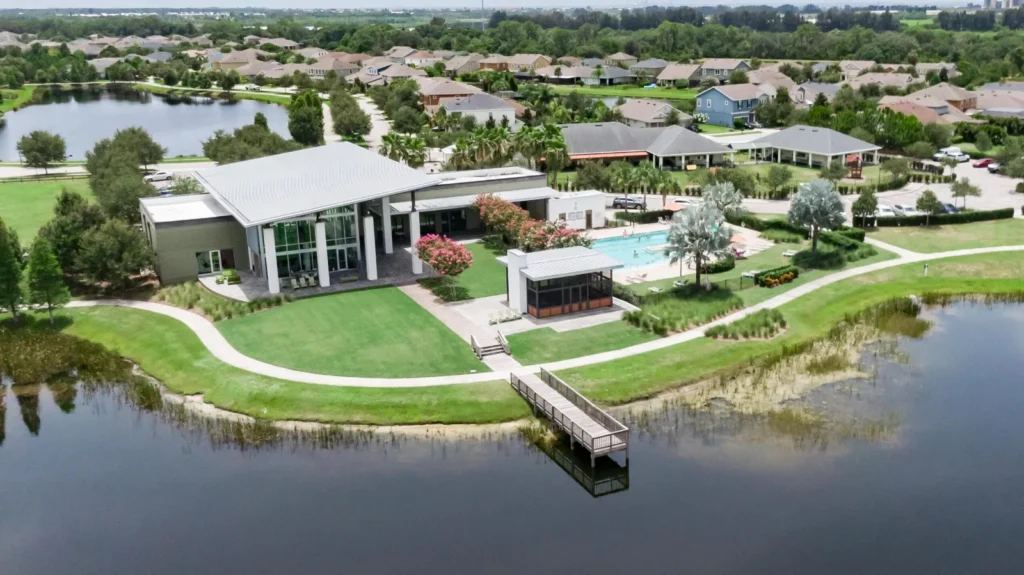
A CDD is a special-purpose local government created under Chapter 190 of the Florida Statutes, and it’s how the roads, ponds, pipes and amenities got built before anybody lived there. Two things people get wrong: a CDD isn’t an HOA, and a single property can have both. The amount usually shows up on your tax bill, but you have to look at the district’s bond obligations, its operating budget, and how the assessment is calculated to know what you’re really signing up for — in Waterset, for instance, it’s based on lot size.
What does a Florida CDD pay for?
A CDD may finance or maintain public improvements and services such as roads, drainage, stormwater systems, utilities, landscaping, recreational facilities and other infrastructure allowed by Florida law. The exact facilities and responsibilities vary by district.
The structure can help a developing community build major infrastructure without placing every cost into the initial home price. The tradeoff is that property owners help repay and operate those improvements over time.
What are the two CDD cost categories?
Debt service or bond assessment
This portion typically repays bonds used to construct district improvements. Ask for the amount allocated to the specific parcel, the remaining term, whether early payoff is allowed, the payoff calculation and whether future district borrowing is possible.
Operations and maintenance assessment
This portion funds the district’s ongoing operations, maintenance and services. It can continue after a particular bond is paid off and may change as the district adopts annual budgets.
Paying off a bond assessment doesn’t necessarily make the entire CDD line disappear. Operations and maintenance costs can remain.
What is the difference between a CDD and an HOA?
A Community Development District is a governmental entity with public budgets, meetings and statutory responsibilities. A homeowners association is a private association governed by its own declaration, bylaws, rules and Florida law. They may coordinate in a community, but they aren’t interchangeable.
- CDD: infrastructure, district services, public budgeting, assessments and sometimes bonds.
- HOA: private community rules, architectural standards, common-area responsibilities and association dues.
A buyer should review both sets of obligations. A low HOA fee doesn’t mean the total community cost is low if a separate CDD assessment applies.
Where do CDD fees show up on your bill?
CDD assessments commonly appear as a non-ad valorem line on the annual property tax bill. Because they may be collected with the tax bill, lenders can include them in an escrow calculation. The treatment can vary, so confirm the amount with the tax collector, district and lender rather than relying only on a listing estimate.
Non-ad valorem assessments aren’t calculated like ordinary property taxes based solely on taxable value. A homestead exemption may reduce ad valorem property taxes but doesn’t automatically remove a CDD assessment.
Why do two homes in the same community pay different CDD fees?
Don’t assume every parcel has the same CDD obligation. Differences can result from unit, phase, lot type, benefit allocation, bond series, prior payoff or later financing. The only safe approach is to verify the parcel-specific amount and the documents behind it.
This is especially important when comparing new construction with resale homes. A builder’s estimate, a seller’s tax bill and the future stabilized assessment may not be the same.
Buyer due diligence checklist
- Confirm whether the parcel is inside a CDD.
- Obtain the latest property tax bill and identify every CDD or special-assessment line.
- Find the district’s official website, adopted budget, meeting records and assessment methodology.
- Ask for the parcel’s current annual debt-service and operations-and-maintenance amounts.
- Request the outstanding bond balance or payoff information applicable to the parcel.
- Ask whether paying off a bond portion is optional, allowed and financially sensible.
- Review whether the district has approved or discussed new capital projects, bonds or special assessments.
- Compare CDD, HOA, insurance, taxes and maintenance as one monthly ownership budget.
- Confirm the lender’s escrow and qualification treatment before the financing deadline.
- Read the statutory CDD disclosure and contract documents with the appropriate legal and financial professionals.
What should you ask before making an offer?
- What was the total CDD assessment on the latest tax bill?
- How much is debt service and how much is operations and maintenance?
- Which bond series applies to this parcel, and when is it scheduled to mature?
- Has any portion already been paid off?
- What has the operating assessment done over the last several budgets?
- Are there planned projects or proposed assessment changes?
- Which amenities and infrastructure does the CDD maintain?
- What separate HOA or condo fees apply?
Is a CDD good or bad?
A CDD is a cost structure, not an automatic reason to buy or avoid a home. Some buyers value newer infrastructure, amenities and planned-community maintenance. Others prefer communities without district assessments. The right comparison is the home, location, infrastructure, amenities, rules and total cost together.
I advise buyers to compare what they receive and what they owe, not just the headline purchase price. A home without a CDD can still have higher HOA dues, older infrastructure or different maintenance obligations.
How do CDD fees affect what you can afford?
Include the annual assessment in the monthly budget and in lender qualification. Also leave room for insurance changes, property-tax reassessment after purchase and HOA adjustments. For a complete tax overview, read Florida Property Taxes for Homebuyers: Homestead, Reassessment and CDD Fees.
Common questions
Can I pay off a Florida CDD?
You may be able to pay off a parcel’s bond assessment, depending on the district and bond documents. That usually doesn’t eliminate ongoing operations-and-maintenance assessments. Request an official payoff quote before making a decision.
Does Homestead Exemption reduce CDD fees?
CDD assessments are commonly non-ad valorem and aren’t automatically reduced by Homestead Exemption. Verify the parcel’s tax bill and district methodology.
Does a paid-off CDD increase value?
Some buyers may value the lower annual carrying cost, but market impact depends on price, community demand, remaining district obligations and competing homes. Don’t assume a dollar-for-dollar value increase.
Are CDD meetings public?
CDDs operate as governmental entities and publish public records such as meeting notices, budgets and financial documents. Use the district’s official site and Florida records.
Official resources
- Florida Statutes Chapter 190, Community Development Districts
- Florida Statutes section 190.048, required disclosure
This article provides general real estate education, not legal, tax, lending or investment advice. District documents and parcel obligations vary. Verify current information with the district, tax collector, lender, title professionals and attorney.
Comparing Florida communities?
I help buyers look beyond the listing price to understand neighborhood fit, CDD and HOA costs, property taxes, insurance questions and the details that shape everyday ownership.
Shawna Calvert
27North Realty
Call or text: 509-294-6818
Email: shawna@27northrealty.com